ZARİF KITCHEN
THE MONTH OF PLENTIFUL FISH: A NOVEMBER TABLE
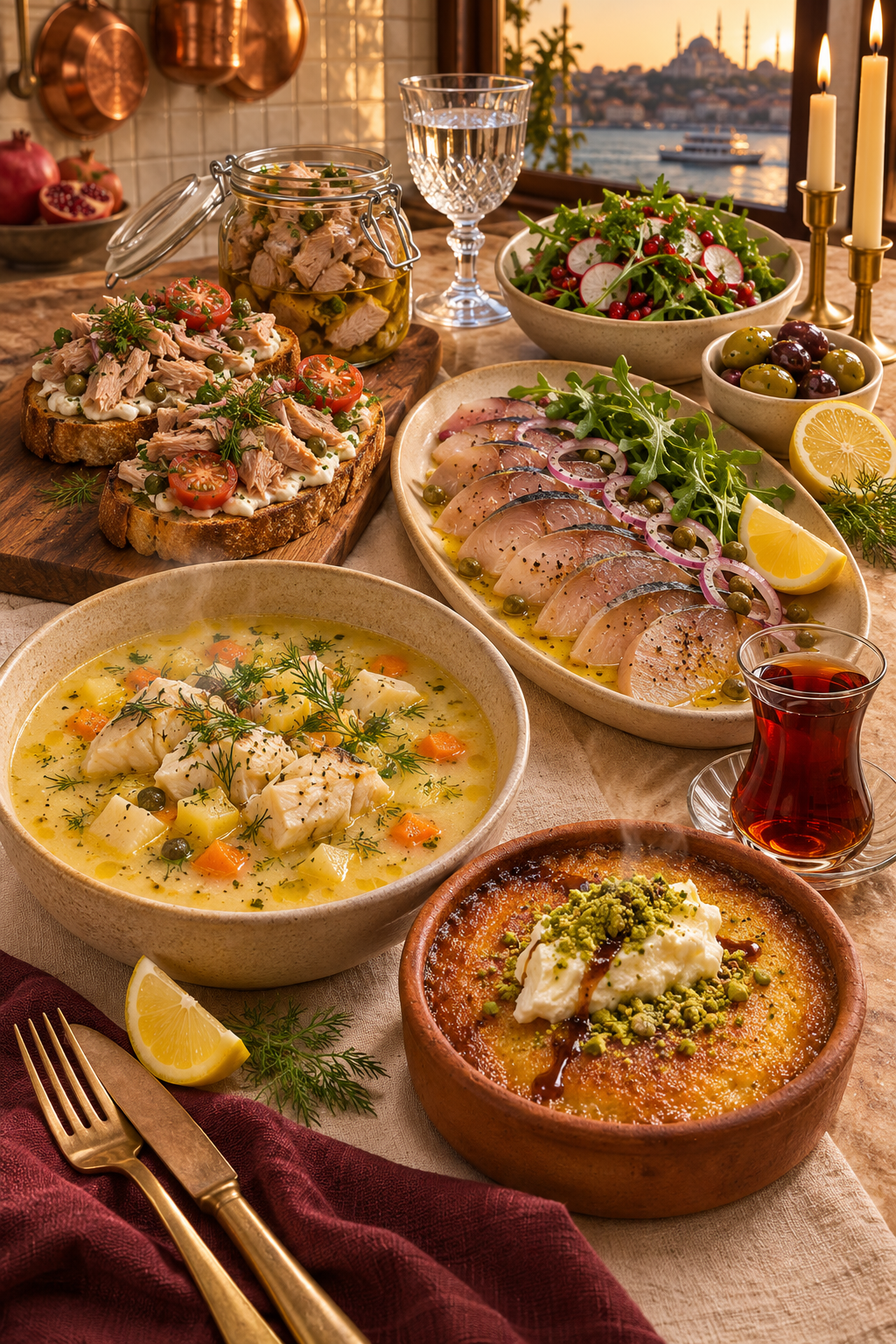
Egg-and-lemon fish soup, lakerda from bonito, home-preserved bonito "tuna" in a jar and warm homemade tahini halva.
November is the month when the sea is generous. Bonito and its larger cousin are on their migration route, anchovies fill the fish stalls, and every day there is something fresh at the fishmonger's. In old Istanbul homes, fish was not only eaten in this month; it was prepared for winter. Large bonito was salted into lakerda and smaller bonito went into jars; a jar opened in midwinter brings November's sea back to the table.
This month we offer you four recipes: a hot soup for today's table, two preparations to keep for winter, and a warm dessert for cold evenings.
RECIPE 1 · EGG-AND-LEMON FISH SOUP
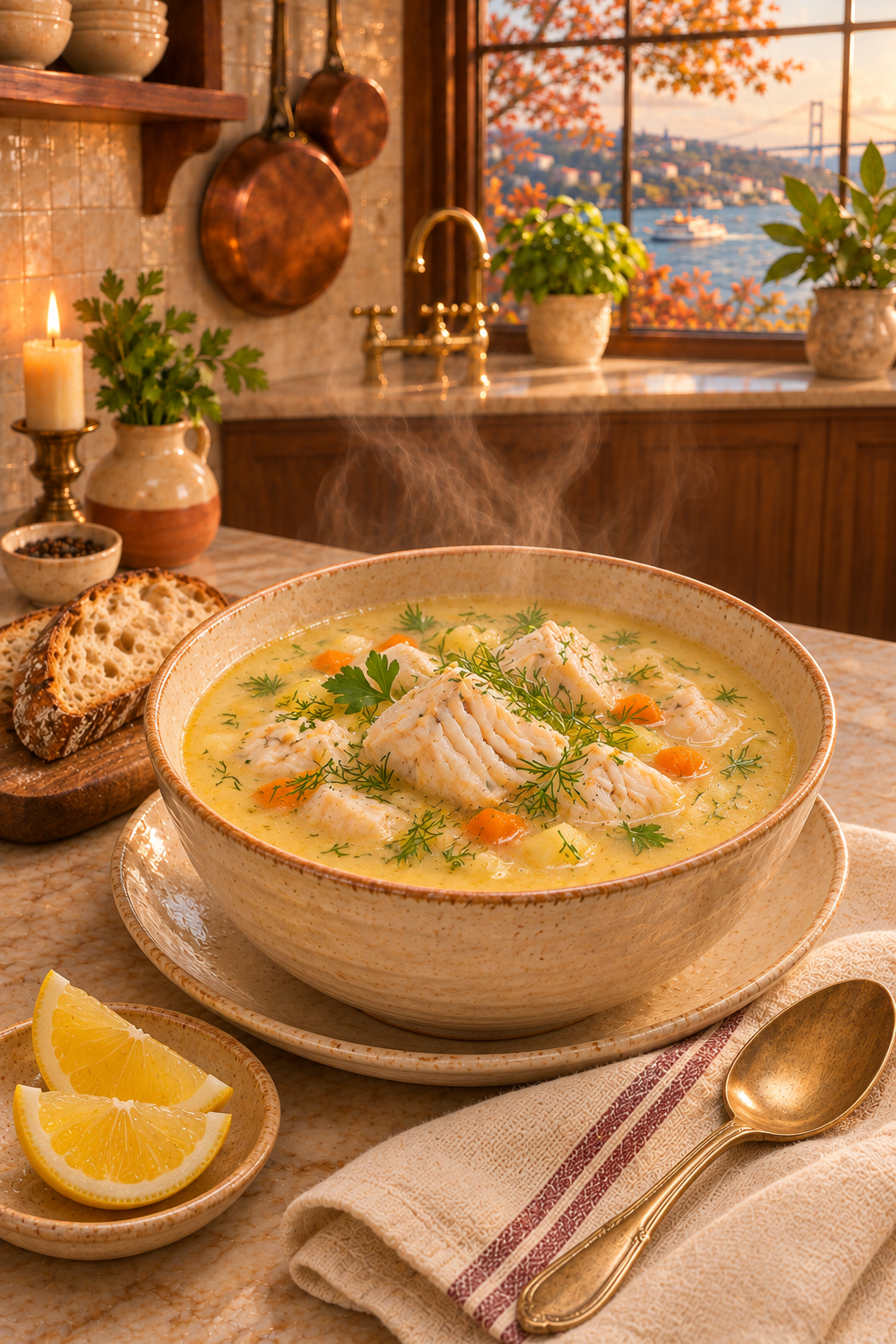
A velvety fish soup in the Istanbul style, finished with egg and lemon. When you make the fish stock yourself, the soup tastes entirely different.
Ingredients
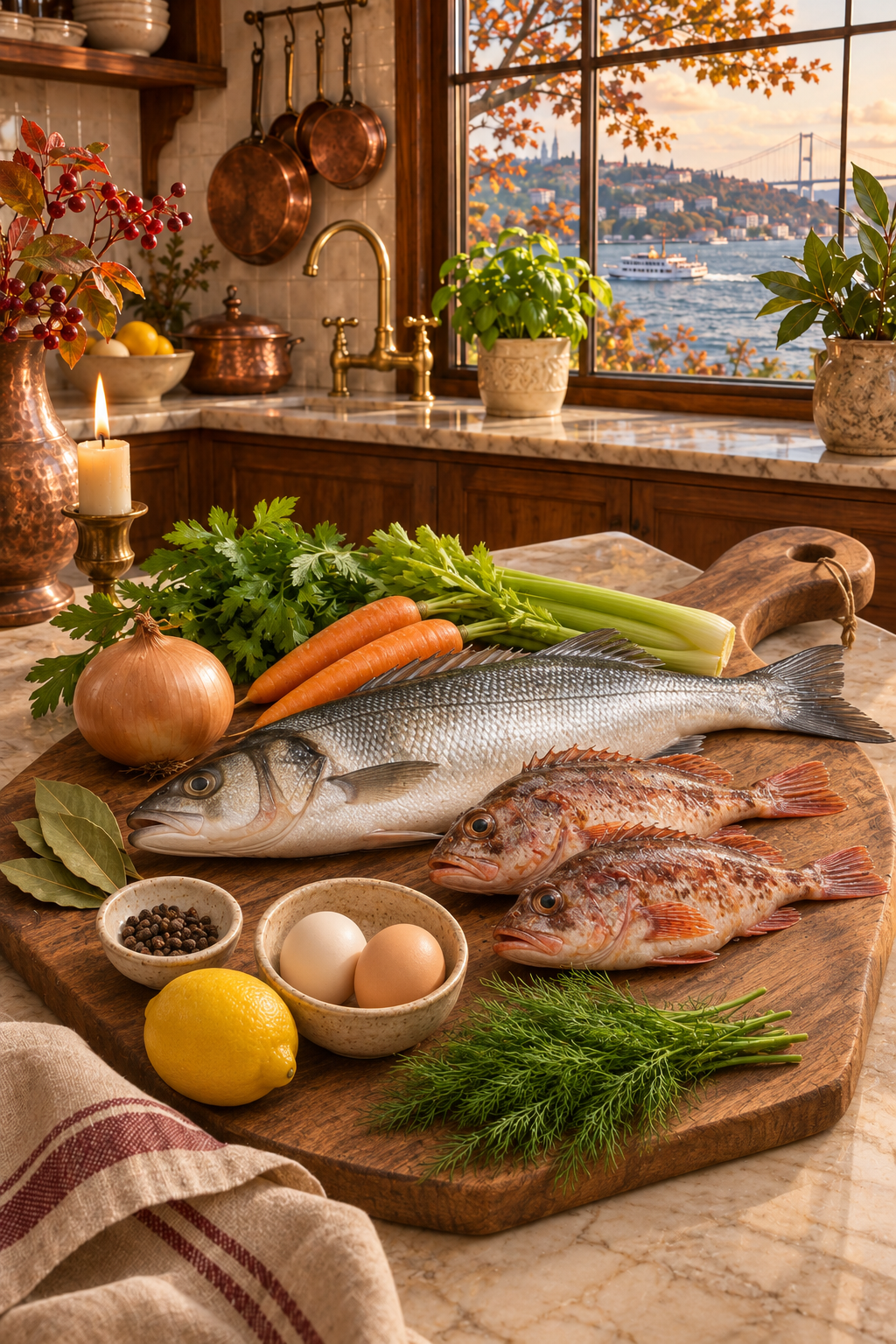
For the fish stock:
– 1 kg white fish (sea bass, rockfish, scorpionfish or whiting; with heads and bones)
– 1 onion, halved
– 1 carrot
– 1 stick of celery or 1 small celery root
– 3–4 parsley stalks
– 1 bay leaf, 6–7 black peppercorns
– 2.5 litres of water
For the soup:
– 2 tablespoons butter and 1 tablespoon olive oil
– 1 onion, finely chopped
– 1 carrot, finely diced
– 1 small potato, finely diced
– 1 tomato, grated
– 2 tablespoons rice
For the egg-and-lemon:
– 2 egg yolks
– Juice of 1 lemon
– 1 tablespoon flour
– To serve: finely chopped dill and parsley, lemon slices
Method
1. Clean the fish and remove the gills. Separate the fillets and keep the heads and bones aside.
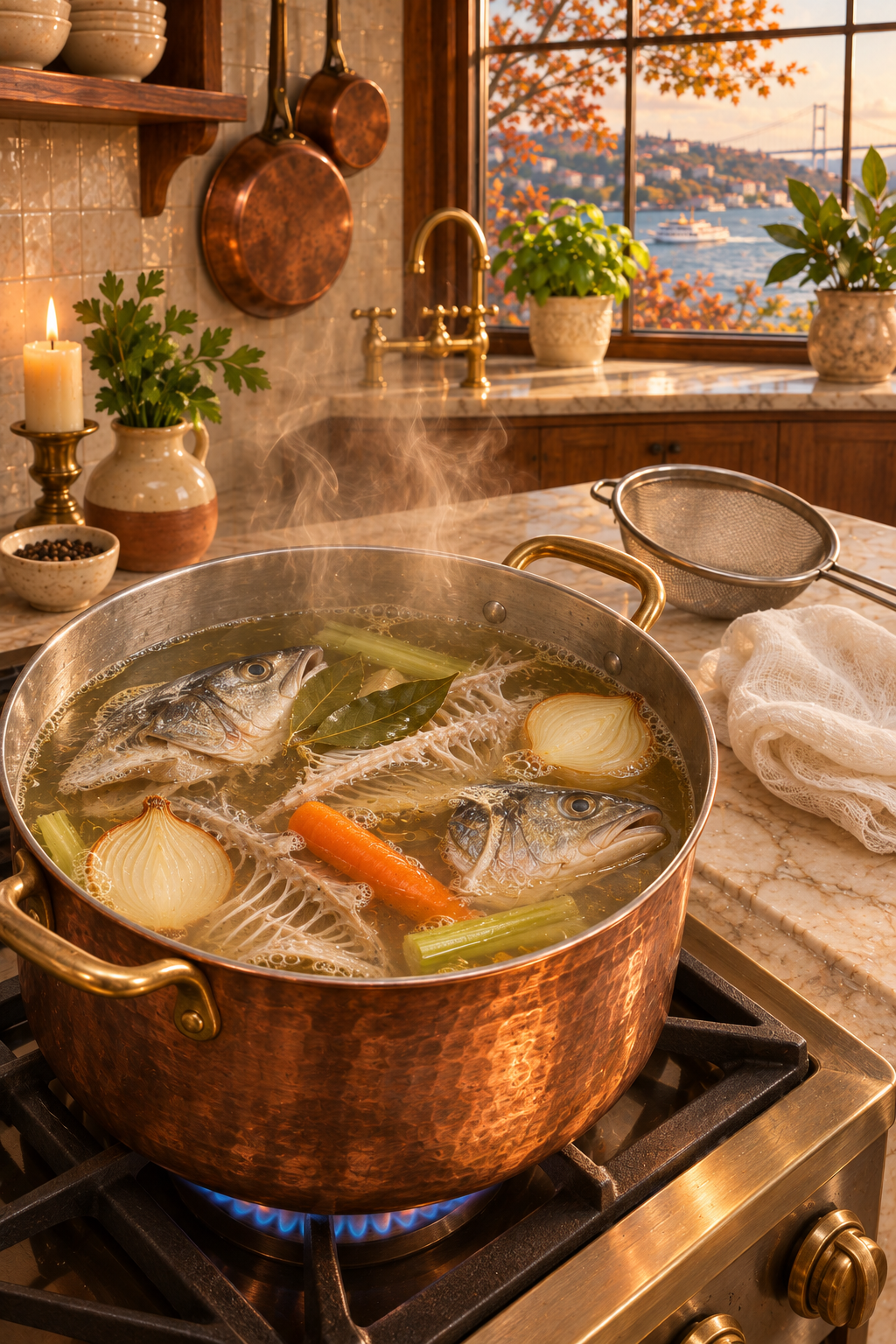
2. Put the heads and bones in a pot with the onion, carrot, celery, parsley stalks, bay leaf and peppercorns. Add the water, skim off the foam when it boils and simmer over a low heat for 25 minutes.
3. Add the fillets for the last 8 minutes. When cooked, lift them out; once cool, break them into large pieces by hand, making sure no bones remain.
4. Strain the stock through a fine sieve or muslin. You will have about 2 litres of clear fish stock.
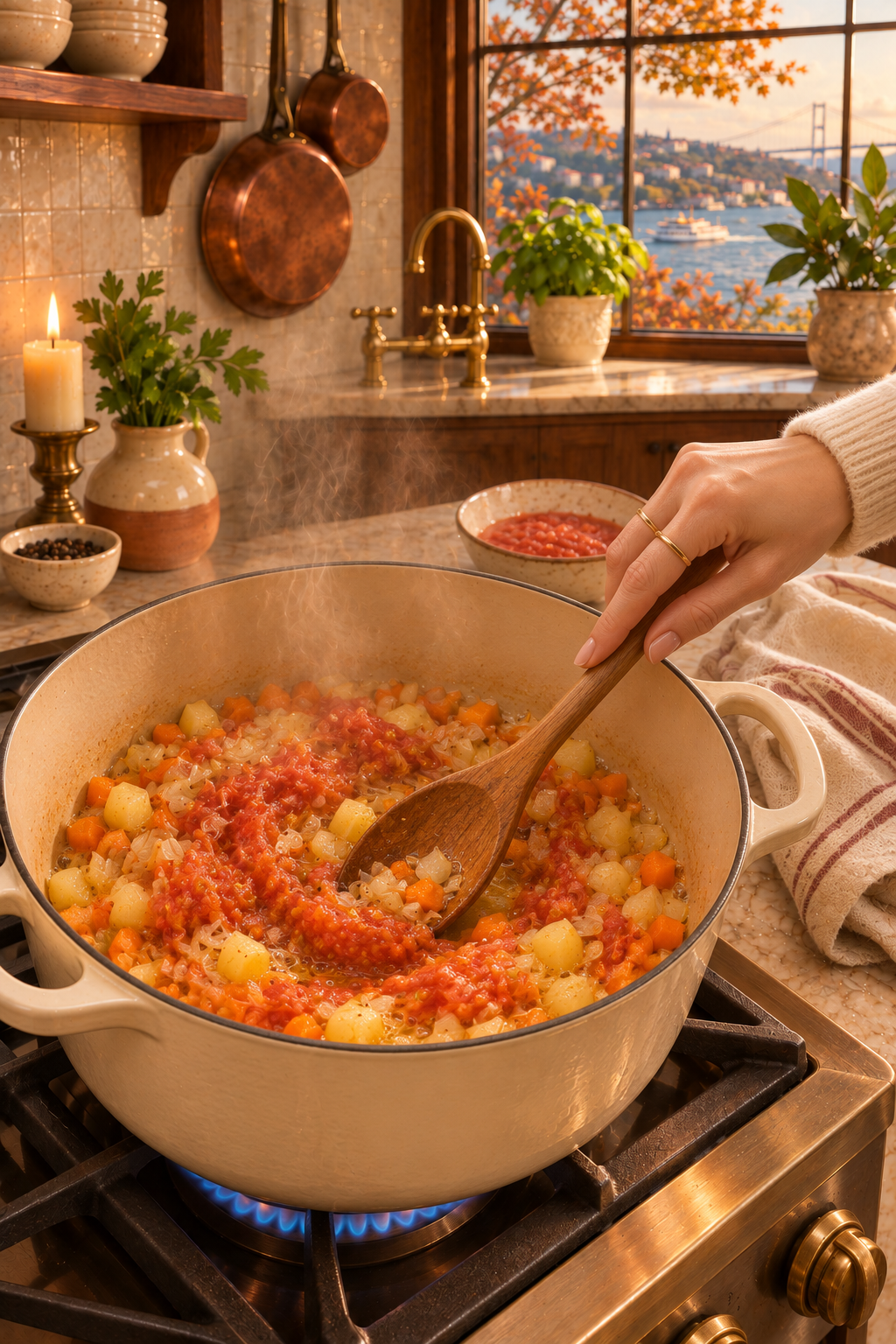
5. In another pot, heat the butter and olive oil. Sauté the onion until soft and golden, then the carrot and potato for 3–4 minutes. Add the tomato and stir for 2 more minutes.
6. Add the fish stock and the washed rice. Cook for 15 minutes until the vegetables and rice are tender. Season with salt.
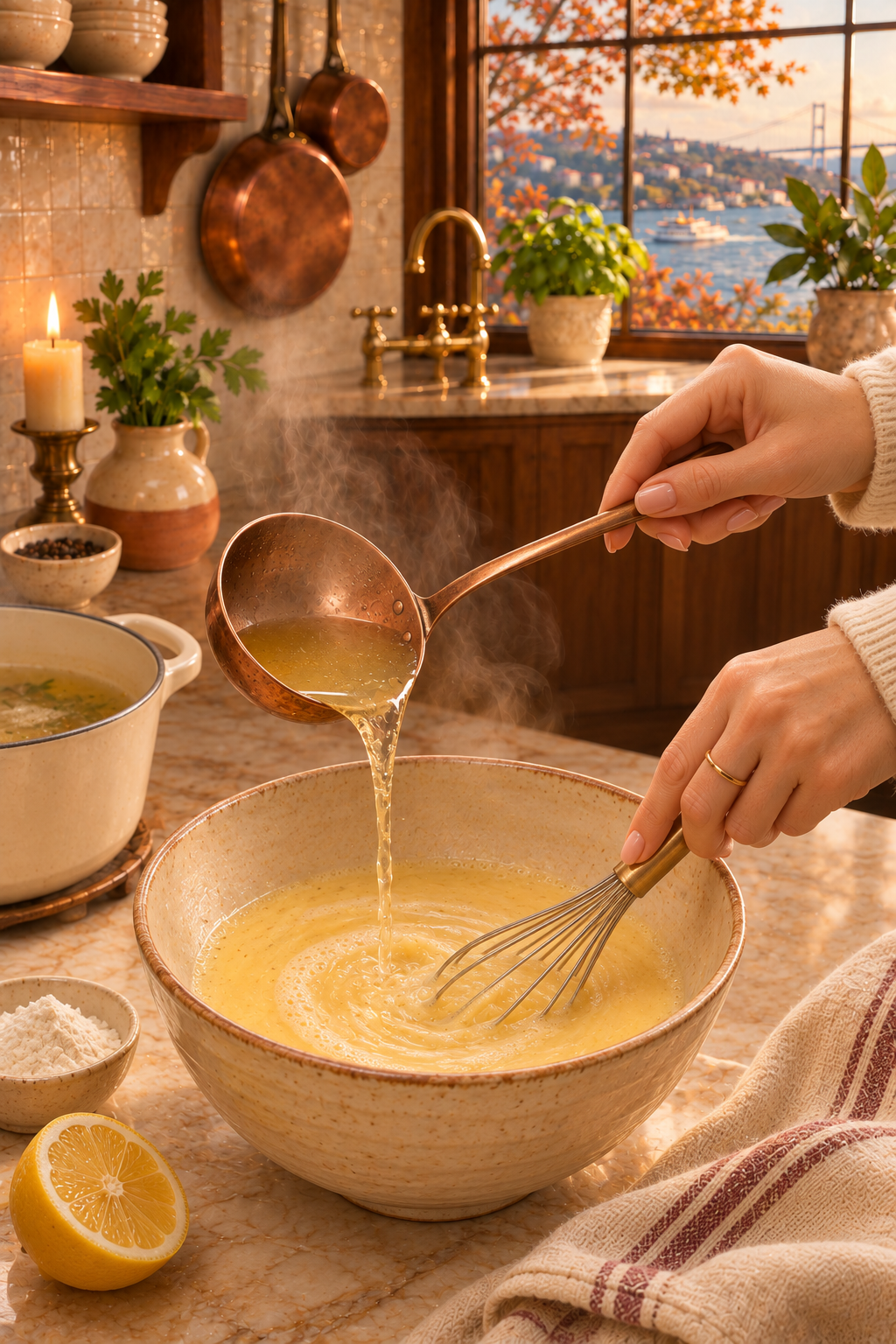
7. For the egg-and-lemon, whisk the egg yolks, flour and lemon juice in a bowl. Temper it by slowly adding a few ladles of the hot soup liquid. Turn the heat down and add the mixture to the soup, stirring constantly. Do not let the soup boil after this; just bring it up to heat once.
8. Add the pieces of fish to the soup. Divide between bowls, sprinkle with dill and parsley and, if you like, a few capers; serve with lemon.
Zarif Yaşam tip: the secret to keeping an egg-and-lemon soup from curdling is tempering. Add the hot liquid to the egg without hurrying, spoon by spoon.
RECIPE 2 · LAKERDA FROM LARGE BONITO
Lakerda is an old Istanbul meze made from large bonito and cured in salt. It is indispensable at rakı tables and among winter meze. It asks for patience but repays the effort many times over.
Safety first: lakerda is not cooked but cured in salt. With fish eaten raw, freezing it beforehand is recommended against the risk of parasites: freeze the cleaned slices at −20°C or below for at least 7 days and thaw them slowly in the refrigerator. If you are not sure your home freezer reaches this temperature, ask your fishmonger for frozen bonito.
Ingredients
– 1 large bonito (about 2–2.5 kg)
– 1–1.5 kg coarse rock salt (non-iodised)
– For soaking: cold water and 2 tablespoons salt
– For storing: extra virgin olive oil
– To serve: thinly sliced red onion, lemon, black pepper, rocket or parsley
Method
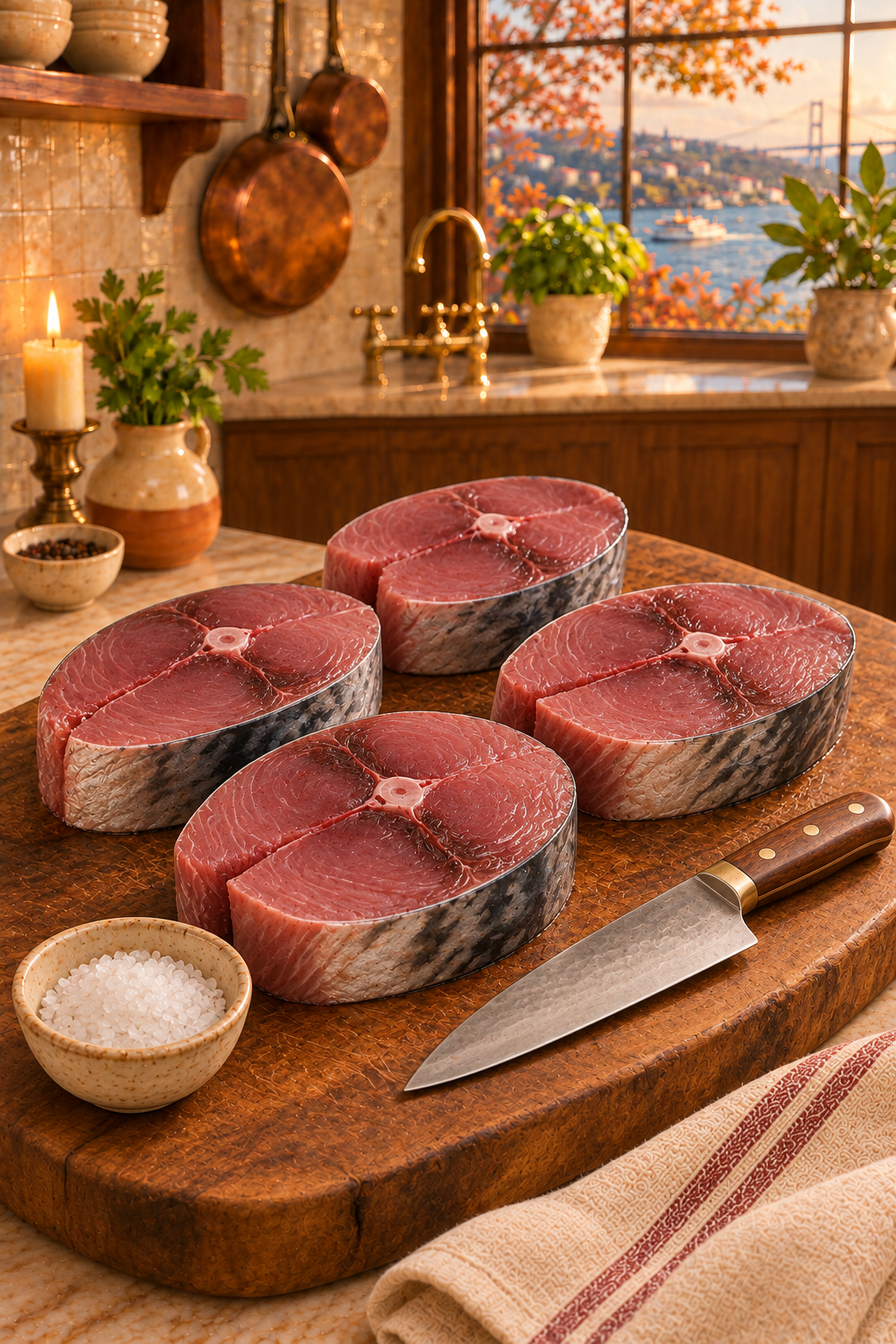
1. Ask your fishmonger to remove the head, tail and innards. Cut the fish crosswise into slices about 3–4 cm thick. (If you need to freeze it, do so at this stage.)
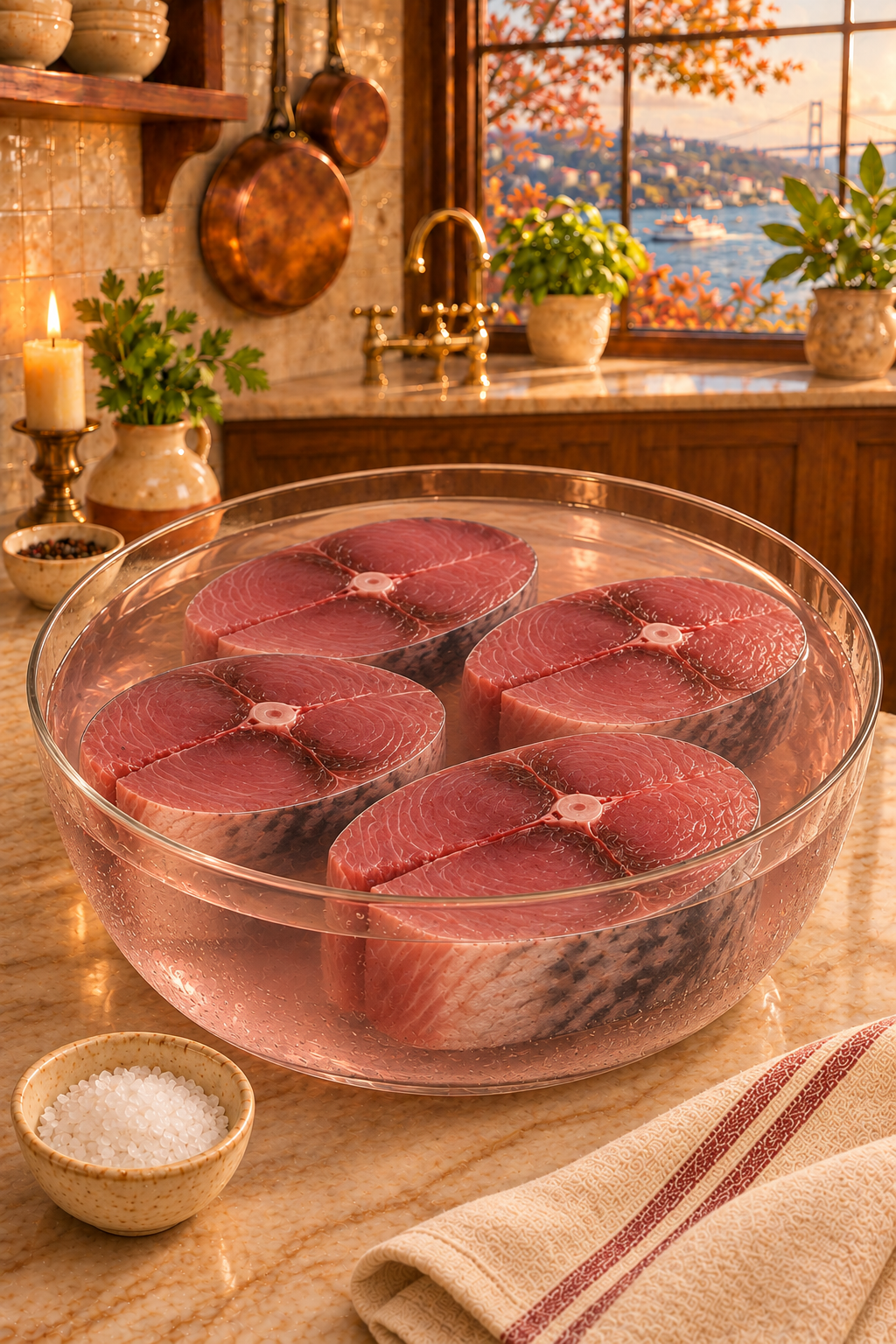
2. Soak the slices in cold salted water in the refrigerator for 6–8 hours. Change the water 3–4 times as the blood draws out. When the water runs clear, the slices are ready.
3. Pat the slices thoroughly dry with paper towels.
4. Spread a thick layer of coarse salt over the base of a glass or ceramic dish. Arrange the slices upright or side by side, layering them with plenty of salt between and over them. The top layer should be completely covered with salt.
5. Cover the dish, press it down with a light weight and leave it in the refrigerator for 4–5 days. Pour off the liquid that collects every day.
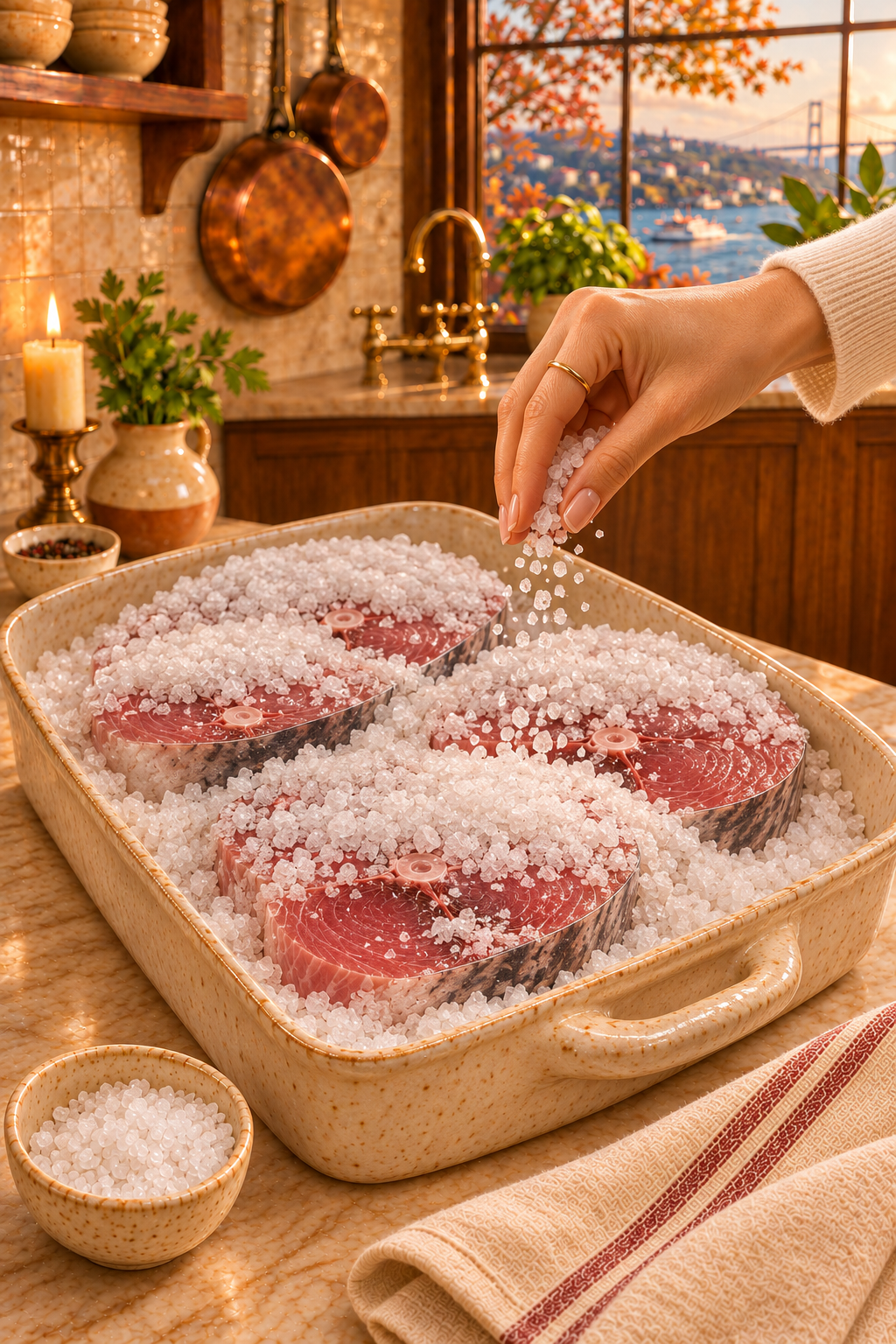
6. Take the slices out of the salt, rinse them in cold water and soak them in fresh cold water for 1–2 hours to remove the excess salt. Taste a piece; if it is still too salty, change the water and soak a little longer.
7. Dry the slices thoroughly. Remove the skin and bones and separate the flesh into slices.
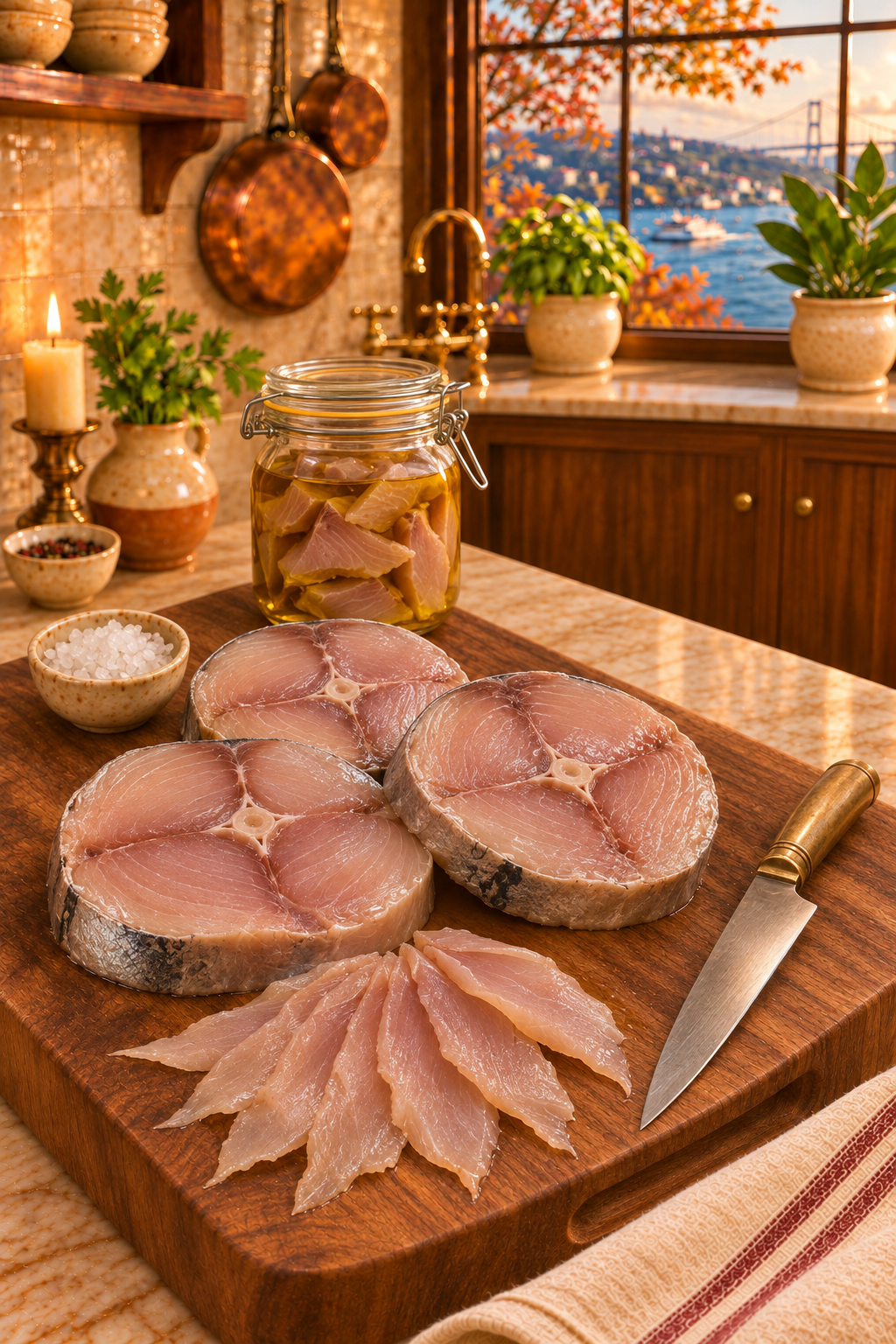
8. Place them in clean glass jars that have been scalded with boiling water and dried, and add enough olive oil to cover them completely. Keep in the refrigerator and eat within 2 weeks.
To serve: lay thin slices of lakerda on a plate; top with red onion rings, a few drops of lemon and freshly ground black pepper.
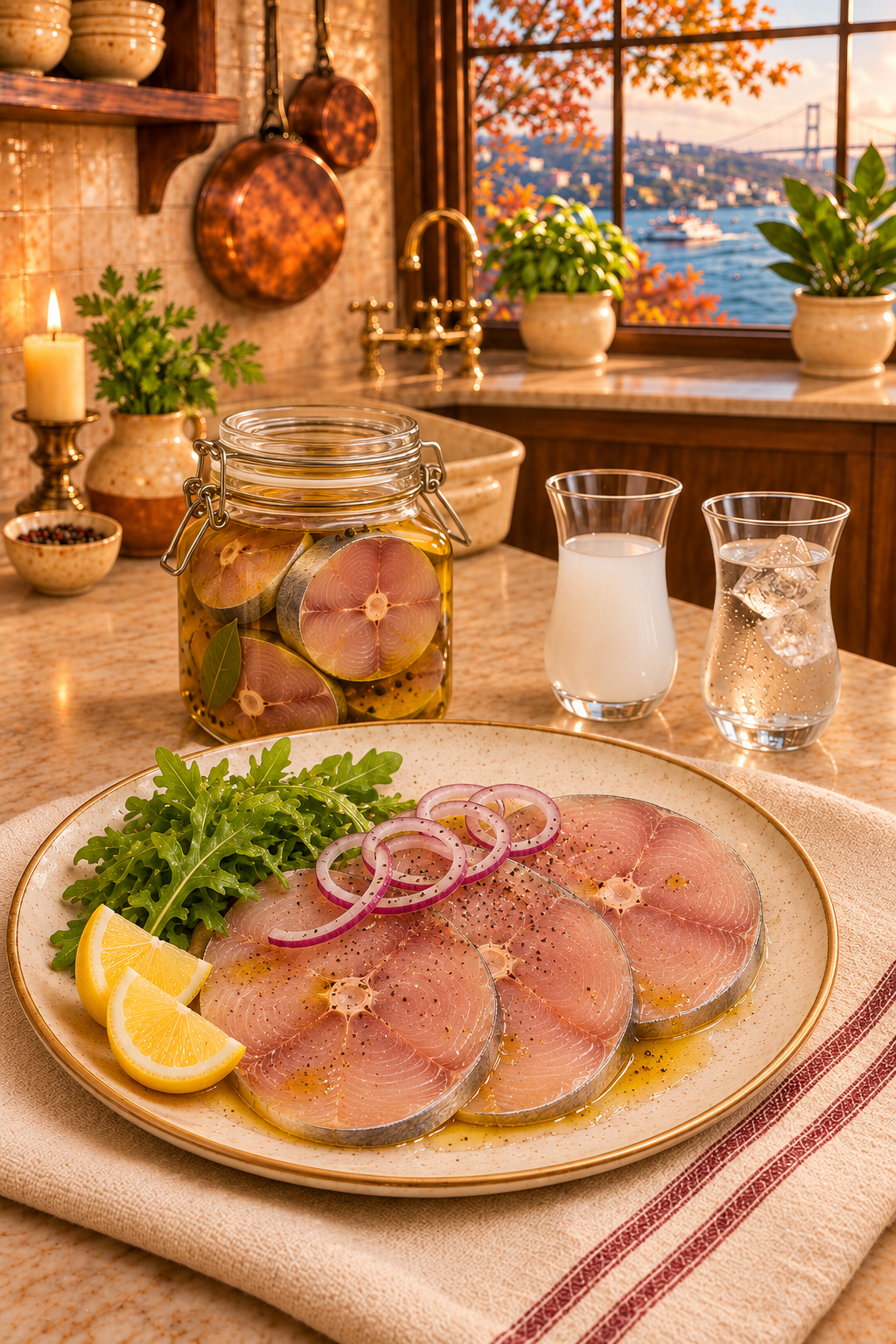
Zarif Yaşam tip: what determines the colour of lakerda is drawing out the blood well. Well-made lakerda is pinkish-beige and firm in texture.
RECIPE 3 · BONITO "TUNA" IN A JAR
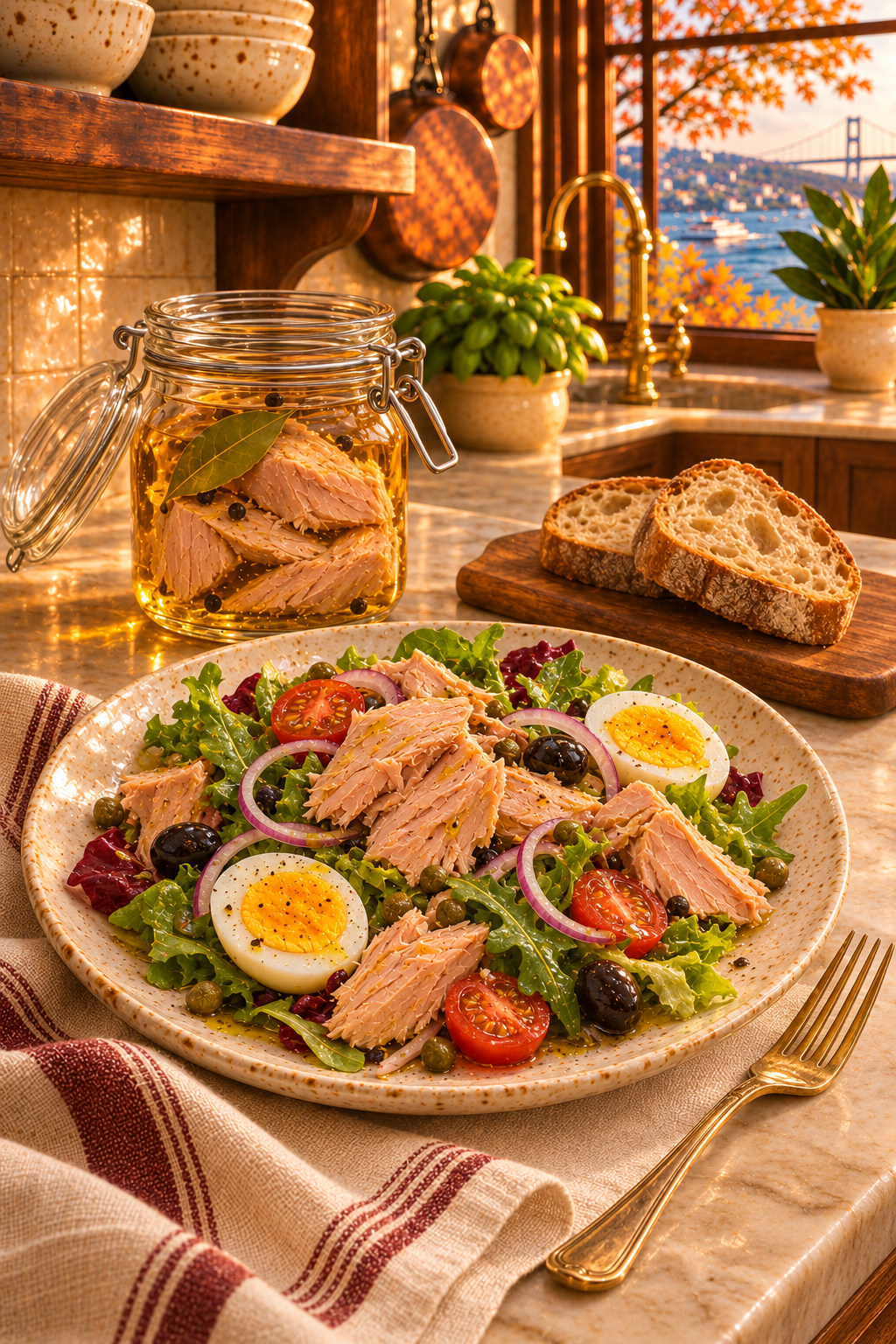
Bonito is a close relative of tuna. Slowly cooked in a jar in its own olive oil, it becomes a tender "tuna" far tastier than anything from a can. It suits salads, sandwiches, pasta and breakfast.
Ingredients
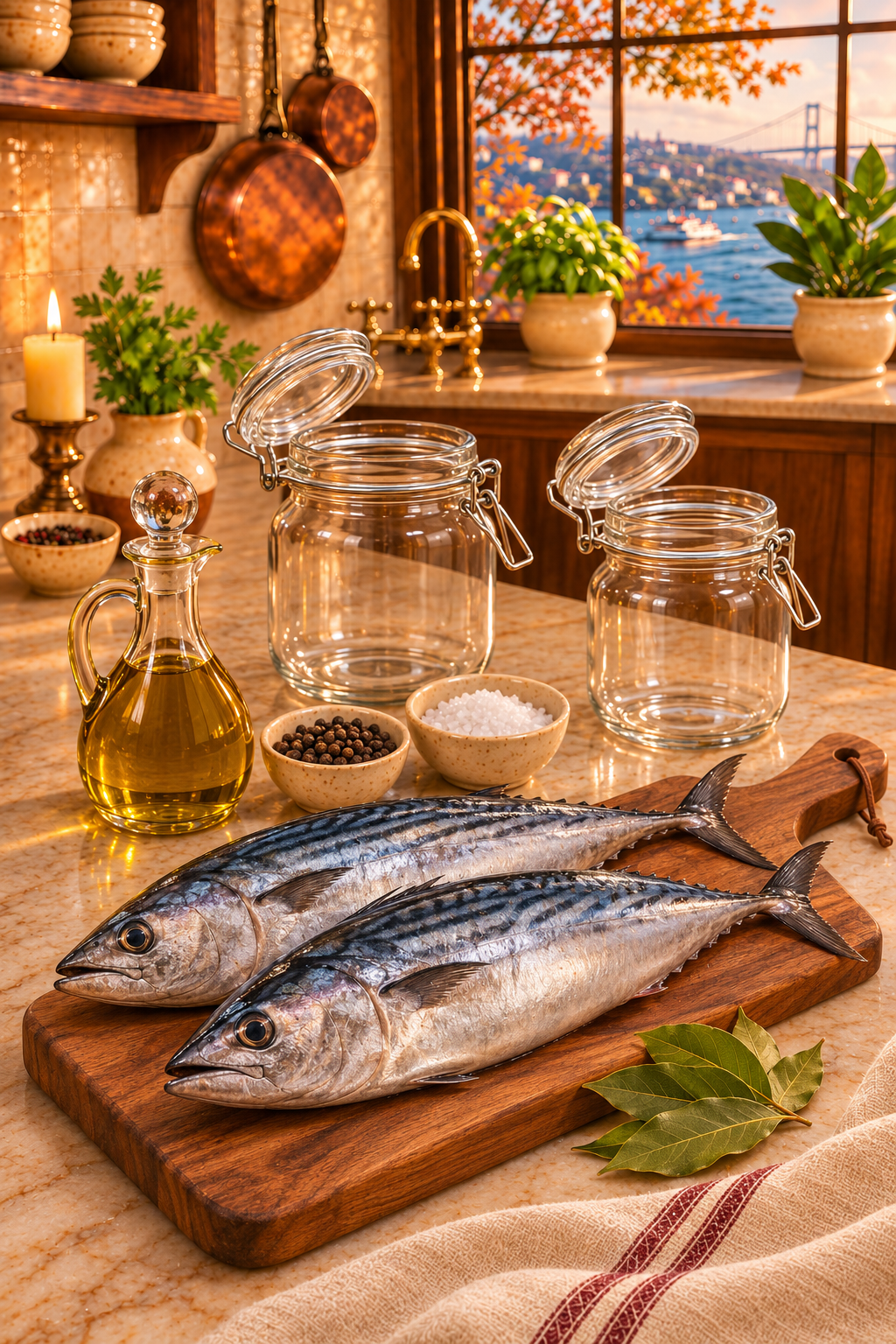
– 2 medium bonito (about 1.5 kg), filleted
– 1 tablespoon salt
– For each jar: 1–2 bay leaves, 5–6 black peppercorns
– Enough extra virgin olive oil to fill the jars (about 500 ml)
– 3 medium glass jars with sound lids
Method
1. Wash the jars and lids in hot water, boil them for 10 minutes and leave them to dry on a clean cloth.
2. Skin the bonito fillets and cut away the dark bloodline in the middle with a knife; this part gives bitterness.
3. Cut the fillets into pieces that will fit the jars, salt them and leave for 20 minutes. Blot away the liquid with paper towels.
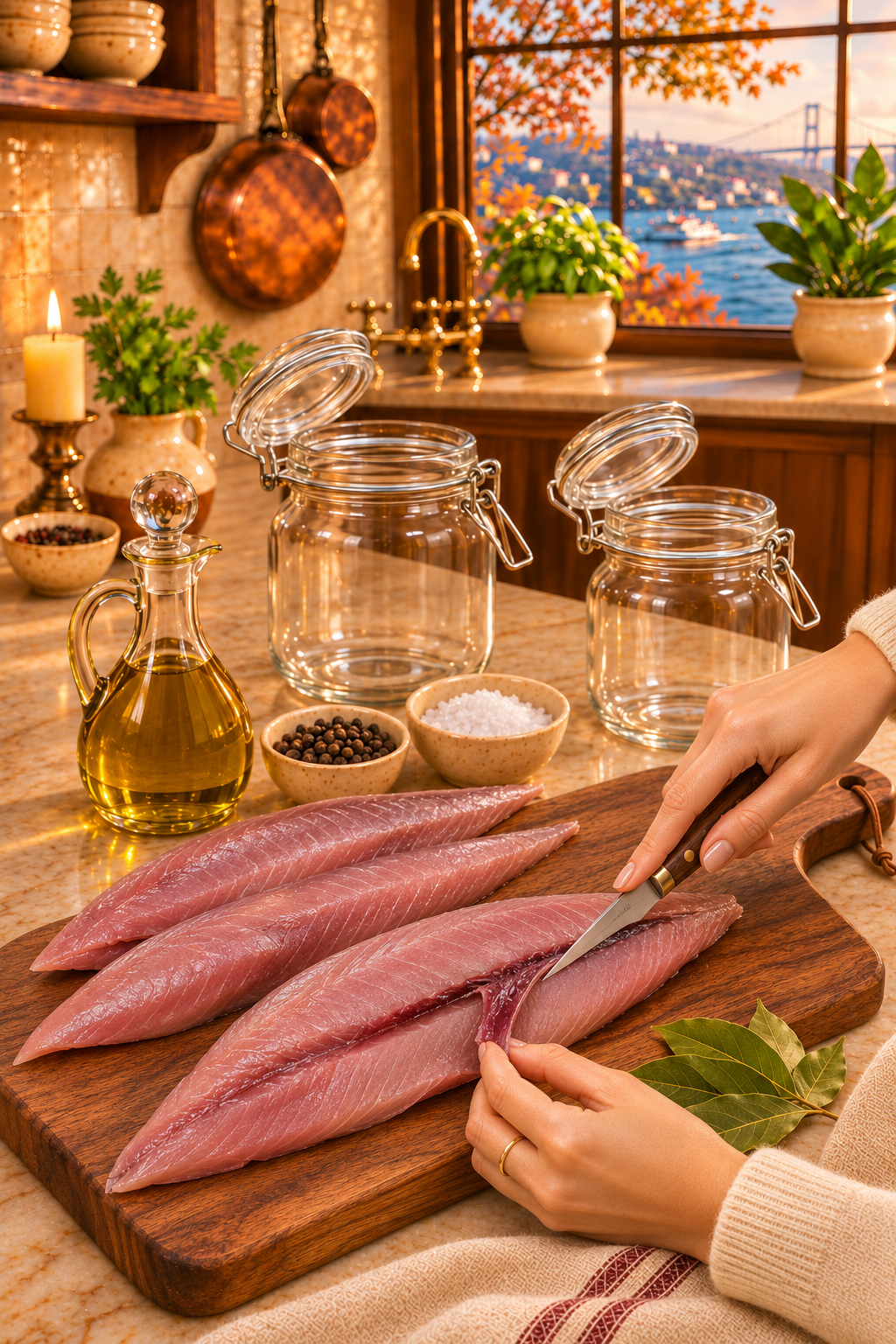
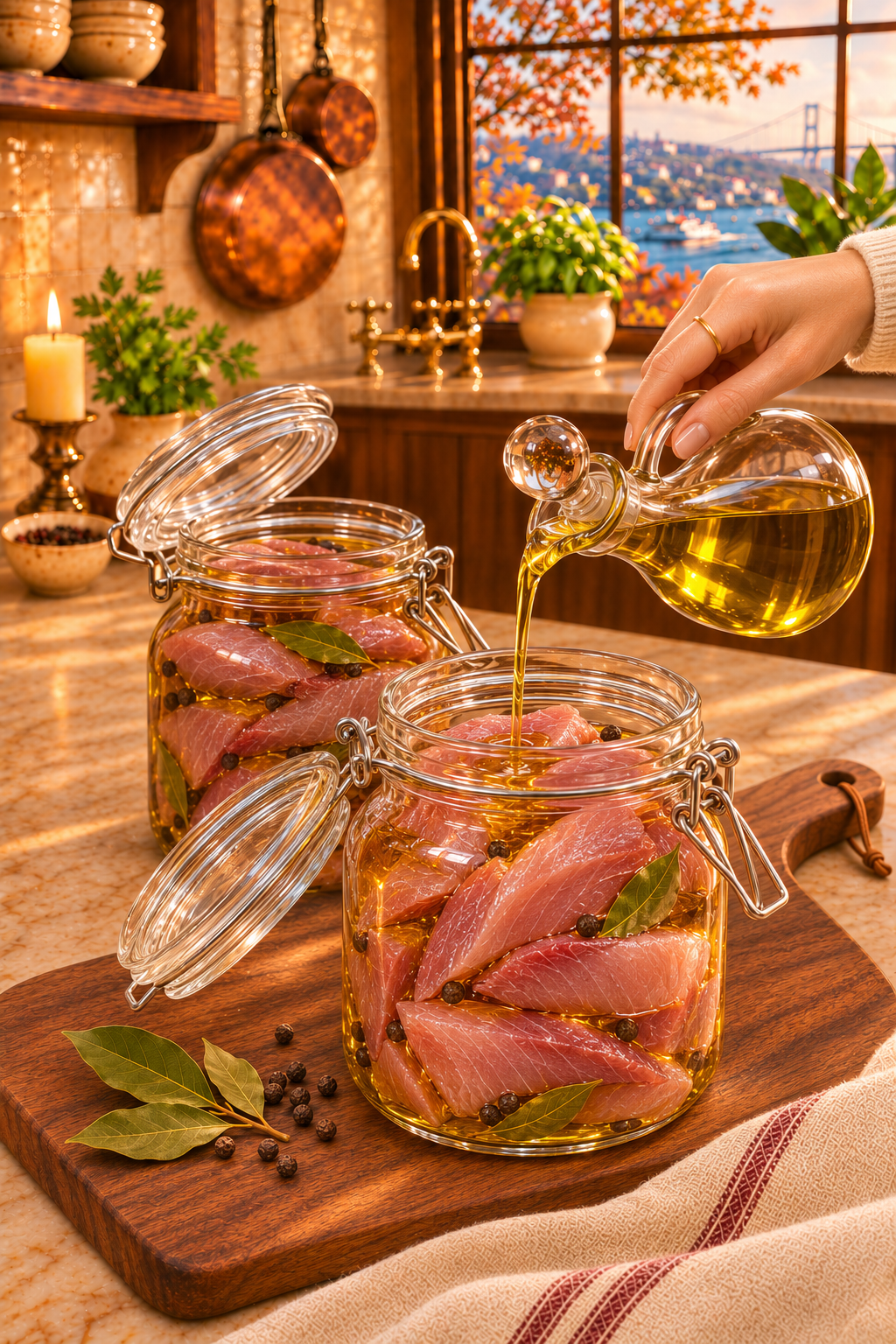
4. Pack the fish pieces firmly into the jars, leaving 2–3 cm of space at the top. Tuck bay leaves and peppercorns between them.
5. Add enough olive oil to cover them completely; release the air bubbles with the handle of a spoon. Close the lids tightly.
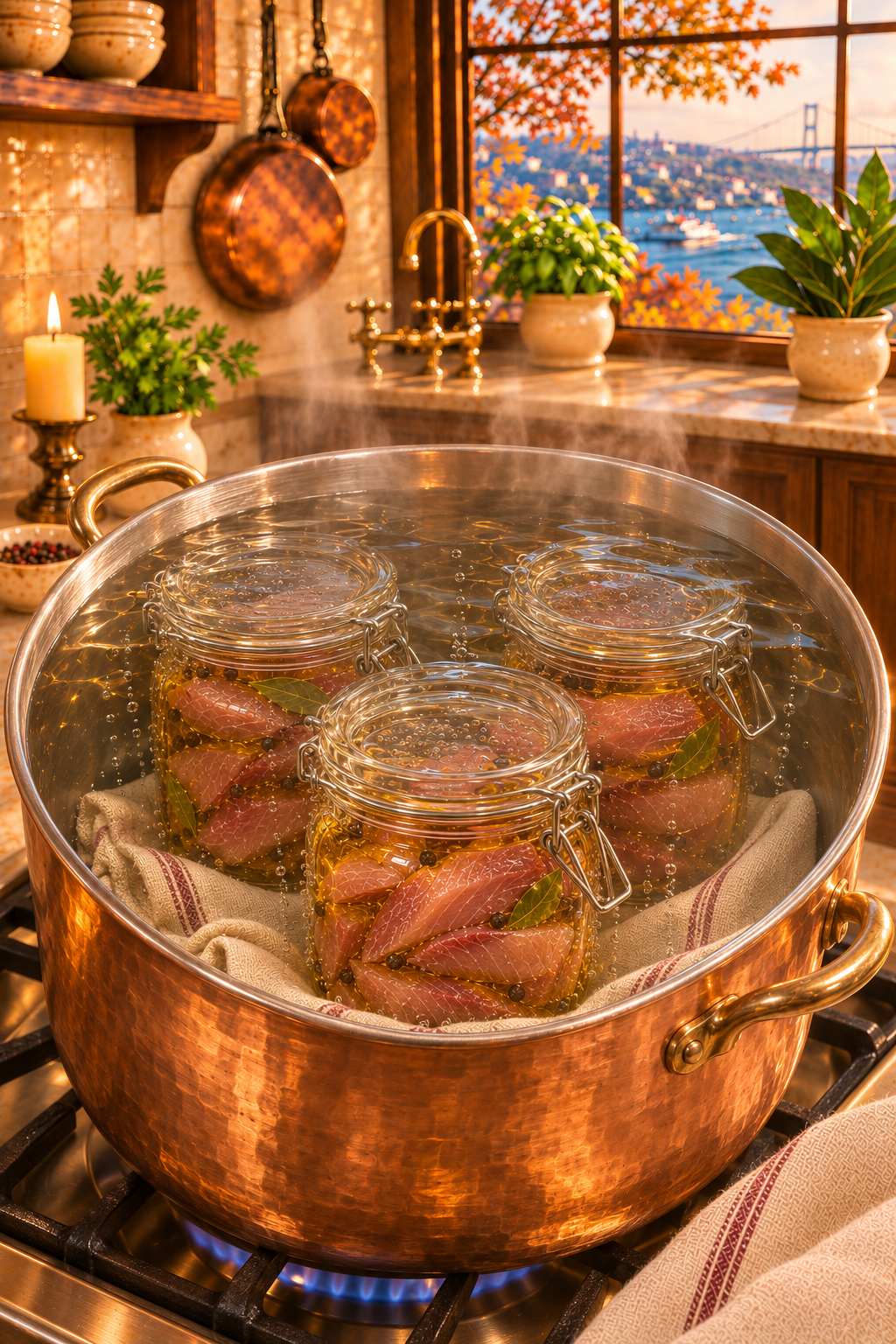
6. Lay a folded cloth in the bottom of a wide pot. Set the jars in so they do not touch each other and add lukewarm water to 2–3 cm above the lids. (Do not put the jars into boiling water; a sudden change in temperature can crack the glass.)
7. Bring the water to the boil, then lower the heat and cook in a bain-marie, in gently simmering water, for 1.5 hours. If the water level drops, add boiling water.
8. Let the jars cool slowly in the water in the pot. When cool, lift them out and dry them.
Storage
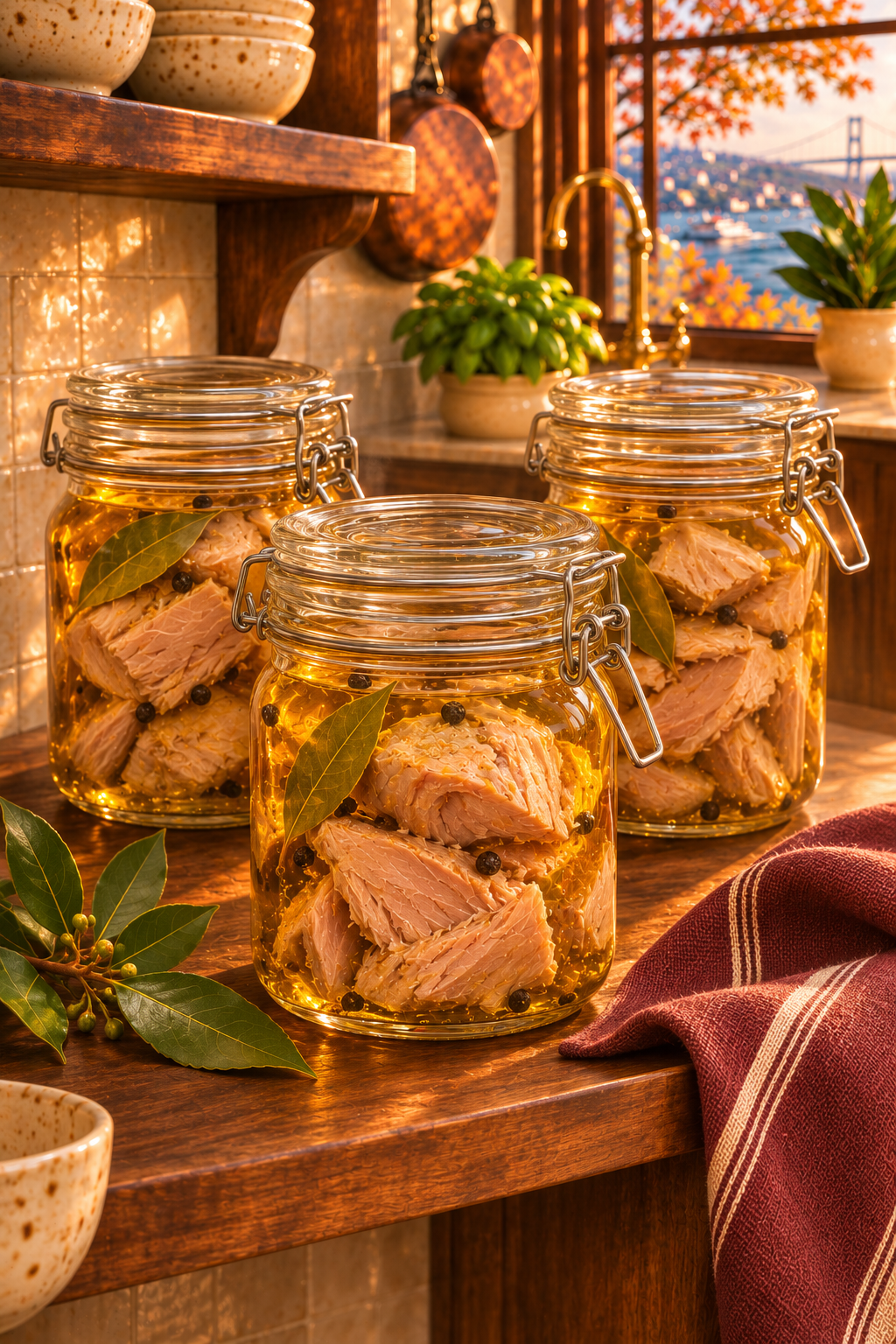
– In the refrigerator: once cool, put the jars in the refrigerator and eat within 10 days. Finish an opened jar within 2–3 days.
– If you want to keep it longer: fish is a low-acid food. A bain-marie in boiling water does not reach a temperature that destroys the botulism spores fish can carry. Canned fish to be kept in the pantry for months must only be made in pressure canners, following the manufacturer's instructions. Another way is to store the fish in portions in the freezer.
– Discard, without tasting, any jar whose lid has bulged, that spurts or foams when opened, or whose smell has changed.
Zarif Yaşam tip: do not add raw garlic or fresh herbs to the jars; bay and pepper give the aroma. You can use the olive oil from the jar, which has taken on the flavour of the fish, in your salads.
RECIPE 4 · HOMEMADE TAHINI HALVA, WARM FROM THE OVEN
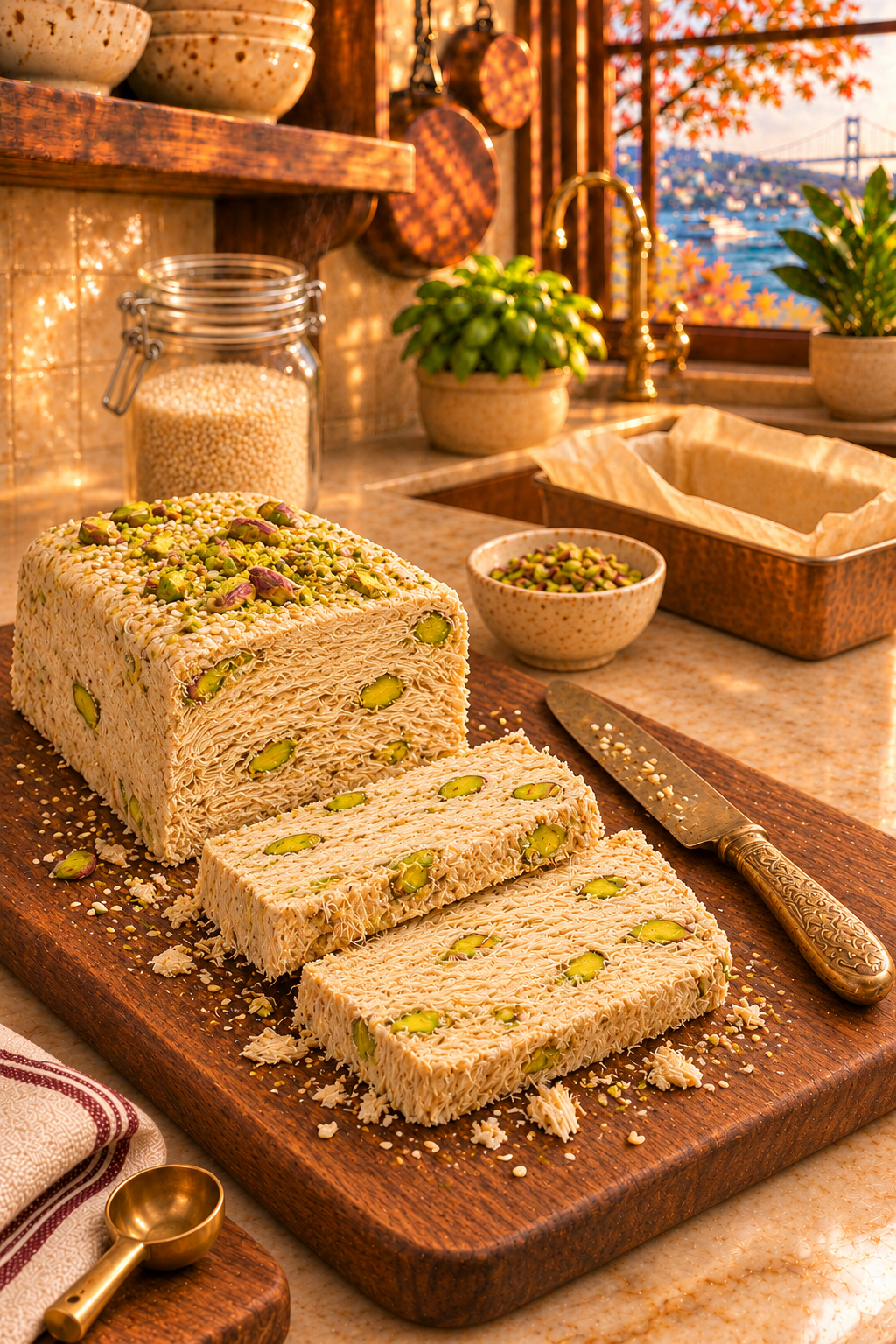
Making tahini halva at home is easier than you think: just tahini, sugar syrup and a little patience. The fine, stringy texture of factory halva is achieved with soapwort root and a long pulling process; homemade halva has a softer, crumblier texture. That makes it ideal for warm halva heated in the oven. And you know what goes into it: no additives, preservatives or glucose syrup; you choose the amount of sugar and the quality of the tahini.
Ingredients
For the halva:
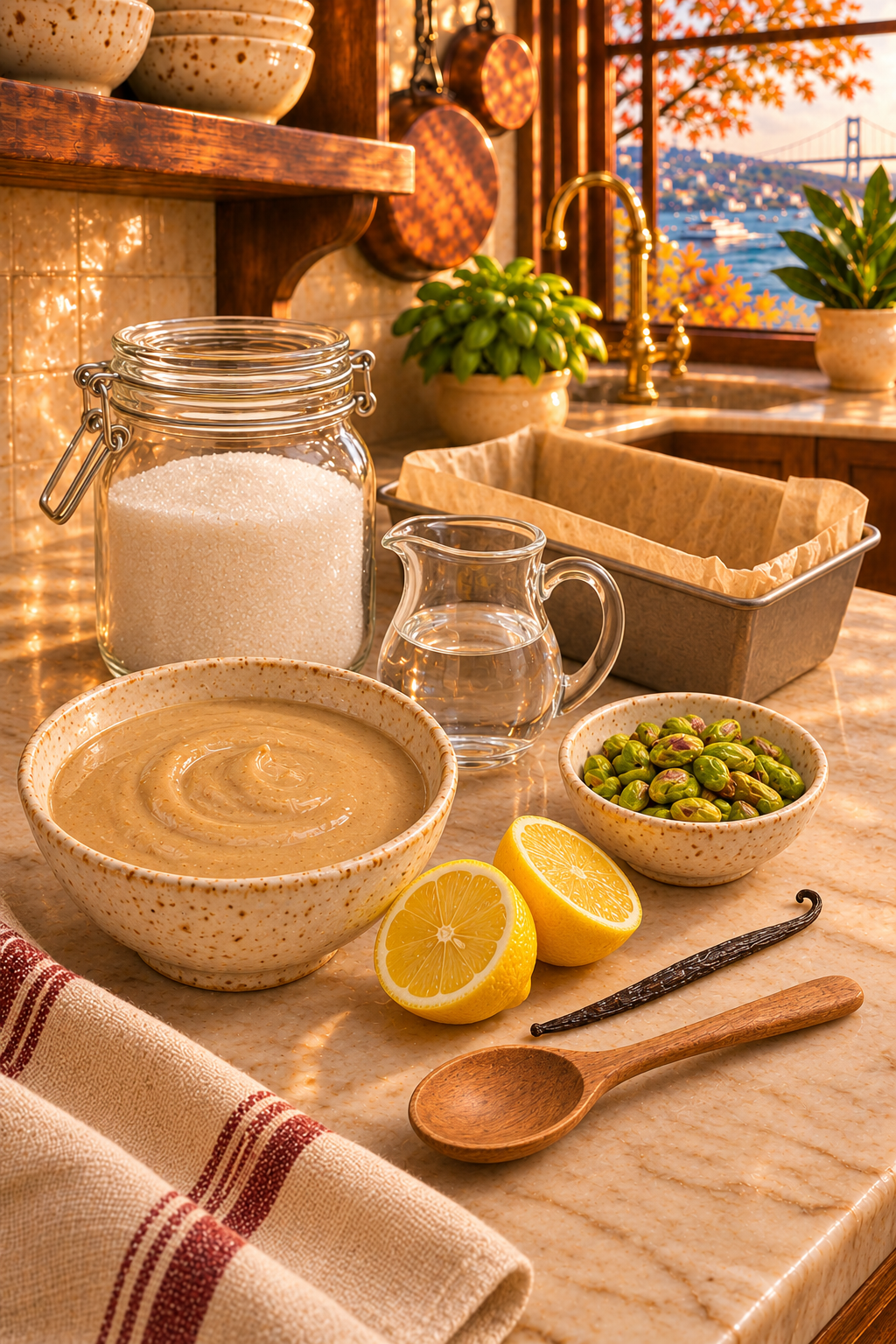
– 300 g tahini (at room temperature, stirred well with its oil)
– 250 g caster sugar
– 80 ml water
– 1 teaspoon lemon juice
– 1 teaspoon vanilla extract or 1 sachet of vanillin
– 1 pinch of salt
– 50 g shelled pistachios (optional; for cocoa halva, 2 tablespoons cocoa)
For warm serving:
– 2 tablespoons butter
– 4 tablespoons milk
– 2 tablespoons coarsely chopped walnuts
– 1 tablespoon ground pistachios
– Clotted cream or plain ice cream, and if you like, a teaspoon of grape molasses
Making the halva
1. Line a small tin or loaf tin with baking paper.
2. Put the tahini in a bowl; add the salt and vanilla and stir. If the tahini is cold, set the bowl over warm water for a few minutes; it should be just barely warm.
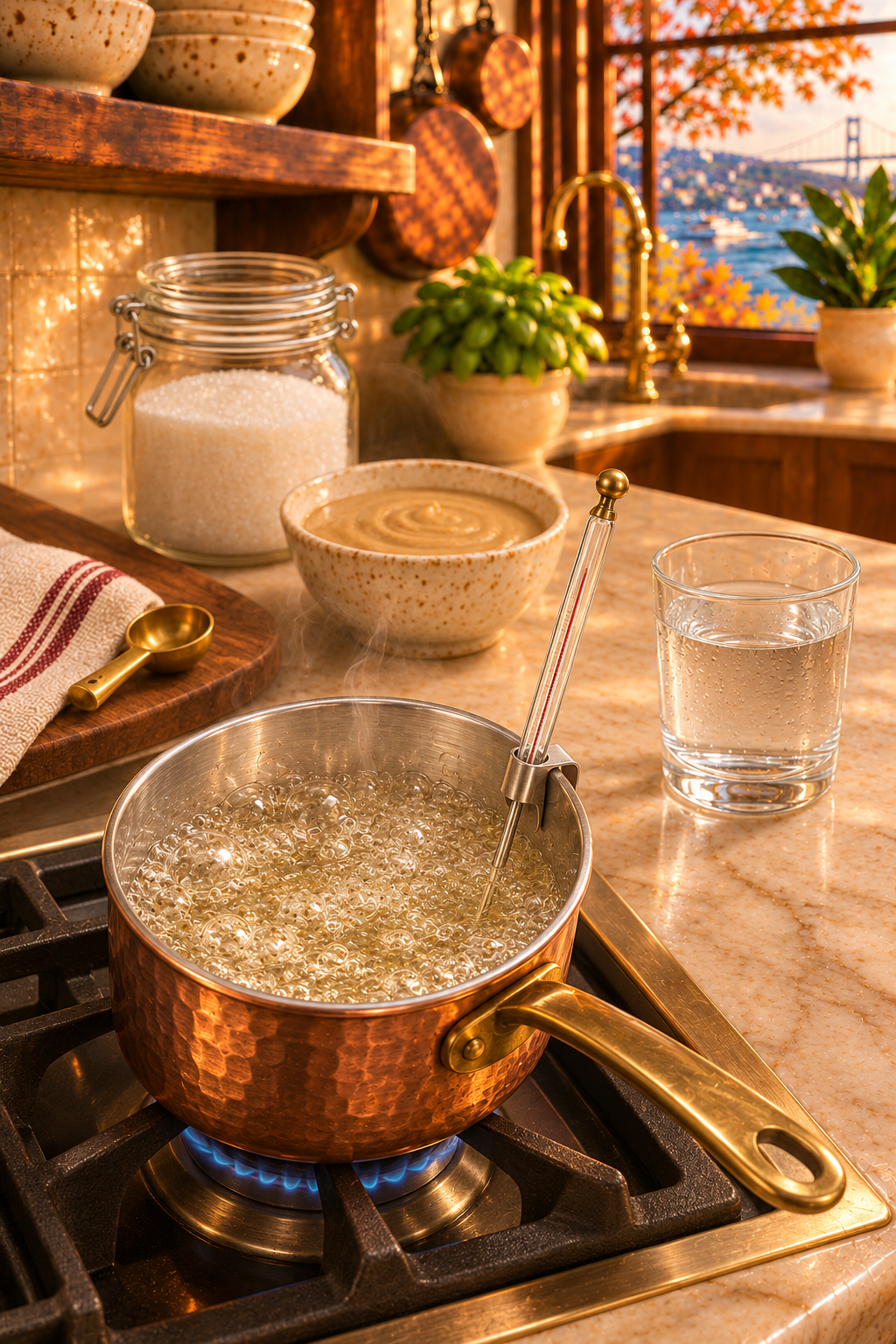
3. In a small pan, mix the sugar, water and lemon juice. Bring to the boil over a medium heat and do not stir once it starts boiling.
4. Cook the syrup for 8–10 minutes until it reaches the soft-ball stage (115–118°C). If you have no thermometer, drop a little into cold water: if it forms a soft ball between your fingers, it is ready.
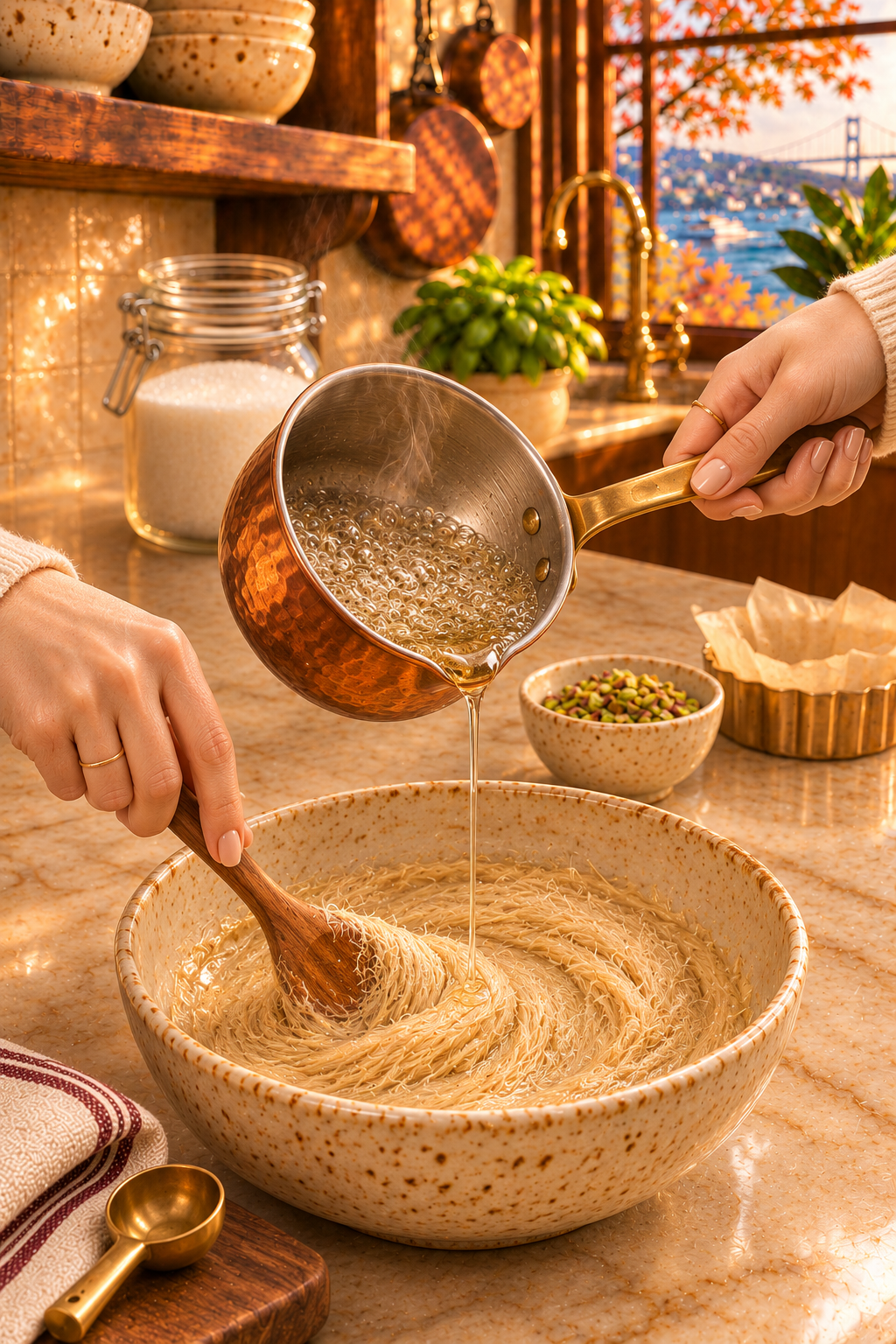
5. Take the syrup off the heat and pour it over the tahini in a thin stream, stirring constantly with a wooden spoon.
6. Within 1–2 minutes the mixture thickens, loses its shine and starts to separate into strands. At this point add the pistachios and stop stirring; over-mixing makes the halva oily.
7. Turn the halva into the tin straight away and press it down firmly with the back of a spoon. Leave it at room temperature for at least 4–6 hours, preferably overnight.
8. Turn it out of the tin. It keeps for 2 weeks in a closed container in a cool place.
Safety first: sugar syrup is very hot and burns by sticking to the skin. Be careful when pouring the syrup and keep children away from the stove.
Warm from the oven
1. Preheat the oven to 200°C.
2. Crumble the halva into large pieces with a fork.
3. Butter the insides of small earthenware dishes and divide the crumbled halva between them.
4. Add a few small pieces of butter and a tablespoon of milk to each dish; the milk lets the halva soften without drying out. Sprinkle the walnuts on top.
5. Bake for 8–10 minutes, until the edges are lightly browned and the centre is soft.
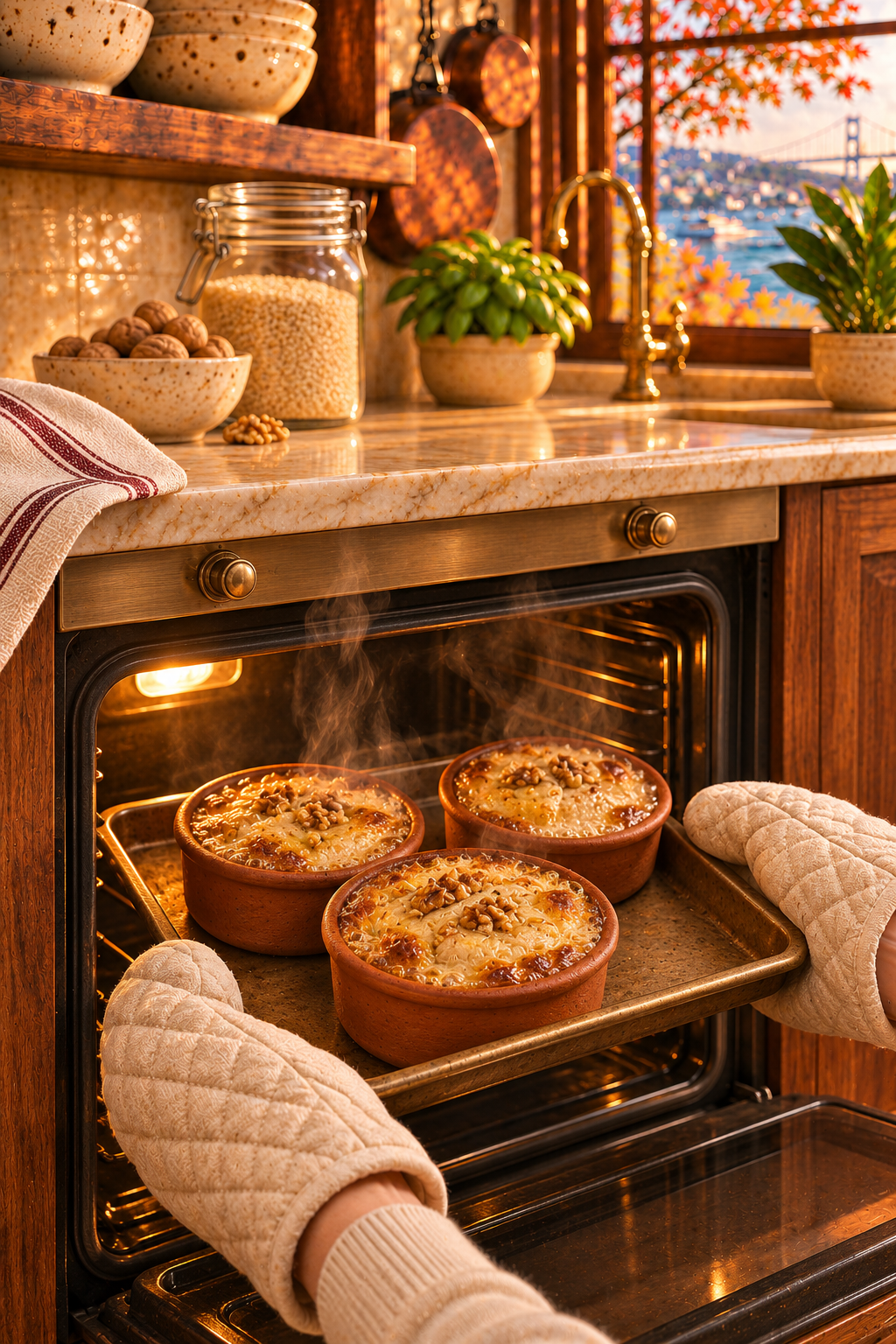
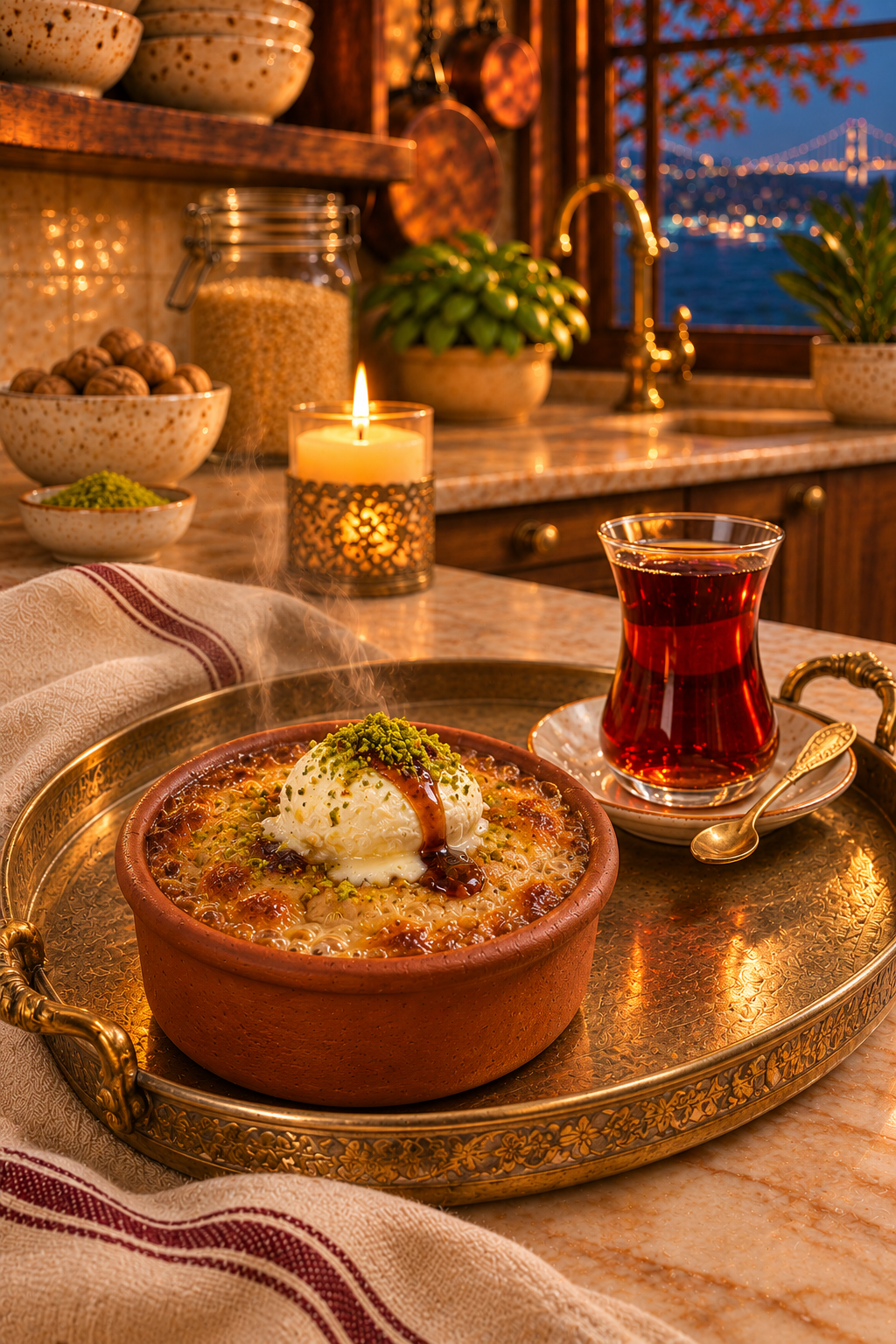
6. As soon as they come out of the oven, sprinkle with ground pistachios and add a spoonful of clotted cream or a scoop of ice cream; if you like, drizzle with a thread of grape molasses. Serve hot.
Zarif Yaşam tip: the secret of homemade halva is the consistency of the syrup. Undercooked syrup leaves the halva soft and sticky; overcooked syrup makes it hard. The soft-ball stage is exactly in between.
ZARİF KITCHEN NOTE
The November table is the table that carries the sea's generosity into winter. A soup steaming today, a jar of lakerda to open in a few weeks, bonito waiting on the shelf… Keeping the season's abundance is the loveliest way to share it again with the people you love.