
THE CULTURE OF LIVING
GRACE AT A FISH SUPPER
From the fish knife to the bones, from lemon to oysters: how to behave graciously at a beautifully set table?
Fish is the dish we are most hesitant about at the table. Bones, shells, lemon, knife and fork… When they all come together, even the most relaxed guest pauses for a moment. Yet the etiquette of a fish supper is not a set of strict rules but a few small courtesies: being at ease ourselves and putting the person beside us at ease. This month we set a fish supper in the Zarif Table section; now we talk about how to sit down at that table.
THE FISH KNIFE AND FORK
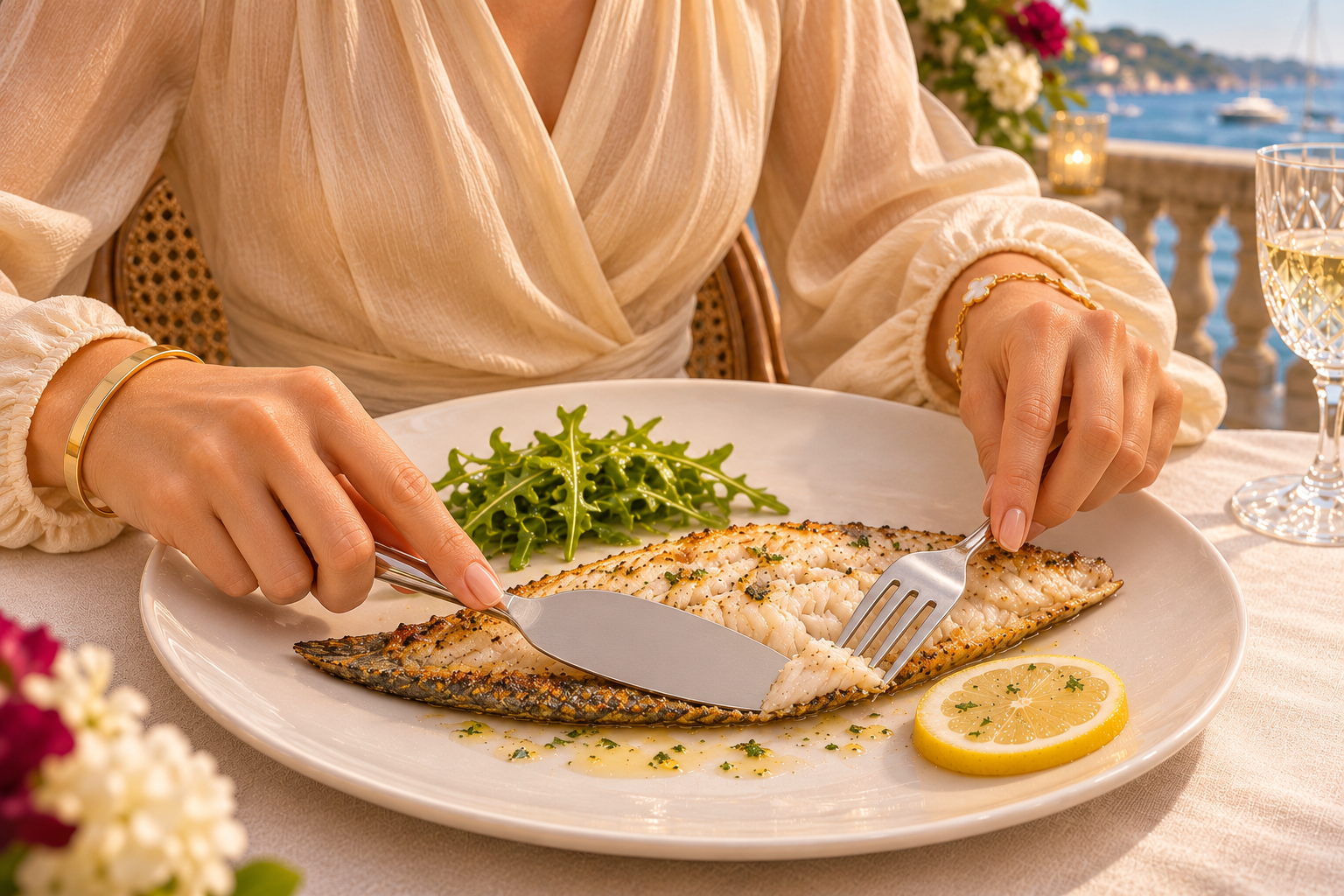
Unlike other knives, the fish knife is not sharp. Its broad, curved blade is for separating the flesh from the skin and bones and placing it on the fork. It also helps lift small bones and gather the sauce.
– Hold the knife lightly in your right hand, like a pen; the fork in your left.
– Separate the flesh by gently sliding the blade, not by cutting.
– If there is no fish knife, fish can be eaten with two forks: one holds the flesh, the other separates it. This is an older method than the fish knife and is still considered very elegant today.
– When you have finished, lay the knife and fork side by side on the plate with their tips pointing the same way; this shows the server that the plate can be cleared.
BONES
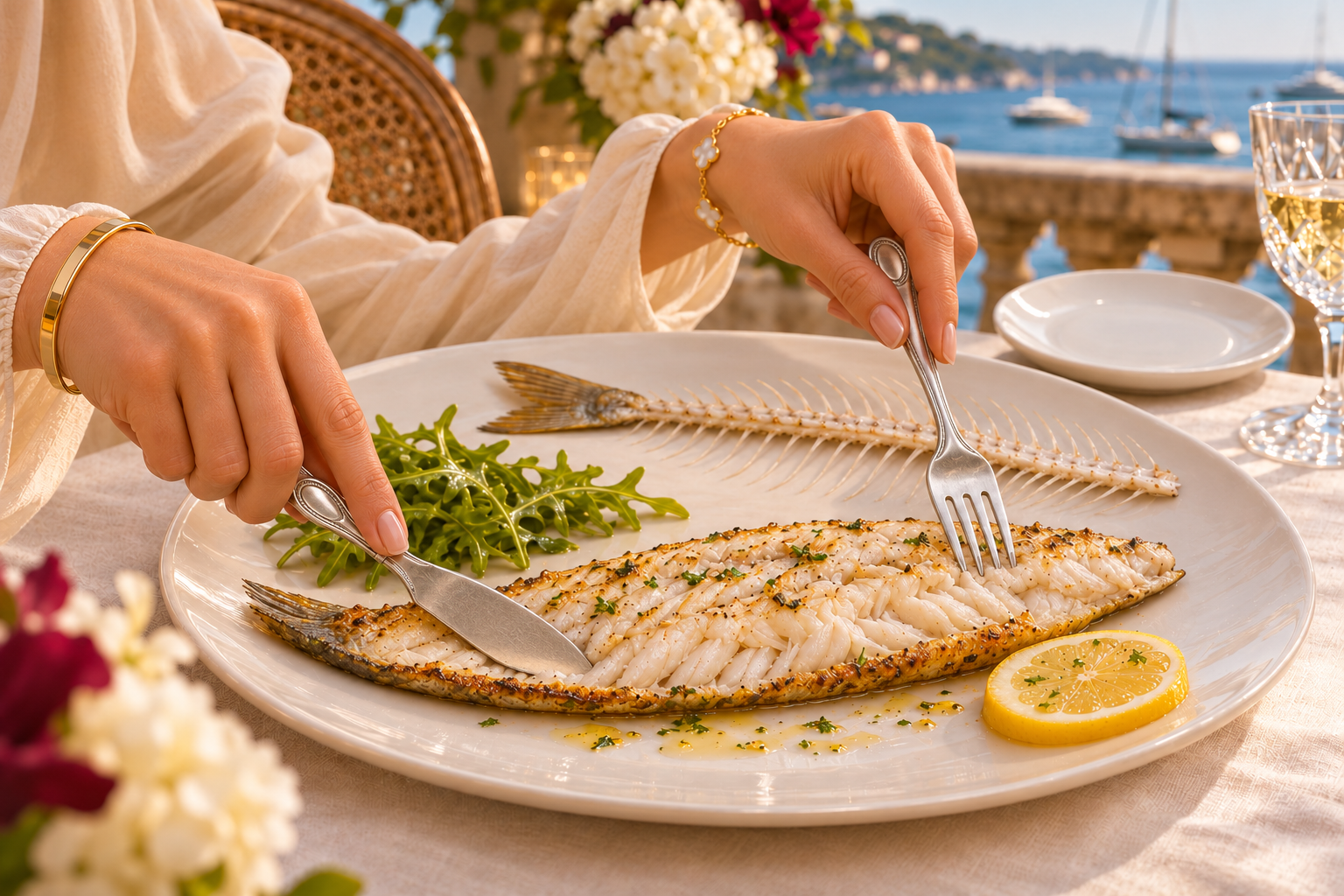
Bones are the most frequently asked-about subject at a fish supper.
– When eating a whole fish, start at its back and work along the spine from head to tail in small mouthfuls.
– Do not turn the fish over. When you have finished one side, gently lift the spine and take the flesh beneath; leave the spine and bones at one side of the plate.
– If a bone gets into your mouth: don't panic. Calmly remove it with your index finger and thumb and place it on the edge of the plate. Do not spit into your napkin. The conversation can go on, and your eyes can stay on the person in front of you.
– If there is a small plate or bowl on the table for bones, use it.
LEMON AND MEZE
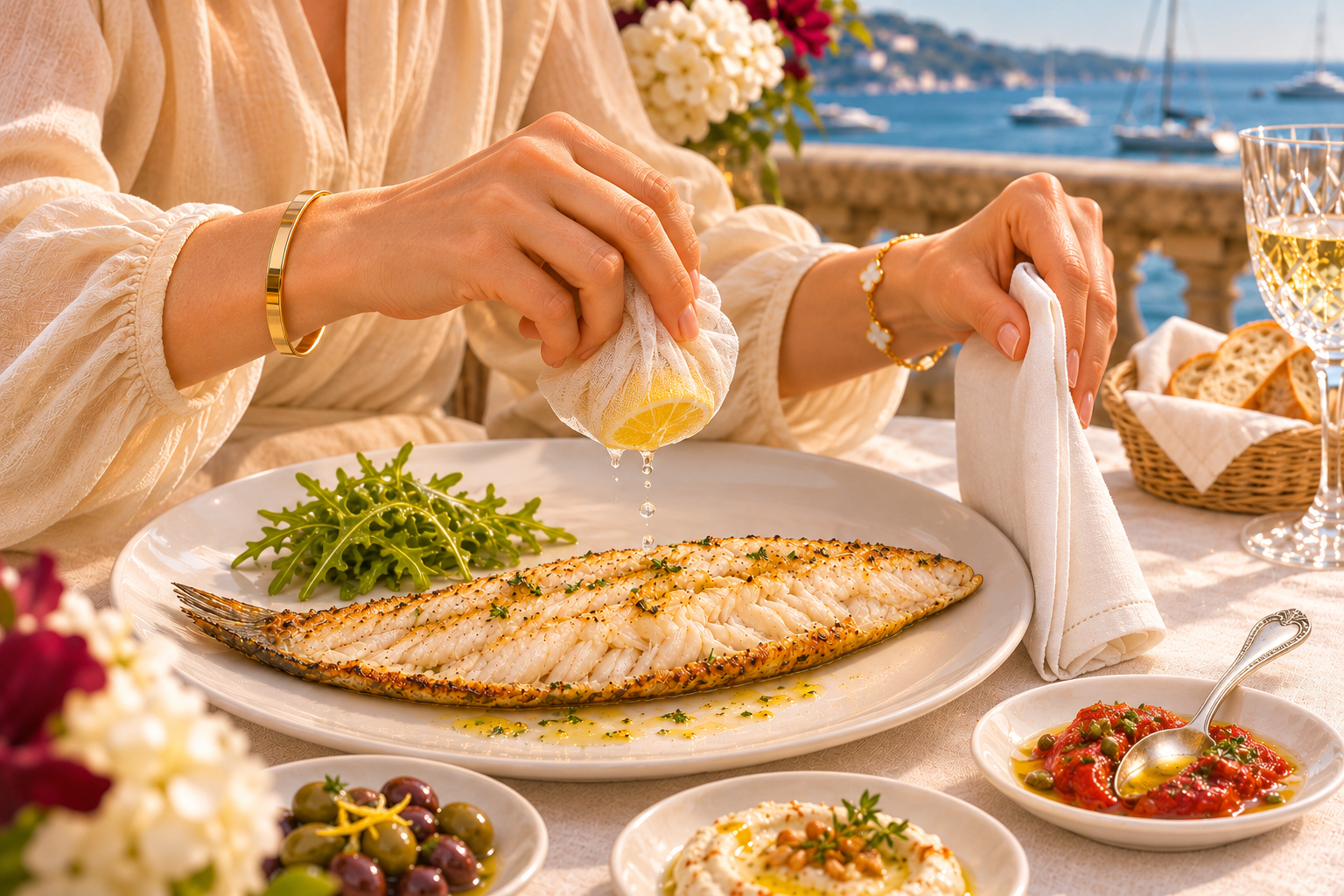
– When squeezing lemon, shield it with your hand or your napkin so it doesn't splash those beside you. If possible, serving lemon wrapped in muslin or a small lemon bag makes this both easy and elegant.
– With shared meze, everyone should help themselves with the serving spoon or fork, not their own fork.
– Instead of biting into bread, break off small pieces to eat.
SHELLFISH
Mussels, oysters and lobster are the showy guests of a fish supper.
– Oysters: hold the shell in one hand, loosen any small fragments of shell with the oyster fork, squeeze over a little lemon if you like, then bring the shell to your lips and let the oyster slide in.
– Mussels: you can eat them with a fork or by using an empty mussel shell like tweezers. Leave the empty shells on the separate plate or bowl on the table. Do not eat a mussel that has not opened.
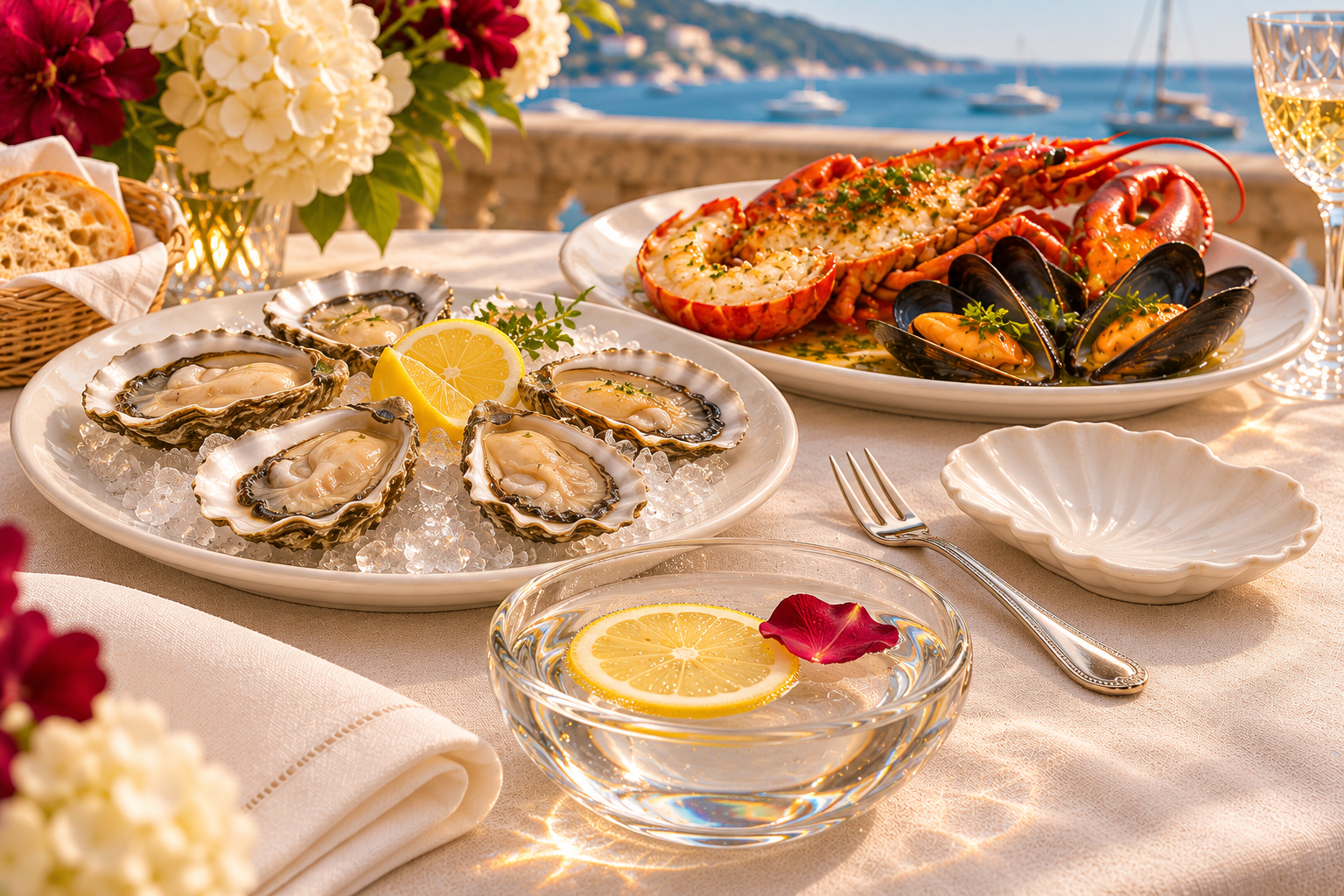
– Lobster: usually arrives split in half; it is eaten with knife and fork, or with a fork alone. A lobster cracker comes to the table for the claws: place the claw in the cracker and squeeze slowly and with control; when the shell cracks, take out the meat with the lobster pick (a thin, long, two-pronged tool). While squeezing the cracker, you can lightly cover the claw with your napkin so the shell doesn't spray onto the table or your neighbours. Be generous enough to leave a little, but measured enough not to seem insatiable.
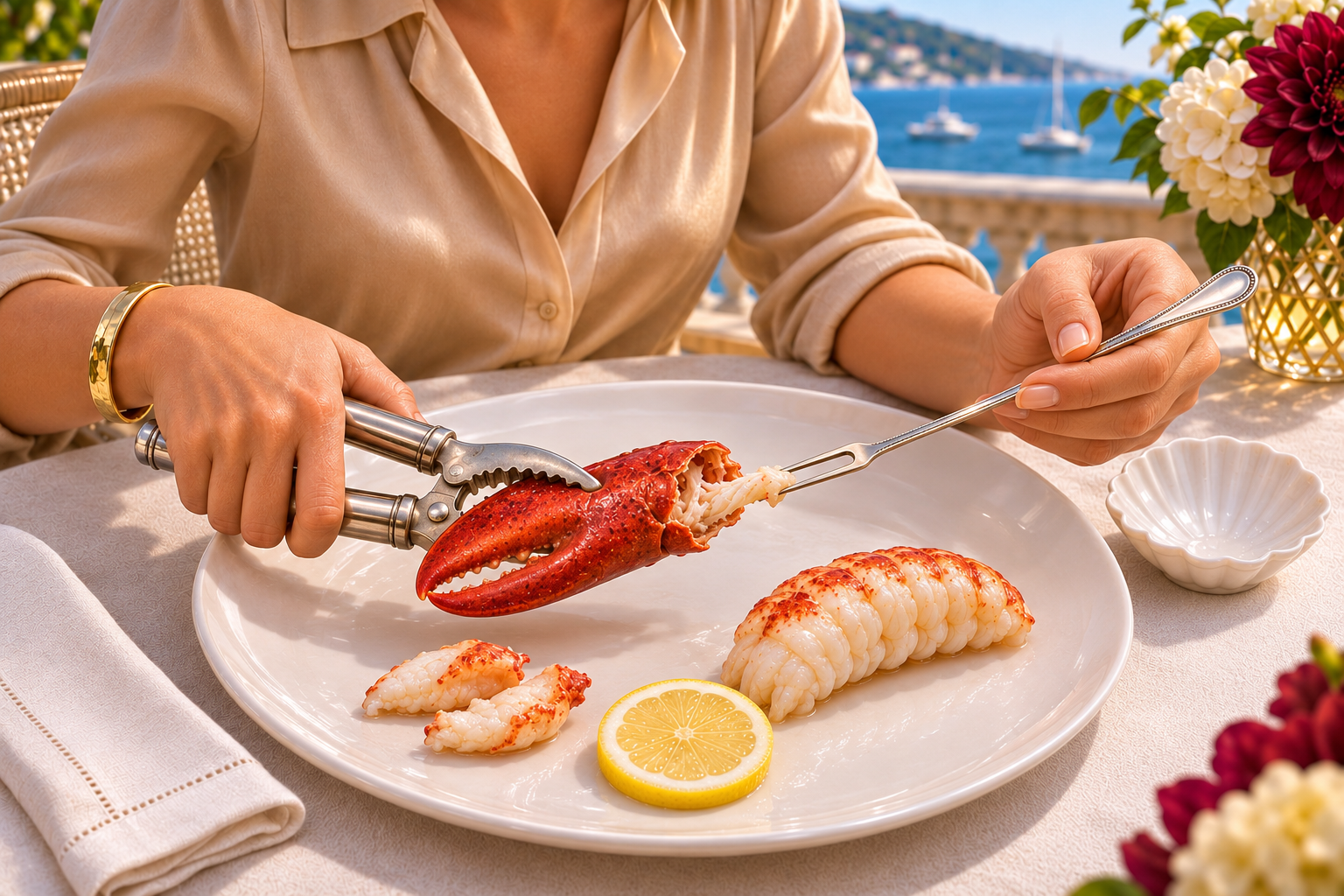
– Whole lobster: it is eaten by taking it apart from the body.
1. First twist off the two claws where they join the body.
2. Crack the claw with the lobster cracker; take out the meat with the lobster pick, making sure to get all the meat inside the claw.
3. Twist the tail away from the body; open the shell on the underside of the tail and lift out the meat whole with the fork.
4. Use the tip of the fork or the lobster pick for the thin legs and small joints.
5. Leave the empty shells and pieces of shell in a separate bowl; not in the middle of the table.
Each part of the lobster has a different taste:
– Claw: sweet, silky and very tender; delicate meat with fine fibres.
– Knuckles (where the claws and legs join): the sweetest and most tender parts; small, but the morsel lobster lovers seek most.
– Tail: plump, firm and lightly sweet; it carries a lightly salty taste of the sea. Most of the meat is here.
– Legs: thin, sweet and full of lobster flavour, but with little meat.
– The green part (the soft, greenish part in the body): it has a very intense, salty and metallic taste; it is optional and eaten only in tiny amounts. Some health authorities advise against eating this part often or in quantity; pregnant women and children should not eat it.
– Roe (in females, small dark red beads in the body or on the tail): a lightly salty taste of the sea that pops gently between the teeth; eaten on its own or stirred into butter.
In short, the meat itself is sweet; what is salty is the green part and the roe.
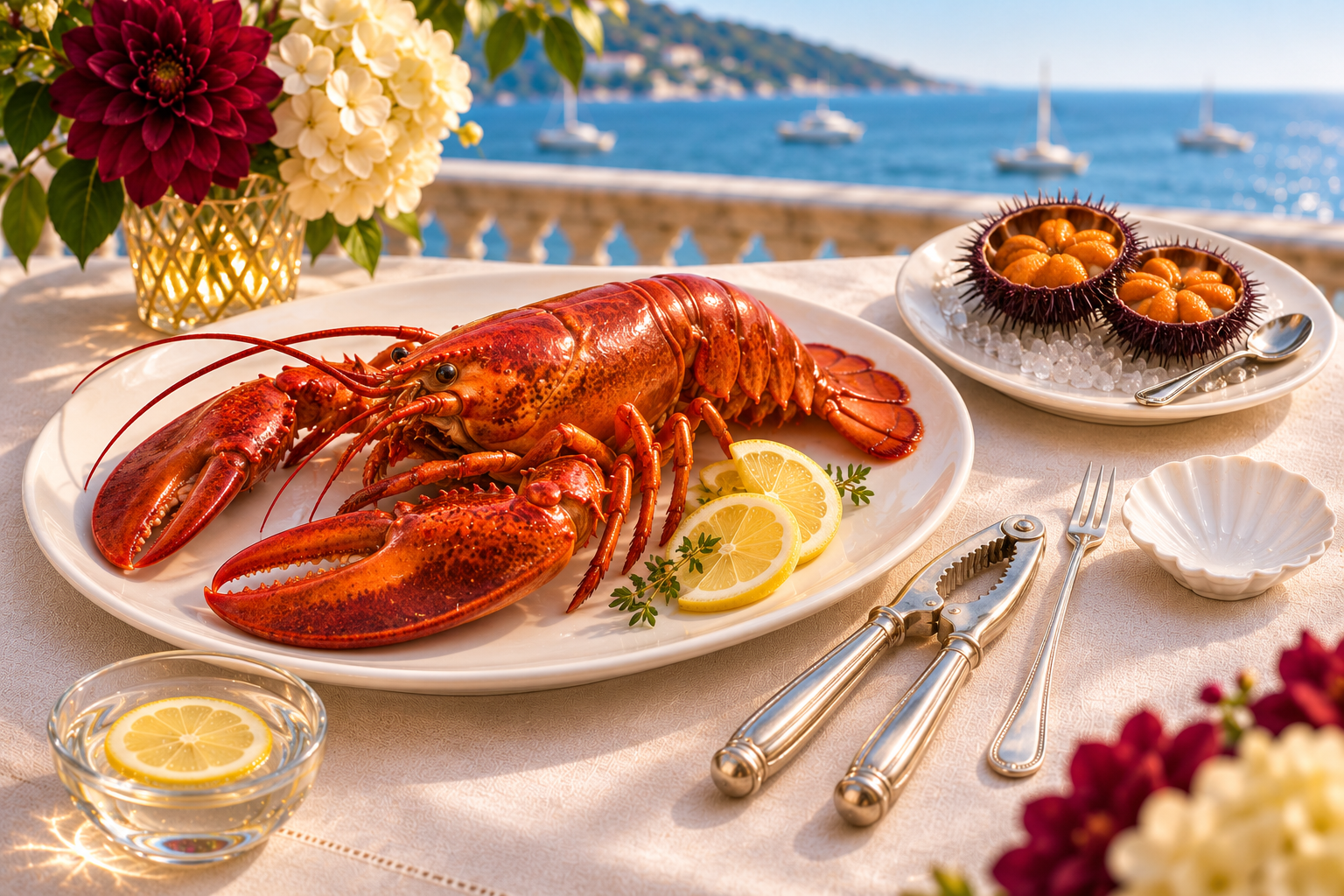
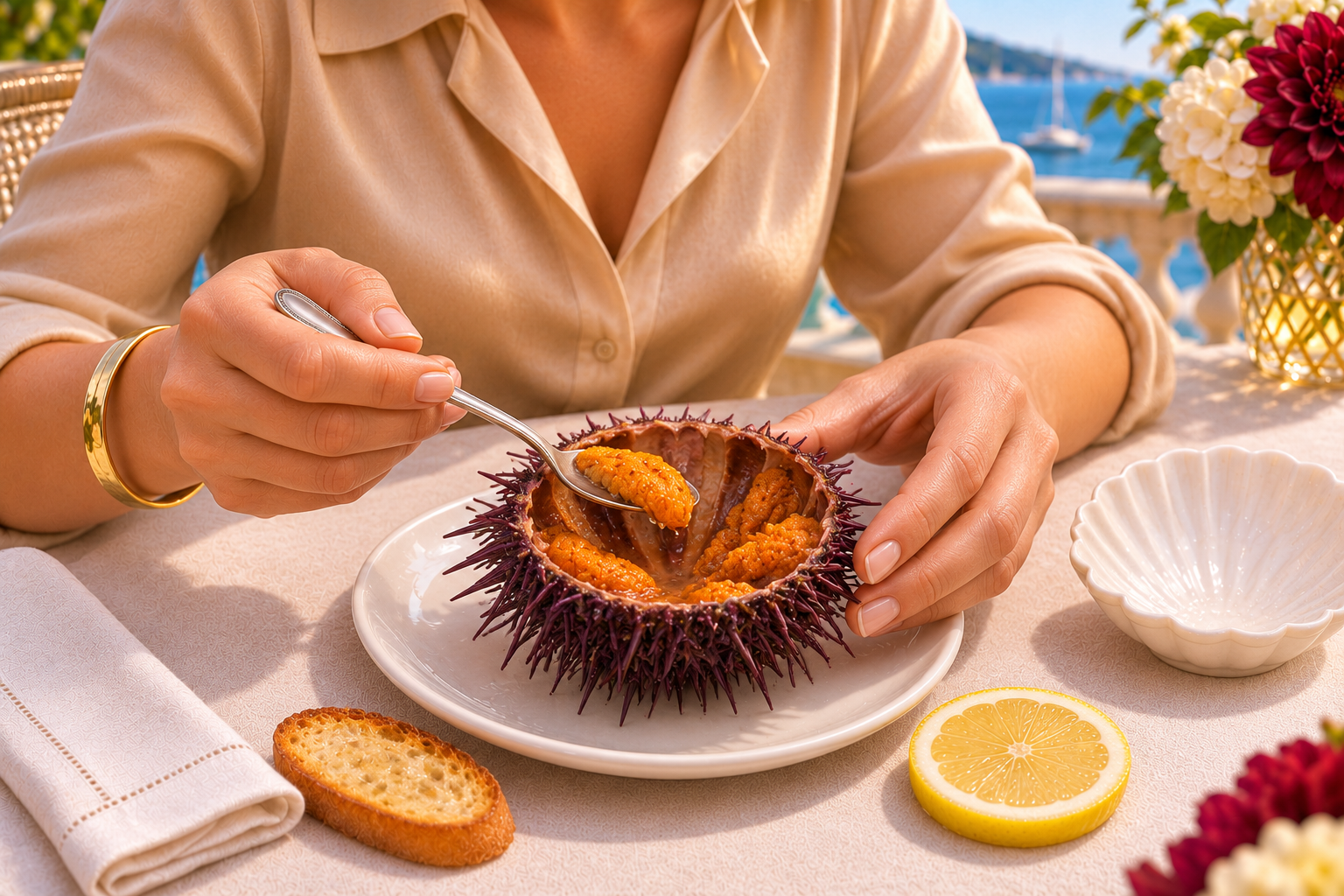
– Sea urchin: usually served raw in its half shell. Hold the shell in one hand and with a small teaspoon take out the soft orange parts (the edible part) one by one; squeeze over a few drops of lemon if you like. It can be eaten with bread or crackers. Leave the empty shell on a separate plate.
– Prawns: pull off the head and tail and peel the shell from the underside. The tails go on your own small plate, not on the shared serving platter.
– Finger bowl: after the shellfish, a small bowl of water with a slice of lemon and perhaps a flower petal may come to the table. Dip only your fingertips in the water and dry them with your napkin.
Note: raw seafood such as oysters, mussels and sea urchins is not suitable for pregnant women, young children or people with weakened immunity; always buy from a trusted source and check that it is fresh.
HOST AND GUEST

– The host serves the fish at the table or in the kitchen if possible; puts a small portion on the guest's plate first and offers more as needed.
– With a whole fish, it is courteous to wait until the host has taken the first bite. The host says to the guest, "Shall we begin?"
– If a guest is put in an awkward position by a bone, the host quietly passes a fresh plate or napkin; and does not make a fuss.
– For guests who are very particular about bones, you can also put filleted fish on the table; this is considered not a shortcoming but a courtesy.
WHAT NOT TO DO AT THE TABLE
– Pulling the fish apart with your hands (except at relaxed, informal tables where fish is eaten freely and in abundance).
– Leaving a bone from your mouth in your napkin or in the middle of the plate.
– Putting shells on the shared serving platter.
– Squeezing lemon directly onto the fish on someone else's plate, without asking.
ZARİF YAŞAM NOTE
The etiquette of a fish supper is more a spirit than a rule: valuing both the meal and the person beside us. Holding the knife correctly, removing a bone quietly, squeezing the lemon gently are very small things; but these small things are what make an evening remembered.