ZARİF MOVEMENT
THE GRACE OF SLOW MOVEMENT
Balance and calm with Tai Chi at home; light and energy outdoors with winter walking and Nordic Walking.
In October we prepared the body for winter with strength, posture and balance. In November we change the pace of movement. As the days shorten and the air cools, the body needs not only strength but also fluidity, breath and a few bright hours spent outdoors.
This month we suggest two paths: slow, flowing Tai Chi movements in a warm corner of the home, and on the days the weather allows, a properly dressed, enjoyable winter walk.
PART 1 · TAI CHI AT HOME
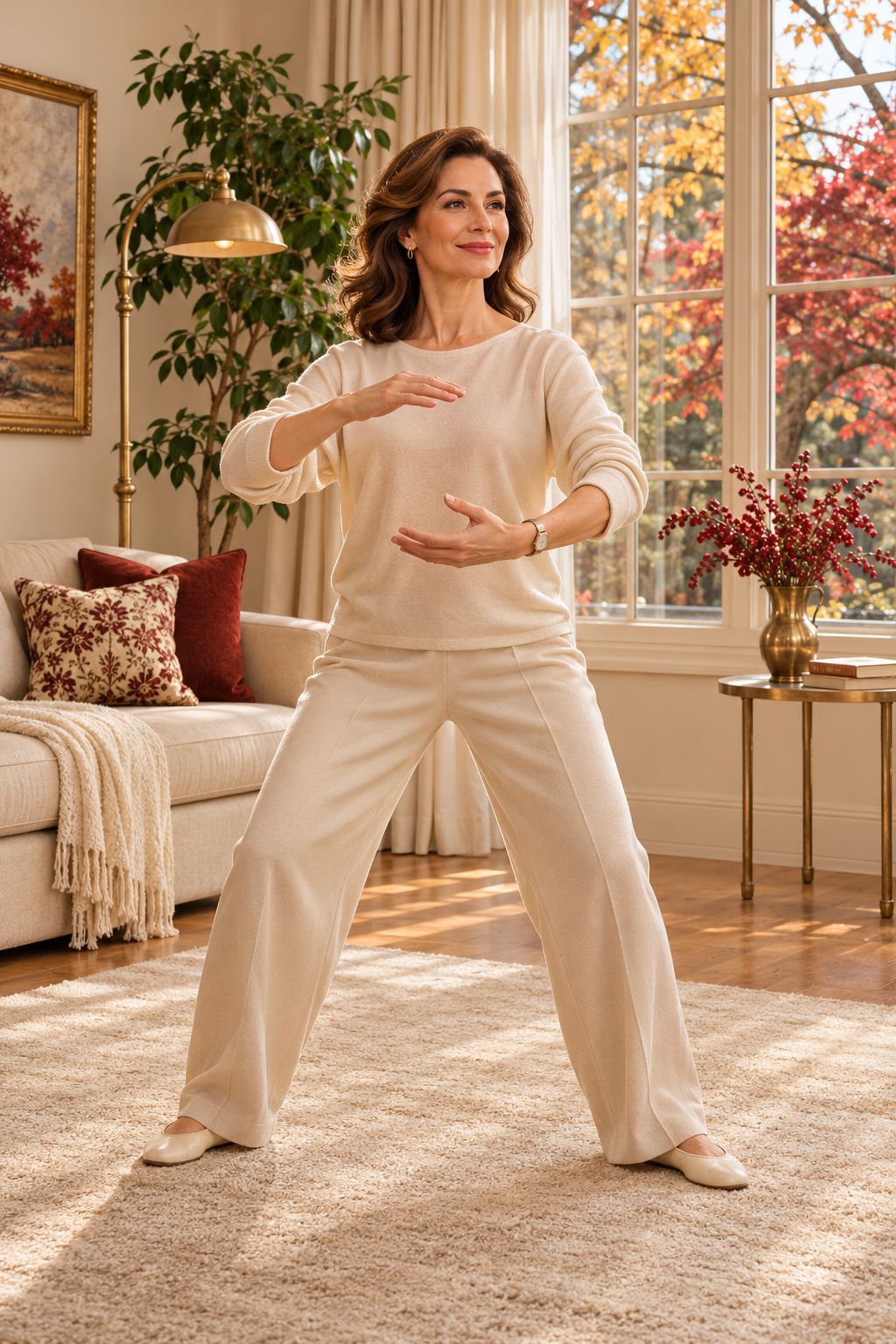
Tai Chi is an art of movement practised in China for centuries, made up of slow, continuous movements in harmony with the breath. It is not fast and it does not make you sweat; but it teaches you to carry the body with attention and to shift your weight from one foot to the other with control.
Why Tai Chi?
– Balance: research shows that regular Tai Chi practice improves balance, especially in later life, and helps reduce the risk of falls.
– Gentle on the joints: there is no jumping or sudden movement; it can be done without loading the knees and lower back.
– Calm: slow movement and deep breathing help release the tension that builds up during the day.
– Anywhere: a space the size of a rug and comfortable clothing are enough.
Before you begin
– Wear comfortable, loose clothing and non-slip socks or flat-soled shoes.
– Do the movements unhurriedly, together with your breath: breathe in as the arms rise, breathe out as they lower.
– Keep the knees slightly bent; do not lock them.
– If you are unsure of your balance, keep the back of a chair beside you.
A 10-MINUTE HOME TAI CHI
1. Preparation Stance (Wu Ji)
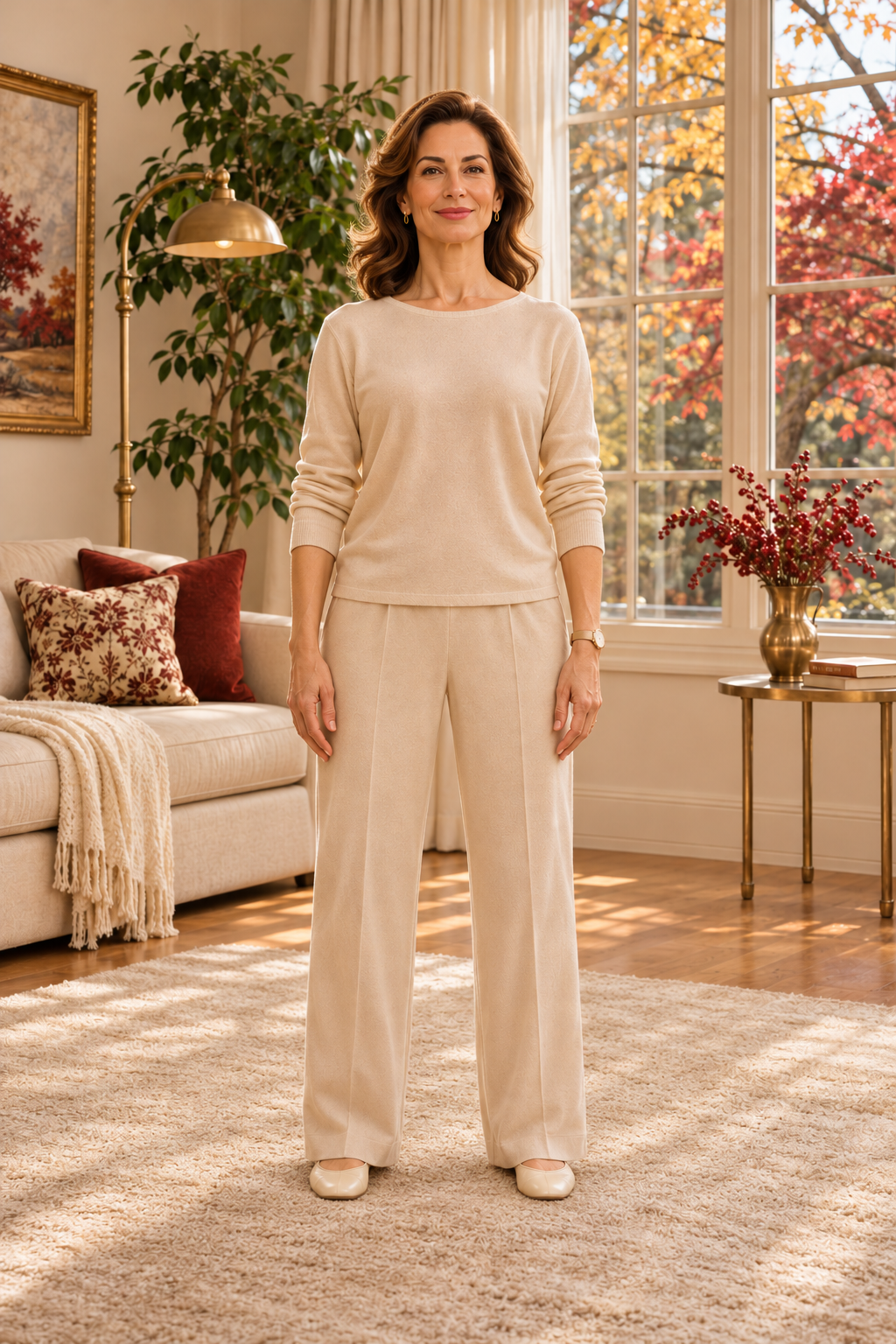
Feet hip-width apart, knees slightly bent, arms relaxed at your sides. Imagine yourself lengthening upwards from the crown of your head. Soften your gaze and take five deep breaths.
What it gives you: gathers the body and slows the breath.
2. Beginning: Raising the Arms (Qi Shi)
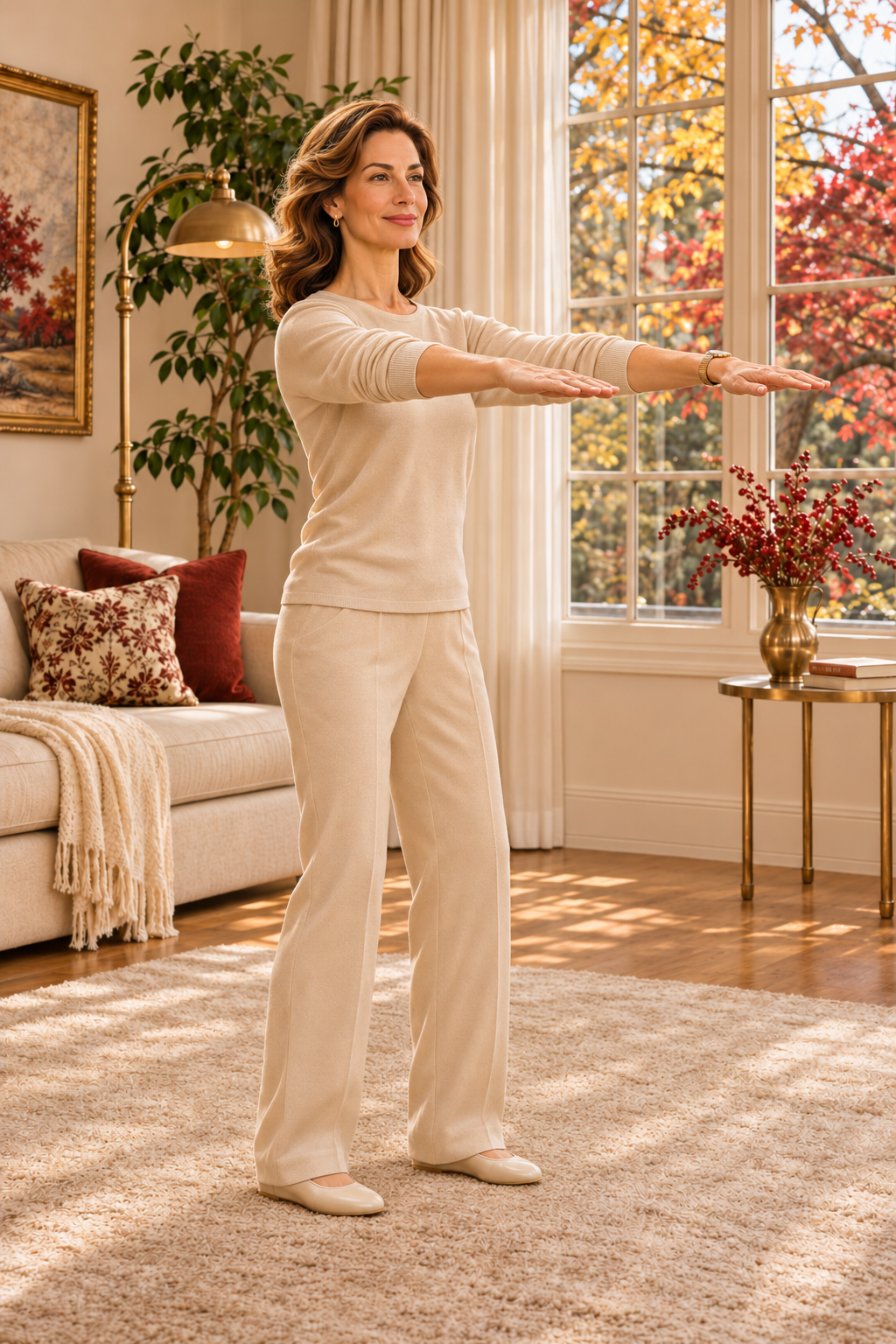
As you breathe in, slowly raise the arms forward to shoulder height, palms facing down. As you breathe out, bend the knees a little more and lower the arms to hip height. 6 times.
What it gives you: relaxes the shoulders and joins breath with movement.
3. Cloud Hands (Yun Shou)
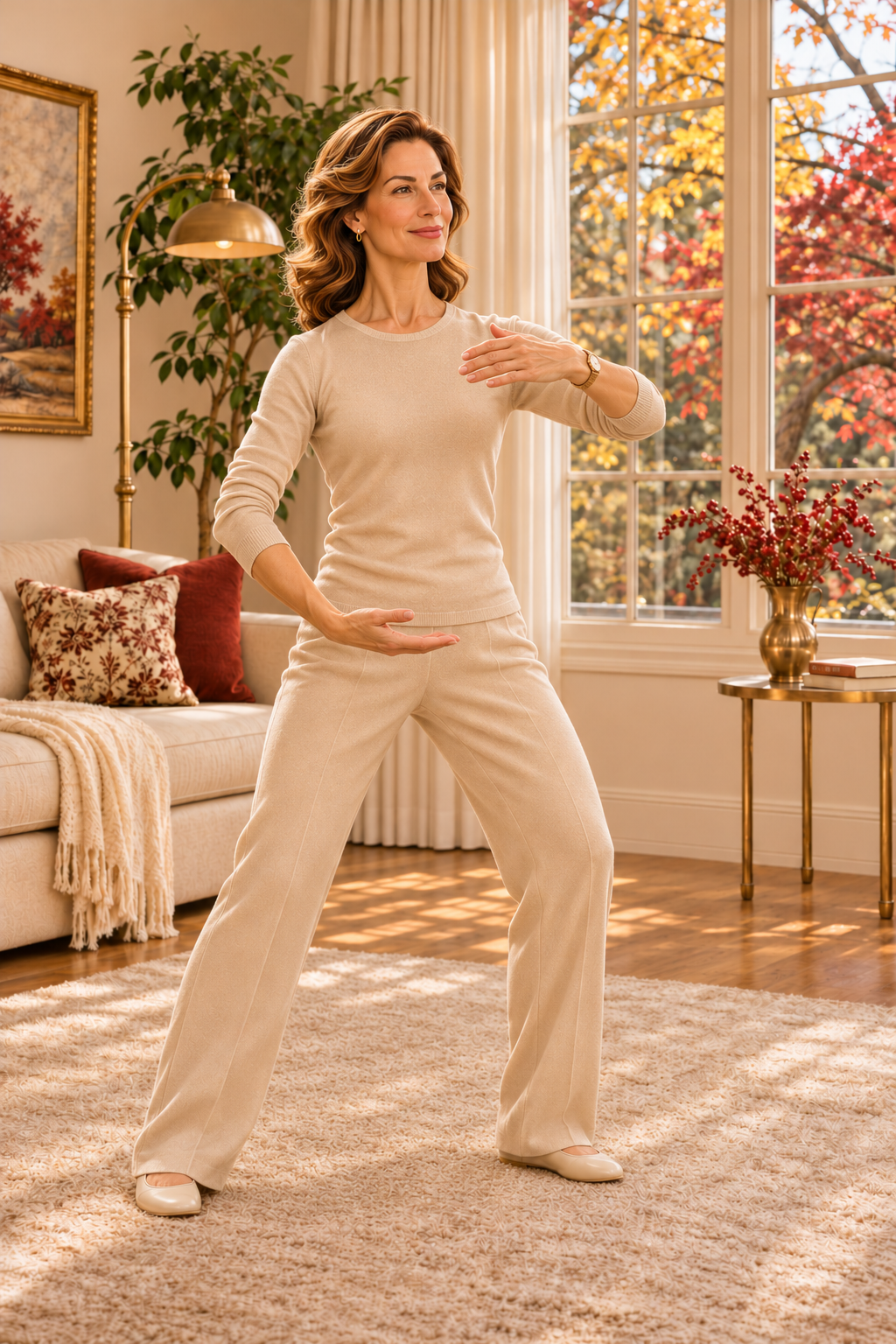
As you shift your weight from one foot to the other, move your arms in circles in front of your chest, as if slowly turning the clouds in the air. Let the waist follow the arms. 6 times in each direction.
What it gives you: improves weight transfer, trunk rotation and coordination.
4. Parting the Horse's Mane
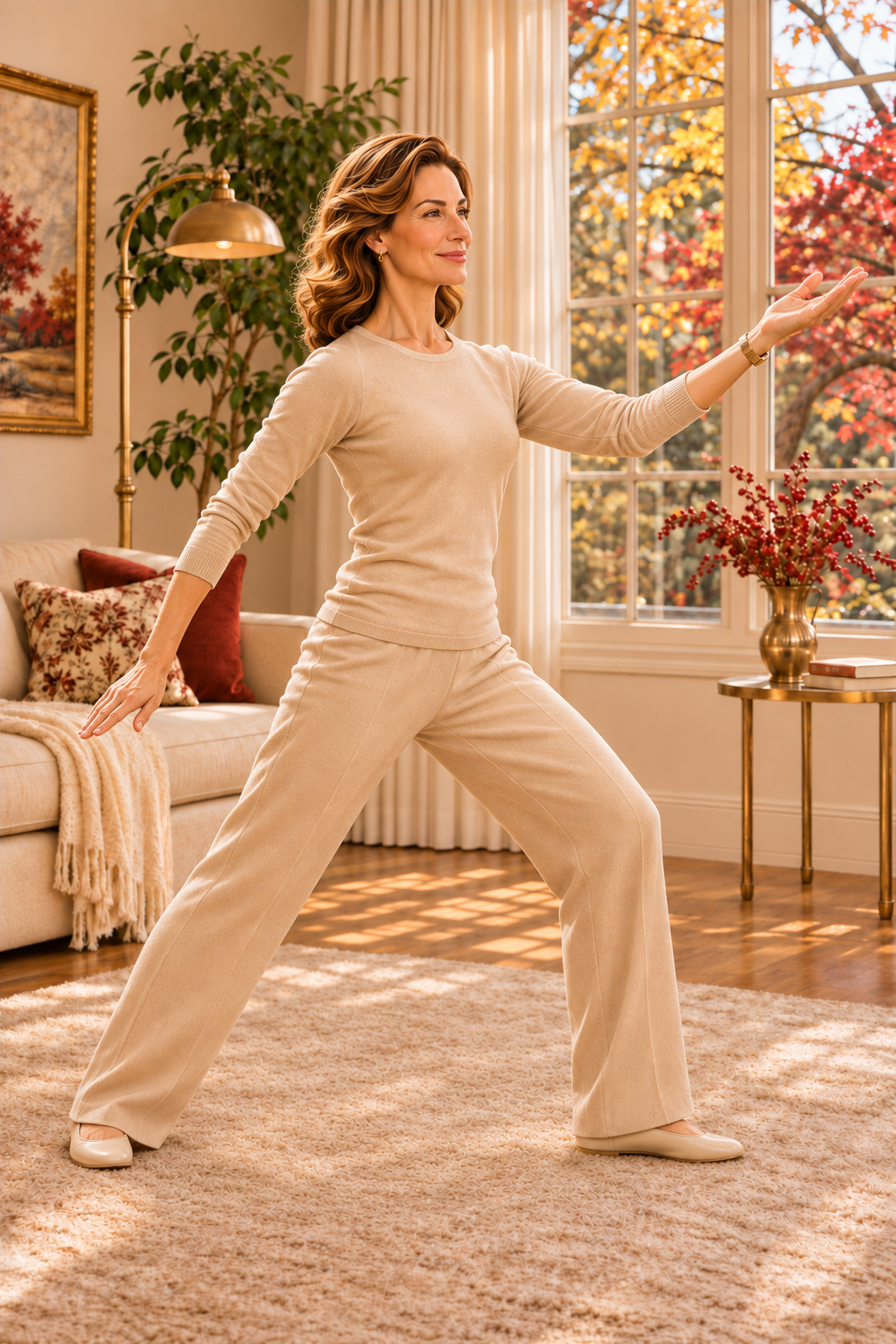
As you step forward, open one arm up and forward and the other down and back, as if parting a horse's mane with both hands. Let the weight move slowly onto the front foot. 4 times on each side.
What it gives you: leg strength, step control and balance.
5. White Crane Spreads Its Wings
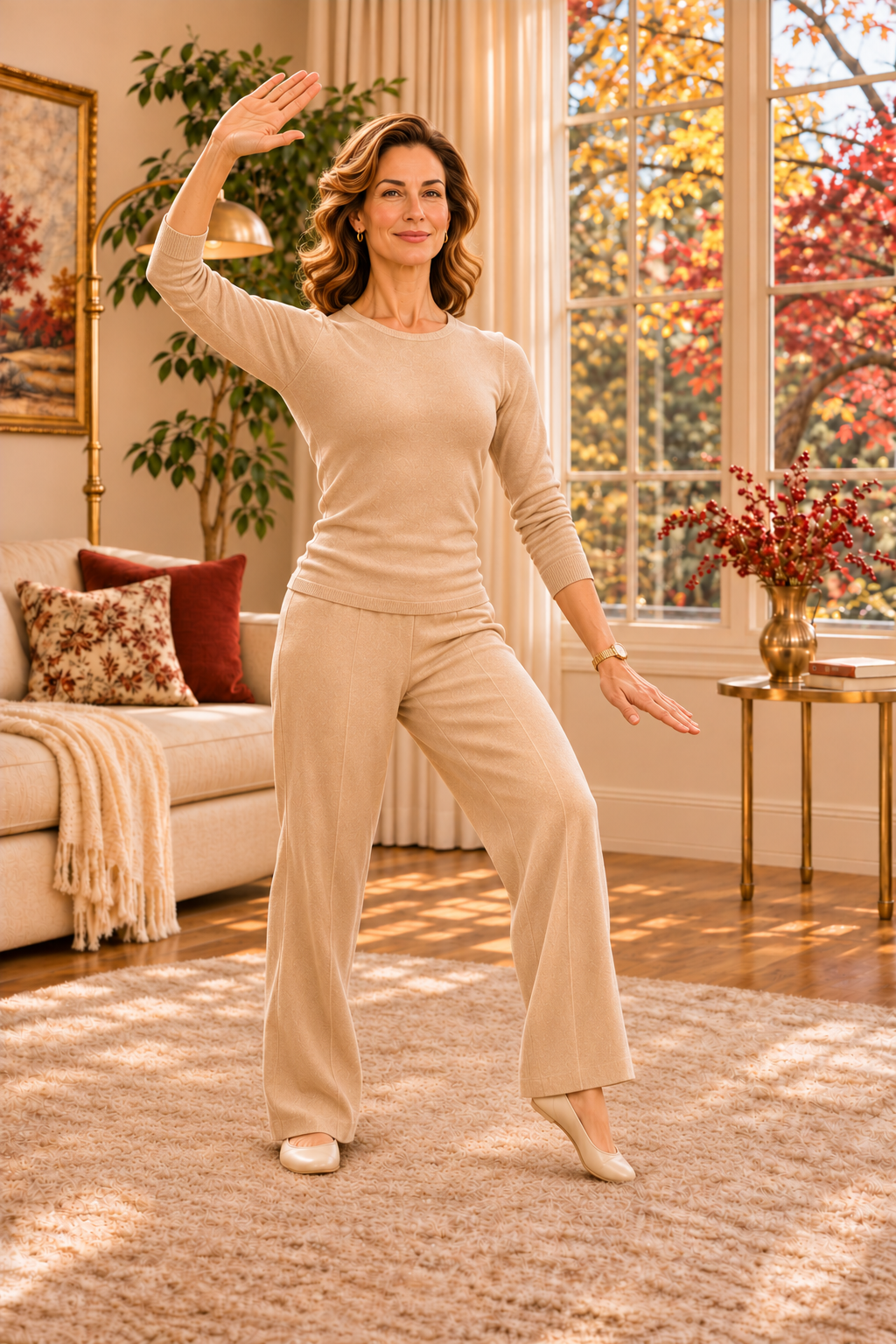
Weight on the back foot, only the toes of the front foot touching the floor. As one arm rises in front of the forehead, let the other hand lower beside the hip. Open the chest, stand tall and hold for three breaths. 3 times on each side.
What it gives you: opens the posture and prepares balance on one leg.
6. Golden Rooster Stands on One Leg
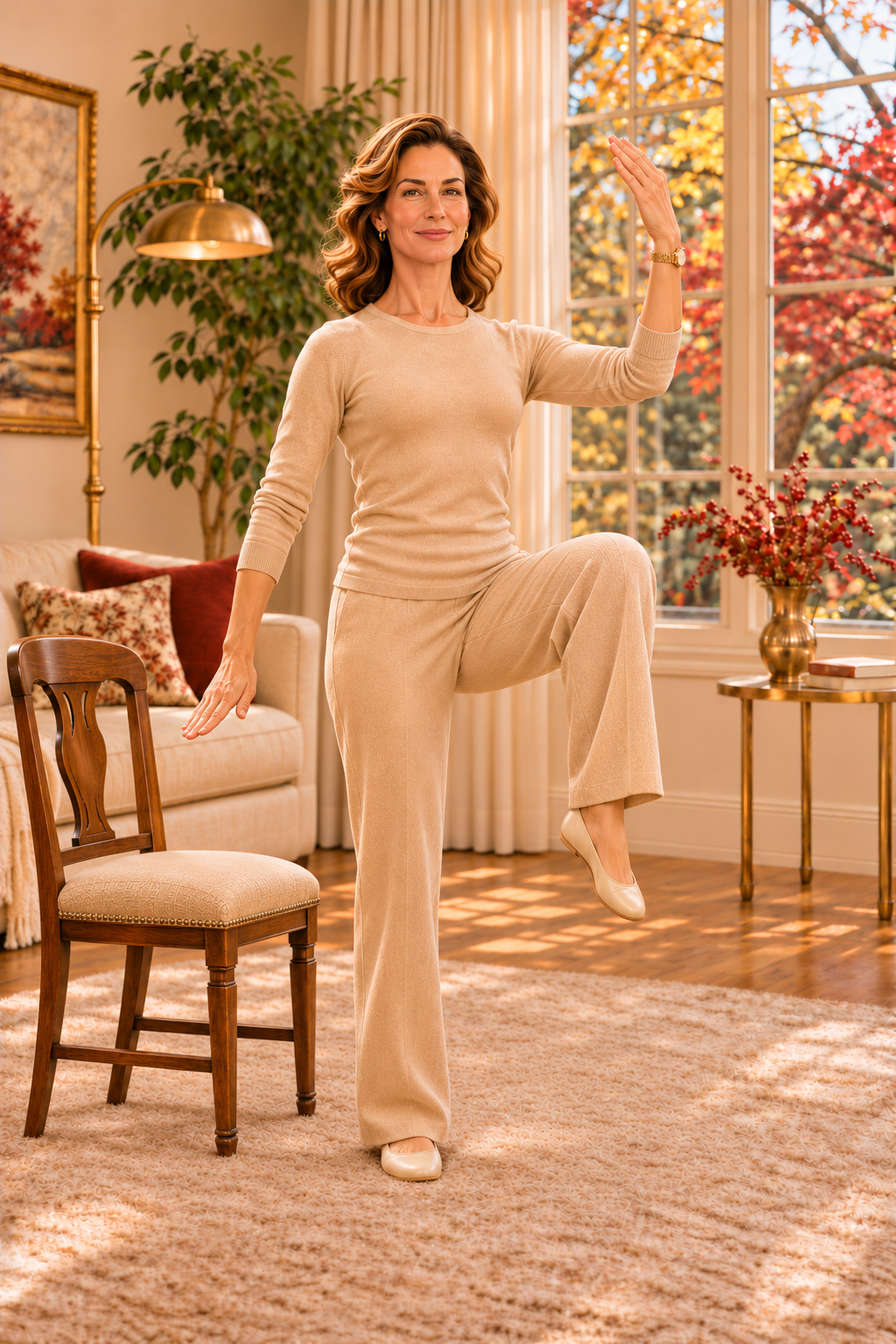
Put your weight onto one foot and slowly raise the other knee towards hip height; let the arm on the same side rise. Hold for three breaths, then lower slowly. 3 times on each side. Use a chair for support if needed.
What it gives you: strengthens ankle, hip and core balance.
7. Closing (Shou Shi)
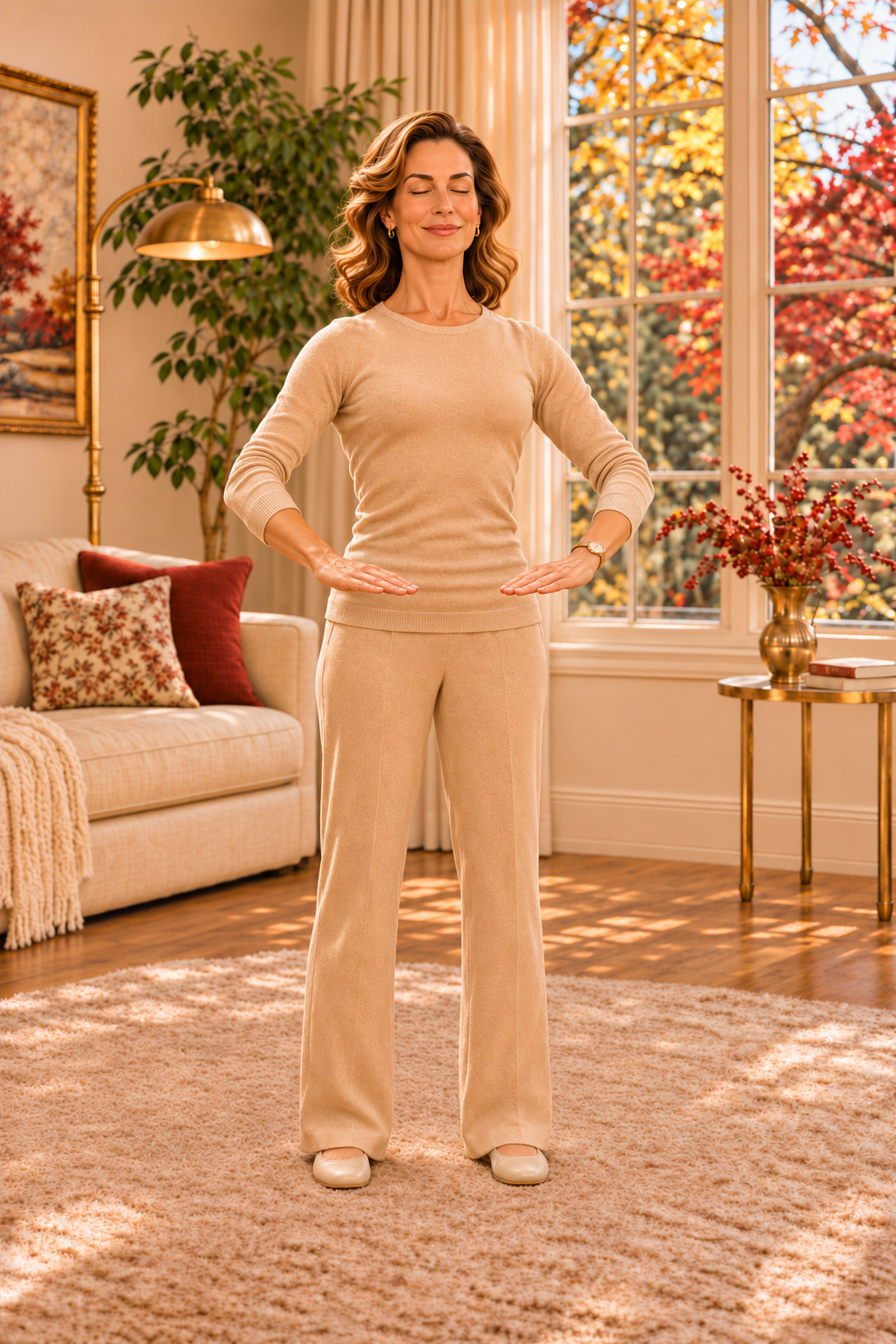
Bring the feet back to hip width. As you breathe in, raise the arms up from the sides; as you breathe out, lower your hands slowly in front of the chest. 3 times. Stand still for a while and feel the warmth of your body.
What it gives you: brings the movement to a calm close.
Zarif tip: in Tai Chi, what matters is not the size of a movement but its flow. Move slowly, as if you were in water.
PART 2 · WINTER WALKING AND NORDIC WALKING
Going out in the winter months can feel hard; but a walk in daylight revives both the body and the mood. In this issue's Health & Longevity section we look separately at the importance of winter light.
Walking well in winter
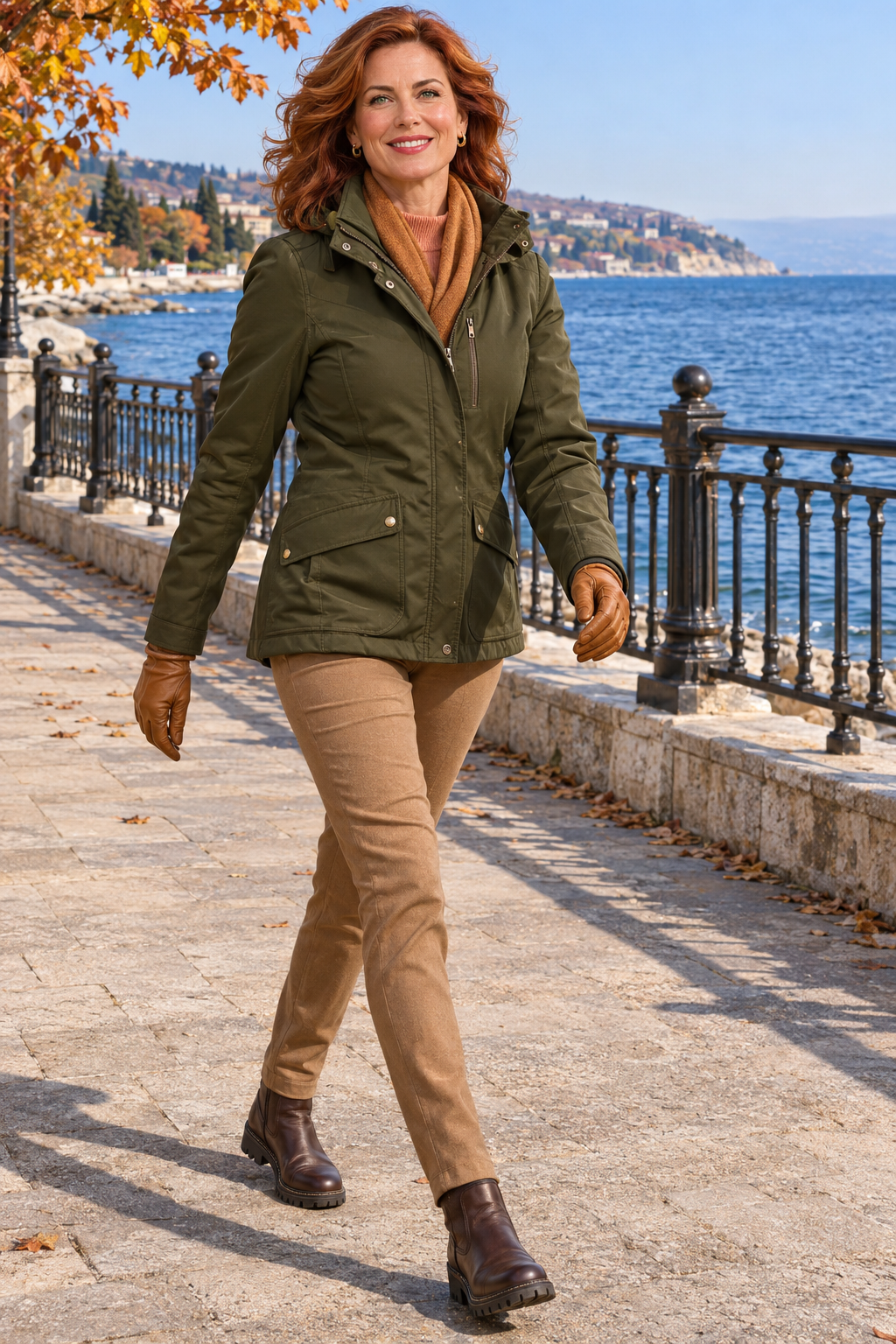
– Choose the brightest hours of the day: walk in the late morning or at midday.
– Start by warming up: walk slowly for the first five minutes, then pick up the pace.
– Dress in layers: a thin inner layer, a warm middle layer and a windproof outer layer. The layering rules in this issue's Fashion & Style section apply to walking too. Don't forget a hat, gloves and a scarf; you can remove a layer as you warm up.
– Take care with your shoes: choose non-slip, waterproof soles.
– On wet and icy ground: shorten your steps, keep your weight over your feet and bend your knees slightly.
– Drink water: in the cold you feel less thirsty, but the body still needs water.
– If you walk in the late afternoon: wear a light-coloured outer layer or one with reflective details.
Nordic Walking: walking with poles
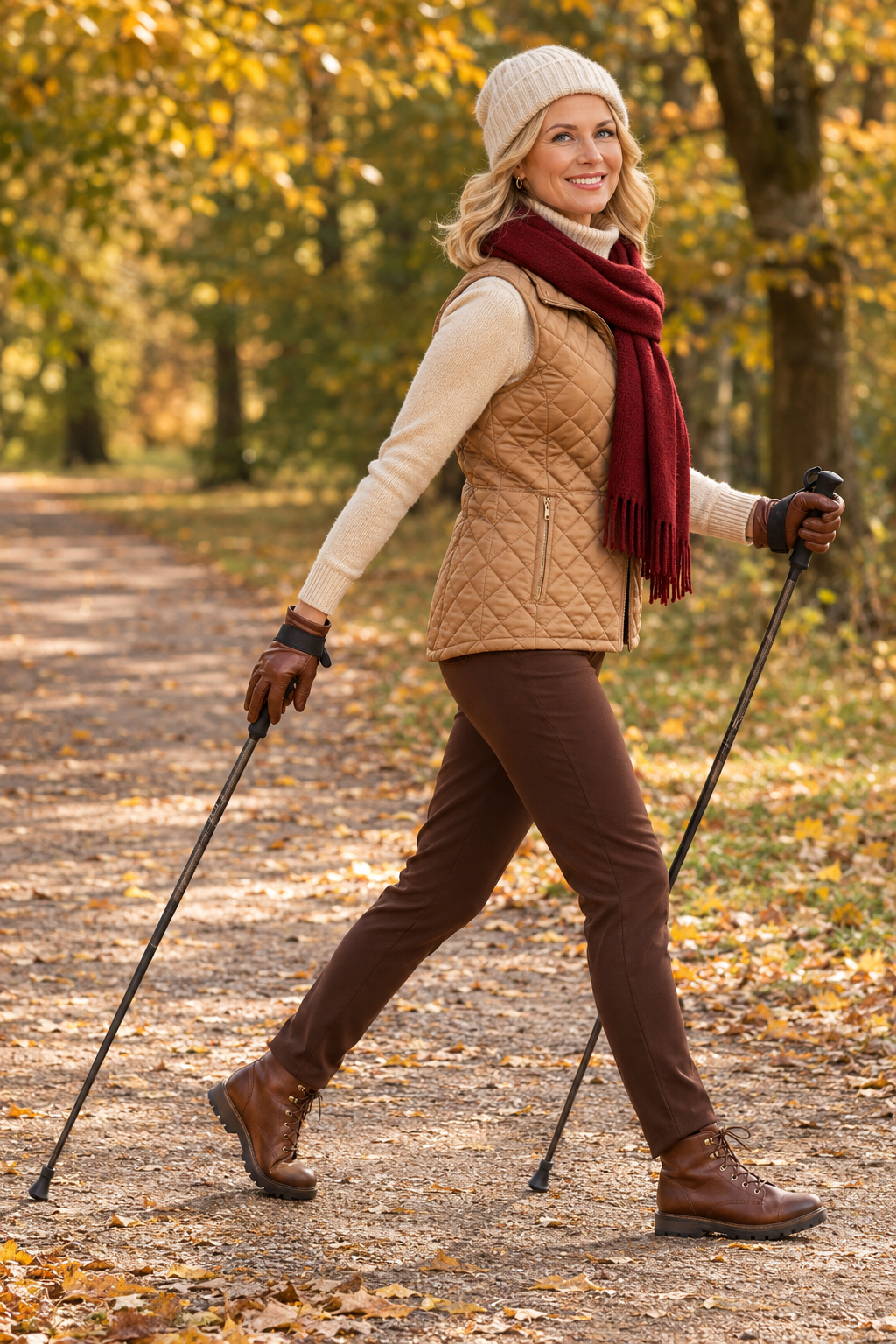
Nordic Walking is a walking technique with special poles, born from the summer training of skiers in Finland. The poles are not just support; with every step they also bring the arms, shoulders and back into the movement. Research shows it uses more energy than ordinary walking at the same speed.
Choosing poles
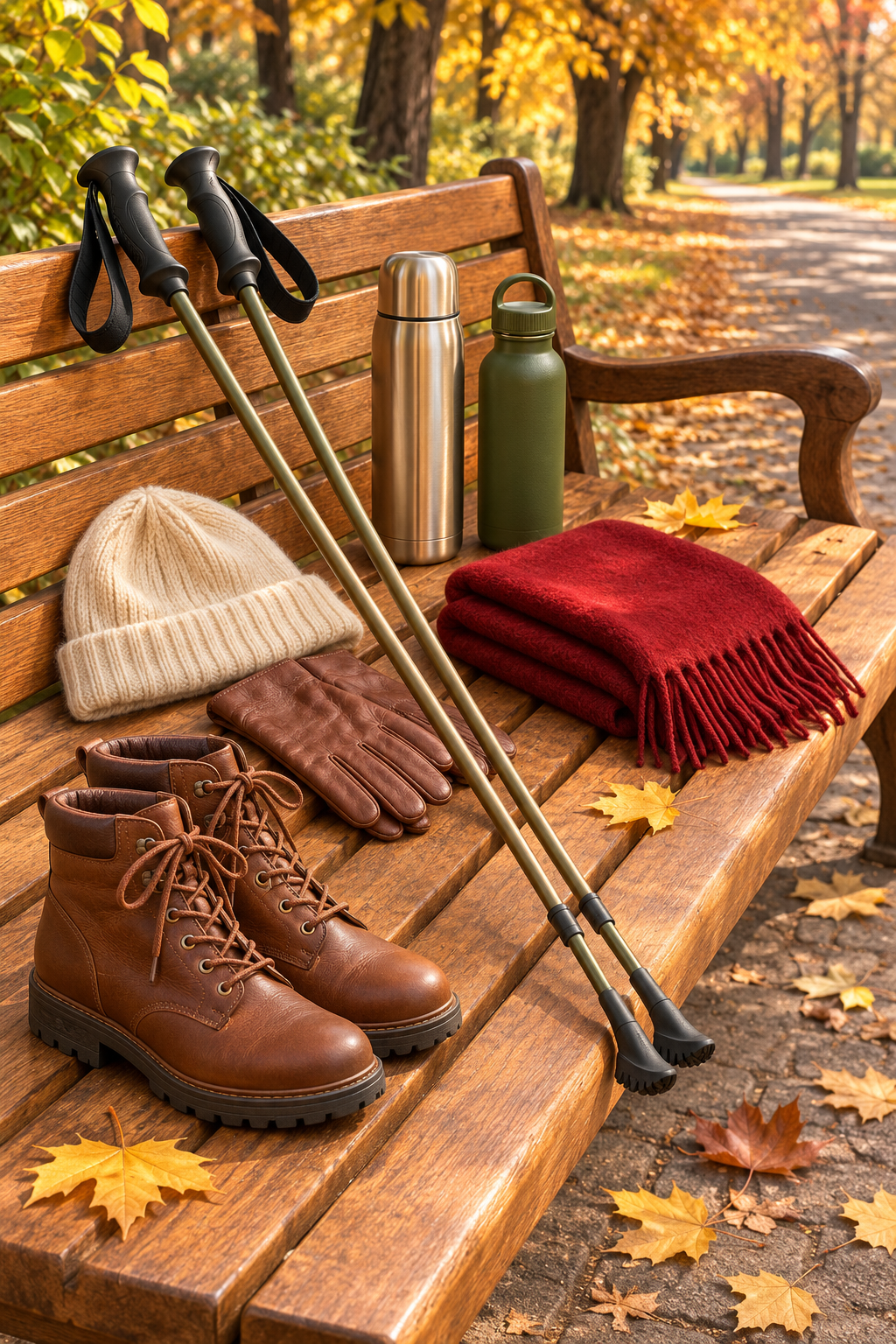
The common formula for pole length: your height × 0.68. For example, for a height of 165 cm, about 110–115 cm. When you hold the pole, your elbow should be bent at about 90 degrees. Rubber tips are used on asphalt, metal tips on earth and snowy paths.
Basic technique
– The arms move opposite to the legs: when the right foot is forward, the left arm is forward; just as in normal walking.
– Place the pole on the ground not in front of you but diagonally behind, in line with the back foot.
– Push off the pole to carry yourself forward; when the arm reaches back, open the hand slightly; the strap holds the pole.
– Keep the shoulders relaxed and the torso upright; let your steps be a little longer than in normal walking.
– In the first weeks, start with walks of 20–30 minutes.
Zarif tip: the easiest way to learn Nordic Walking is to take your first few walks with an instructor or a walking group.
A WEEKLY PLAN FOR NOVEMBER
– 3 days a week: a 10-minute home Tai Chi in the morning or evening.
– 2–3 days a week: a 30-minute walk or Nordic Walking in daylight.
– Every day: standing on one leg for 30 seconds beside a chair (both sides).
Note: If you have any joint, balance or cardiovascular condition, consult your doctor before starting a new exercise.
ZARİF MOVEMENT NOTE
Moving in winter is not resisting the season but being in harmony with it. A slow Tai Chi at home as if in water, a walk outdoors that brings colour to the cheeks in the cold… Both remind us of the same thing: the body grows stronger through patient care.