The scent of the char, the sheen of olive oil, the sweetness of the season's figs…
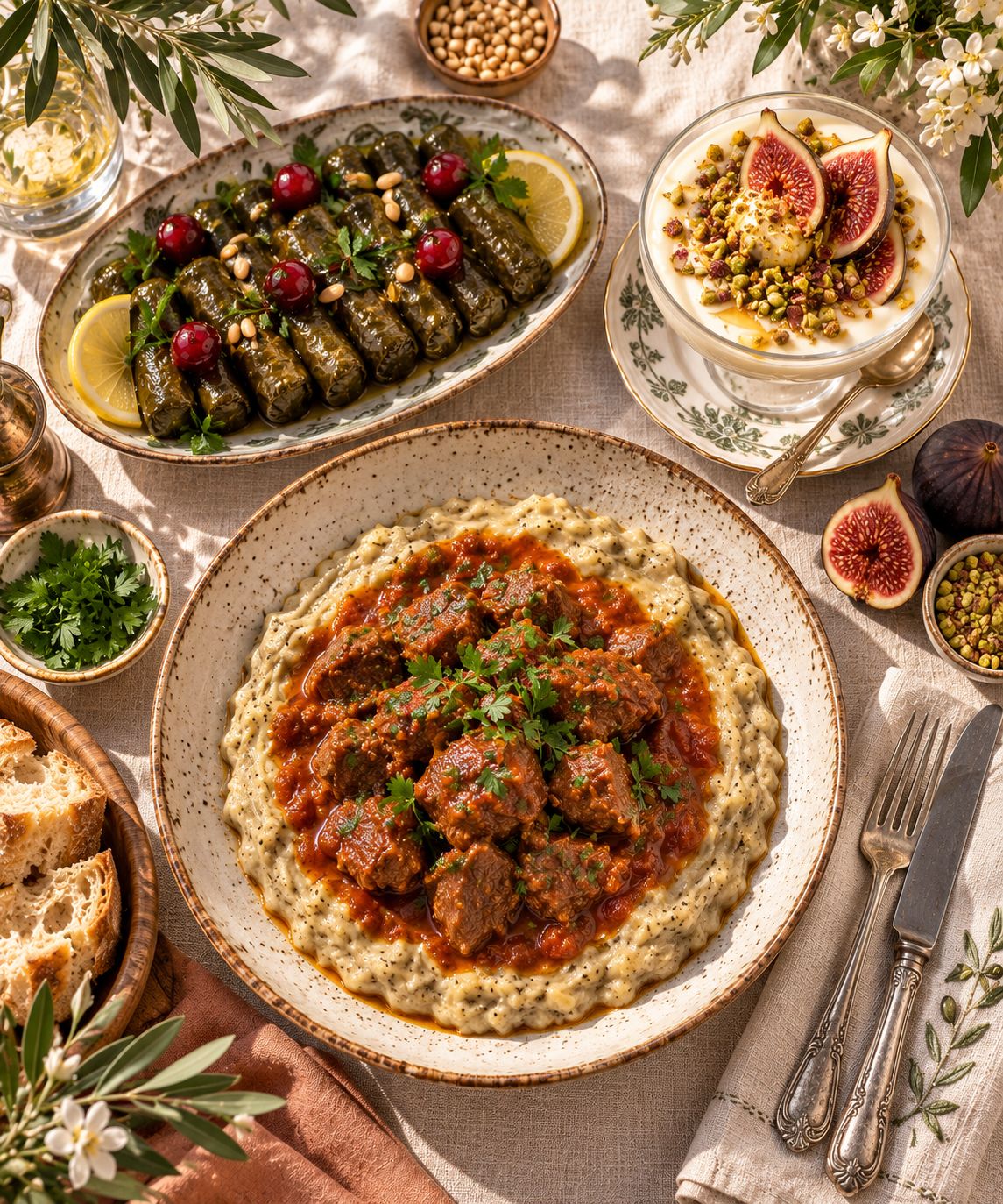
The elegance of Turkish cuisine lies not only in its richness, but in its ability to draw deep, balanced and unforgettable flavours from familiar ingredients. This is why we're dedicating Zarif Yemek's first table to Turkish cuisine.
At our September table, the smoky flavour of charred aubergine meets Hünkar Beğendi; the softness of olive oil meets the sweet-tart touch of sour cherries in stuffed vine leaves; and the season's ripe figs meet clotted cream and pistachio in an elegant milk pudding.
Hünkar Beğendi · Sour Cherry & Olive Oil Stuffed Vine Leaves · Fig Muhallebi with Clotted Cream and Pistachio
Main Course — Hünkar Beğendi
Silky Smoked Aubergine Purée with Meat as Tender as Turkish Delight
Serves 4 · Prep: 30 minutes · Cooking: Approximately 1 hour 30 minutes
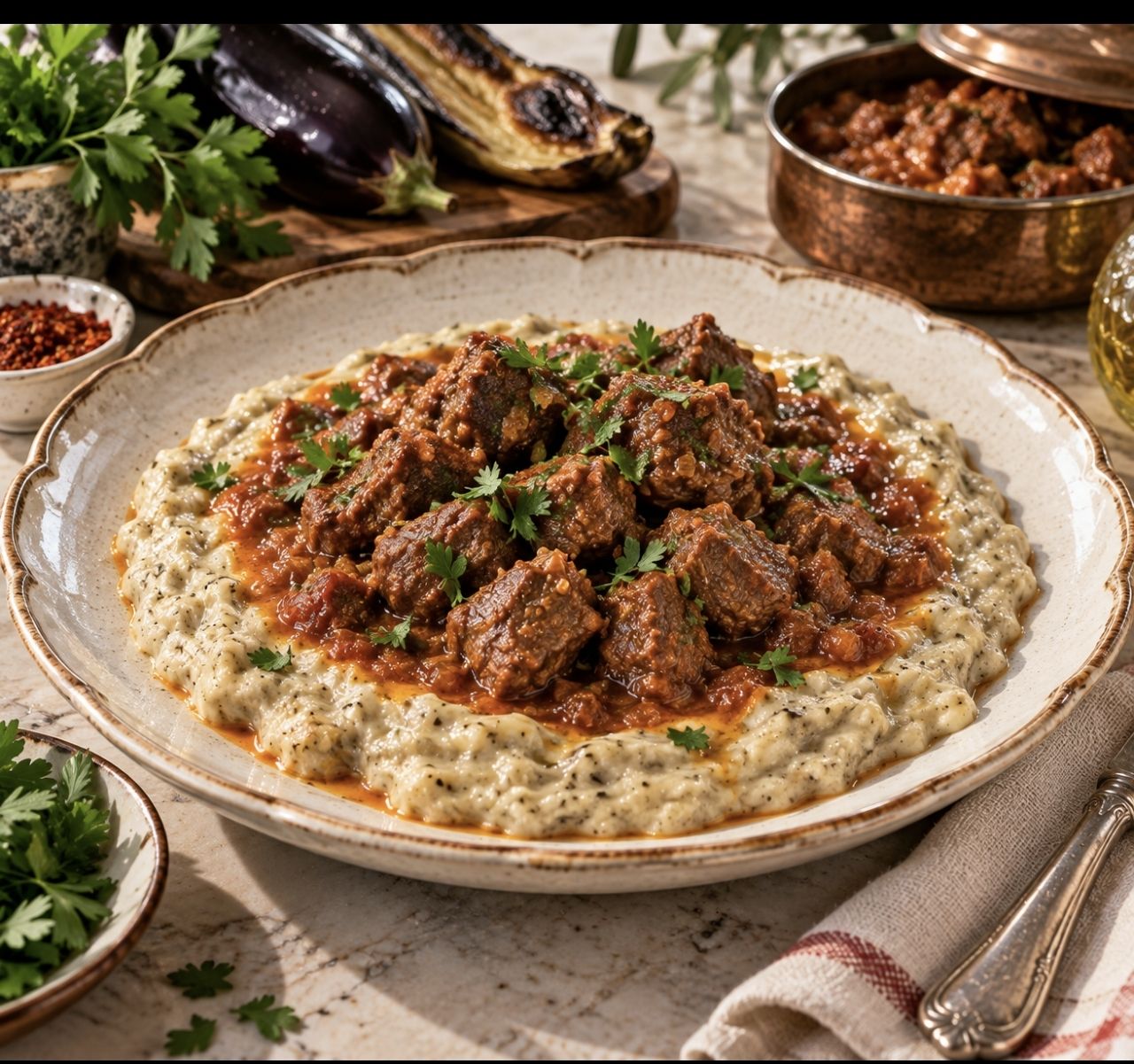
The beauty of Hünkar Beğendi comes from the meeting of two powerful textures: a silky aubergine purée carrying the scent of fire, and meat slowly braised in its own sauce until melt-in-the-mouth tender. In a good Hünkar Beğendi, the meat should never overwhelm the purée, and the cheese should never mask the character of the charred aubergine.
Ingredients
| For the meat | For the purée |
|---|---|
| 600 g cubed lamb | 4 large long aubergines |
| 1 medium onion | 2 tbsp butter |
| 2 cloves garlic | 2 level tbsp flour |
| 2 ripe tomatoes | 1½ cups warm whole milk |
| 1 tbsp tomato paste | 80 g grated aged kaşar cheese (or a mature semi-hard cheese) |
| 1 tbsp butter | A very small pinch of nutmeg |
| 1 tbsp olive oil | Salt |
| 1–1½ cups hot water | |
| ½ tsp freshly ground black pepper | |
| Salt |
Preparing the Meat
Take the meat out of the refrigerator about 20 minutes before cooking.
Heat a heavy-based, wide pot thoroughly. Add the olive oil and place the meat in the pot without overcrowding it. If your pot is small, sear the meat in two batches.
Rather than stirring constantly, let each piece brown on one side first. Once nicely seared, turn to brown the other sides.
Add the butter and the finely chopped onion. Once the onion has softened and turned translucent, add the finely chopped garlic.
Add the tomato paste and sauté for about 1 minute. Then add the peeled, finely chopped tomatoes.
Once the tomatoes have cooked for a few minutes, add the hot water. Lower the heat and cover the pot.
Cook gently for about 60–75 minutes, until the meat is completely tender. Depending on the cut, you may need to add a little more hot water.
Toward the end of cooking, remove the lid and let the sauce thicken. Adjust the salt and pepper.
There shouldn't be too much liquid left under the meat; the result should be a glossy, concentrated sauce coating the tender meat in a thin layer.
Preparing the Purée
If possible, char the aubergines directly over an open flame. Keep turning them until the skins are completely blackened and the flesh has softened all the way through.
Let the charred aubergines rest for a few minutes. Carefully peel off the skins and drain off the excess liquid. Finely chop the aubergine flesh with a knife.
Melt the butter in a saucepan. Add the flour and cook over medium-low heat for 1–2 minutes, without letting it darken in colour.
Whisk in the warm milk a little at a time, stirring constantly, until you get a smooth, creamy consistency. Add the charred aubergine.
Cook over low heat, stirring, for a few minutes. Add the grated aged kaşar cheese, salt, and just the smallest pinch of nutmeg. Remove from the heat once the cheese has melted.
Serving
Transfer the purée to a warm plate without delay and spread it elegantly with the back of a spoon. Place the tender meat on top of the purée. Drizzle a little of the meat's own concentrated sauce over the top.
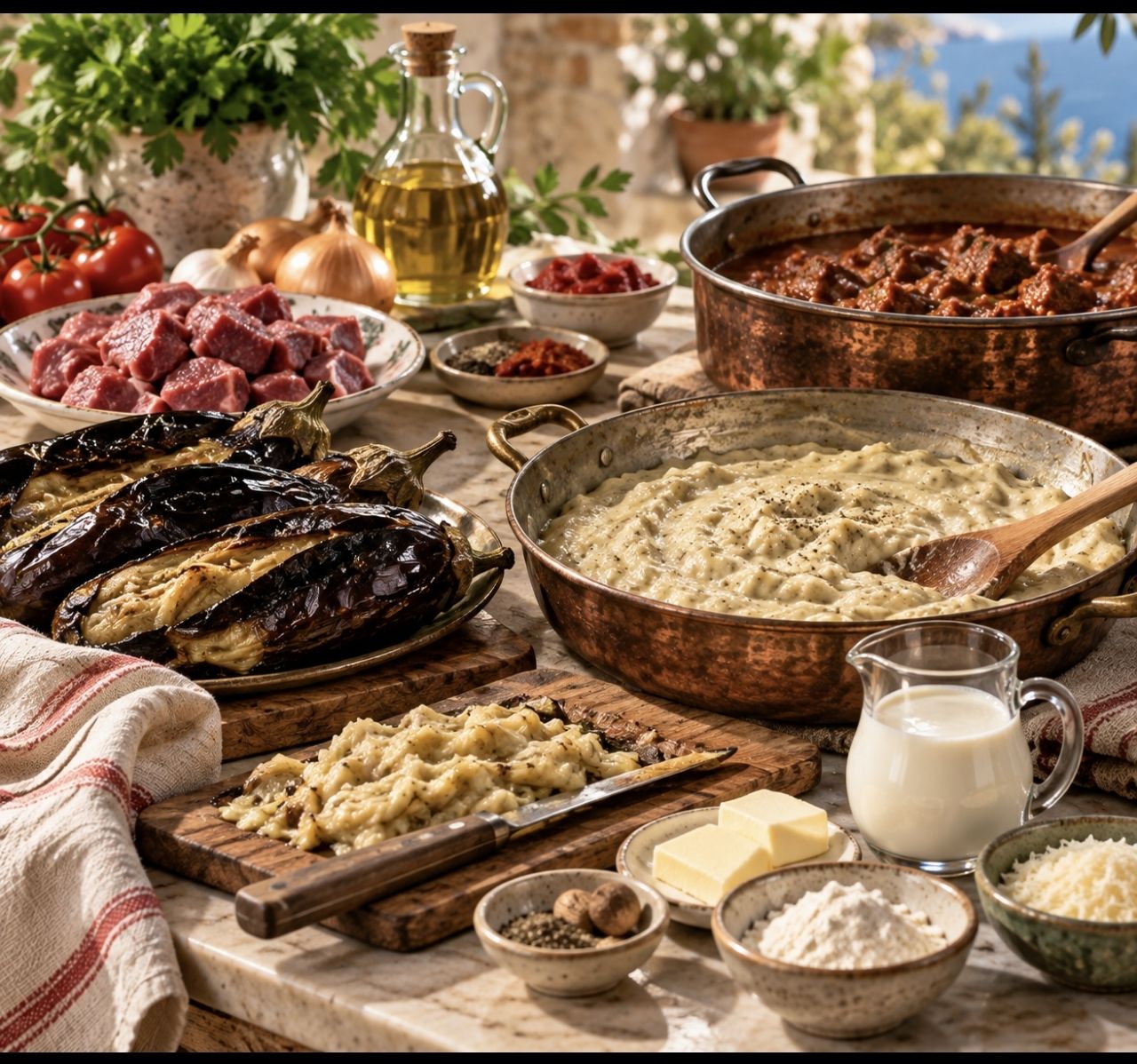
A Tip from Zarif Yaşam
The star of the purée is the charred aubergine, not the cheese. Too much kaşar weighs the purée down and masks the smoky aroma. An ideal purée should be silky, glossy, and soft enough to fall slowly from the spoon.
MEZE
Sour Cherry & Olive Oil Stuffed Vine Leaves
Sweet, Tart, and Delicately Thin
Makes approximately 35–40 pieces · Prep: 45 minutes · Cooking: 35–40 minutes
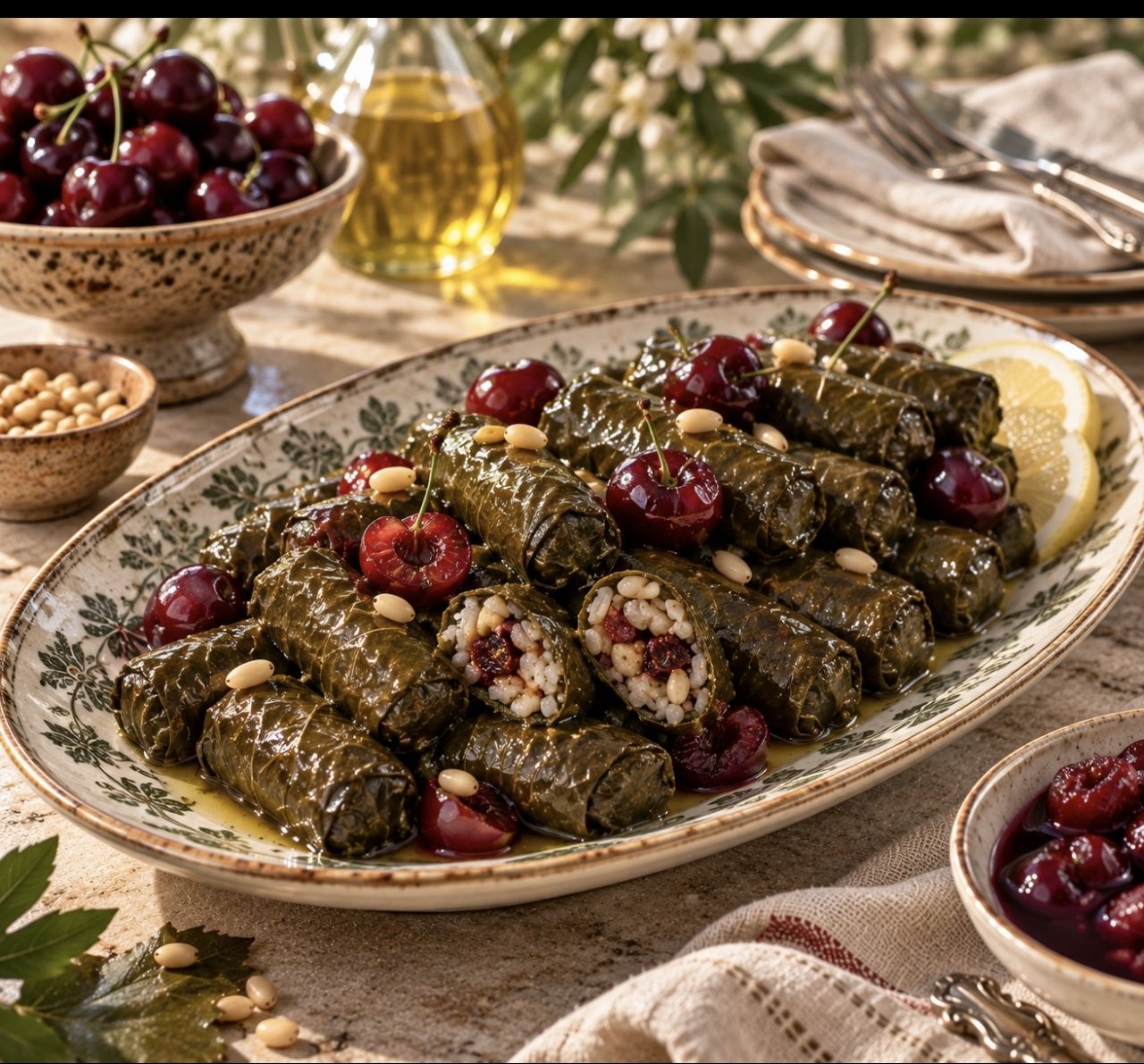
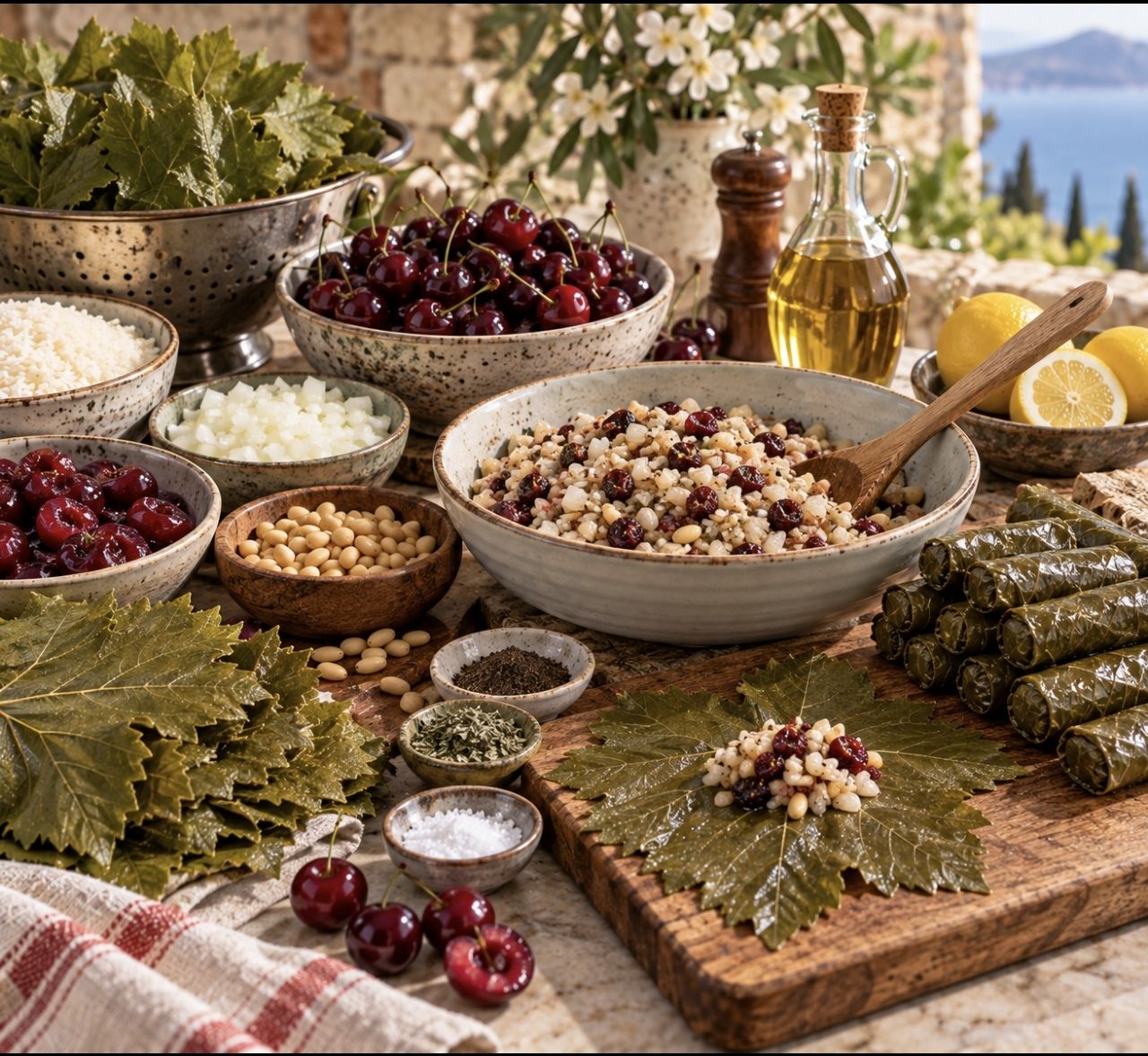
Olive oil, slow-cooked onion, rice and traditional dolma spices, wrapped in a delicately thin vine leaf… Sour cherry brings a light sweet-tart touch to this familiar flavour. The aim here isn't for the cherry to dominate the whole roll — it's to create a small, refreshing surprise every few bites.
Ingredients
| Main ingredients | Spices and other |
|---|---|
| 300–350 g brined vine leaves | 1 tbsp currants |
| 1 cup baldo rice (or another short-grain rice) | ½ tsp dried mint |
| 2 large onions | ½ tsp cinnamon |
| ¾ tea-glass olive oil | ¼ tsp allspice |
| ¾ cup pitted sour cherries | ½ tsp freshly ground black pepper |
| 2 tbsp pine nuts | 1 tsp sugar, salt |
| Juice of ½ lemon, 1–1¼ cups hot water |
Preparing the Vine Leaves
Rinse the brined leaves a few times in cold water. If very salty, soak in warm water for 10–15 minutes, then drain and squeeze out the excess water.
Try not to use very tough leaves. Thin, medium-sized leaves roll more delicately and give a nicer result.
Preparing the Filling
Chop the onions as finely as possible. Add about half of the olive oil to a wide pan. Add the pine nuts and toss until lightly coloured.
Add the onions. Cook over medium-low heat, without rushing, until softened and translucent. Add the rinsed and drained rice, and sauté together with the onions for 2–3 minutes.
Add the currants, dried mint, cinnamon, allspice, black pepper, sugar and salt. Add about half a cup of hot water and cook briefly until the rice has absorbed the liquid. The rice should not be fully cooked at this stage.
Once the filling is off the heat and has lost its initial warmth, add the pitted sour cherries. Distribute them through the filling with just a few gentle movements, without crushing them.
Rolling the Leaves
Place the vine leaf veined-side up on your work surface. Remove the stem. Place a small amount of filling on the lower part of the leaf. Fold in the two sides first, then roll forward. Don't roll the leaves too tightly.
Line the bottom of the pot with a few vine leaves. Arrange the rolls closely together in rows in the pot, so they won't unravel. Drizzle the remaining olive oil and lemon juice over the top. Add the hot water.
Cover the rolls with a flat, heatproof porcelain plate. Bring to the boil first over medium heat. Then lower the heat right down and cook gently, in a controlled way, for about 35–40 minutes.
Resting
Don't serve the rolls right away once cooked. Keep the lid on and let them cool inside the pot. Once they've reached room temperature, let them rest for a few more hours. As olive oil dolma rests, the flavours meld together and the texture improves.
A Tip from Zarif Yaşam
Don't add the sour cherries to the hot filling. If overcooked, the cherries will break down, stain the whole filling, and lose their distinctive sweet-tart character. Dried mint should also be used in moderation; its role is not to overpower the cherry, but to complete the classic olive oil dolma aroma from the background.
Dessert — September Fig Muhallebi
With Clotted Cream, Pistachio and Honey
6 small portions · Prep: 20 minutes · Resting: At least 3 hours
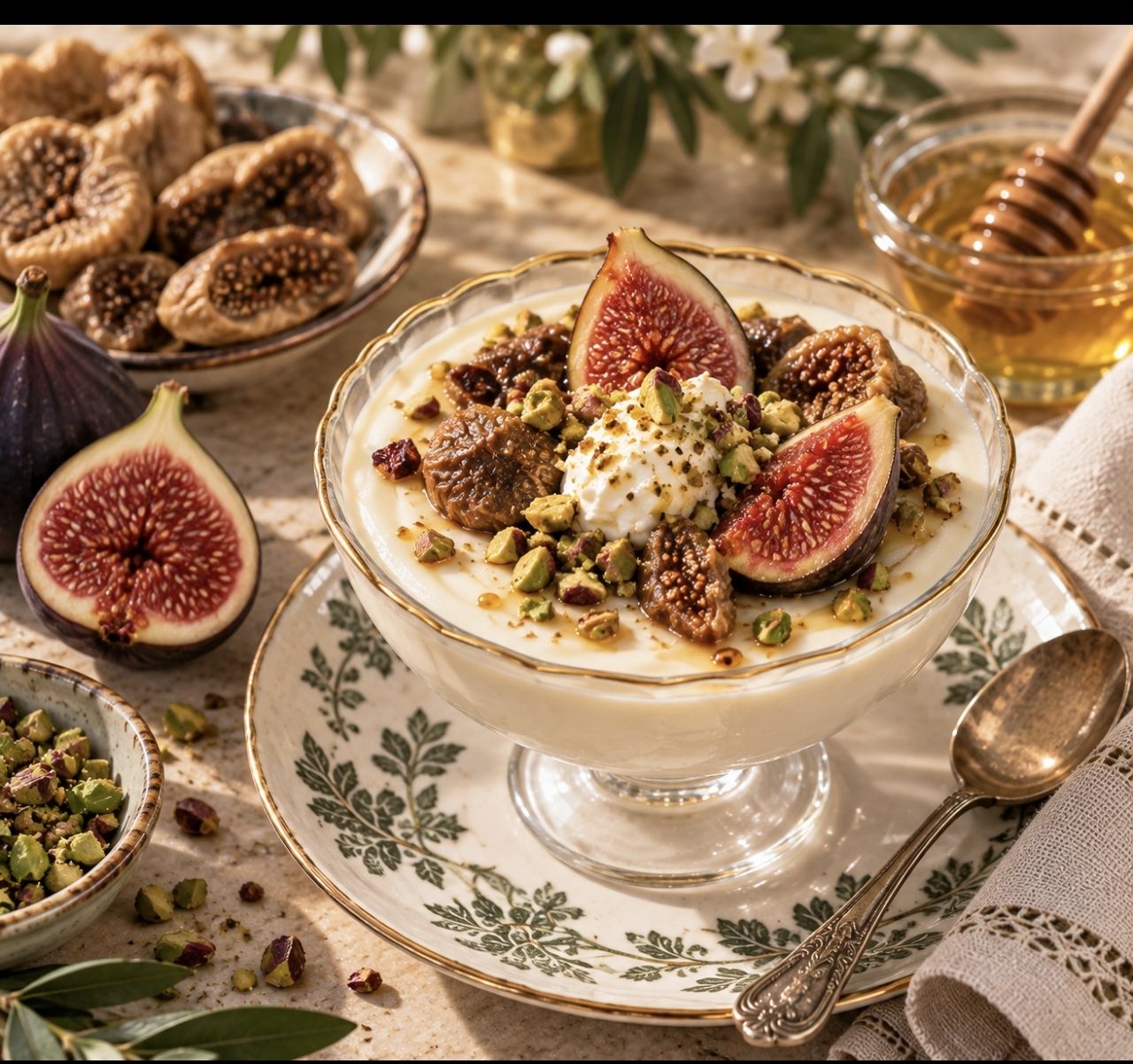
We're not hiding September's figs under a heavy syrup. A silky milk pudding, lightly caramelised fresh figs, cool clotted cream and pistachio… This dessert's elegance lies in its simplicity, and in the way different textures meet on the same spoon.
Ingredients
| For the muhallebi | For the figs and serving |
|---|---|
| 750 ml whole milk | 6 ripe but firm fresh figs |
| 3 tbsp rice flour | 1 tbsp butter |
| 1 tbsp cornflour | 1 tbsp honey |
| 5 tbsp sugar | 100–120 g clotted cream (kaymak) |
| 1 tsp butter | 3 tbsp coarsely ground pistachio |
| 1 tsp natural vanilla extract | A very small amount of honey |
| A very small pinch of salt |
Preparing the Muhallebi
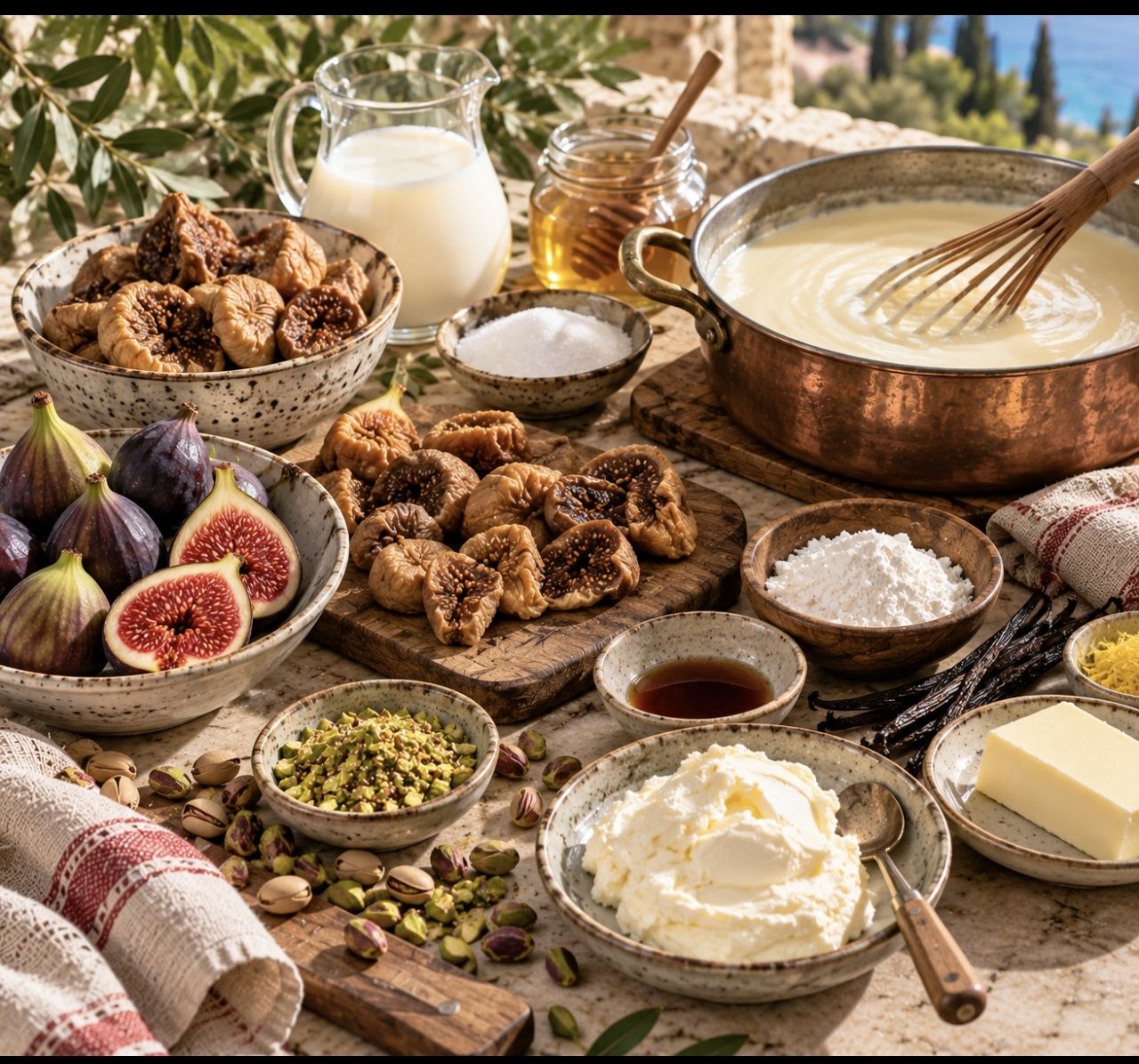
Put the rice flour, cornflour and sugar into a saucepan. Slowly whisk in about one cup of the cold milk until completely smooth. Add the remaining milk.
Cook over medium heat, stirring constantly and scraping the bottom and sides of the pan. Once the pudding begins to boil and thicken, lower the heat and continue stirring for 2–3 more minutes. Remove from the heat.
Add the butter, vanilla, and a tiny pinch of salt, and stir through. Divide the pudding among six small serving dishes. Let them come to room temperature first, then chill in the refrigerator for at least 3 hours.
Preparing the Figs
Wash the figs and dry them gently. Quarter each one. Melt the butter in a wide pan.
Place the figs cut-side down in the pan. Caramelise briefly over medium heat. Don't let the figs fall apart — we want the outside to colour lightly while the inside stays fresh, soft and juicy.
Remove the pan from the heat and add the honey. Gently shake the pan, without crushing the figs, to let the honey coat the fruit.
Serving
Arrange the caramelised figs over the chilled muhallebi. Add a small piece of clotted cream to each portion. Sprinkle with coarsely ground pistachio. Finish with just a little honey drizzled over the top — the honey here shouldn't be a sauce, just a final touch.
A Tip from Zarif Yaşam
The secret of this dessert lies less in sugar and more in the contrast of texture and temperature: the cool, silky muhallebi, the lightly warm fig, the cold clotted cream, and the crunch of pistachio… Figs are already sweet enough in season. Rather than adding too much honey or sugar, let the fruit's own flavour take the lead.
The Table's Small Secret
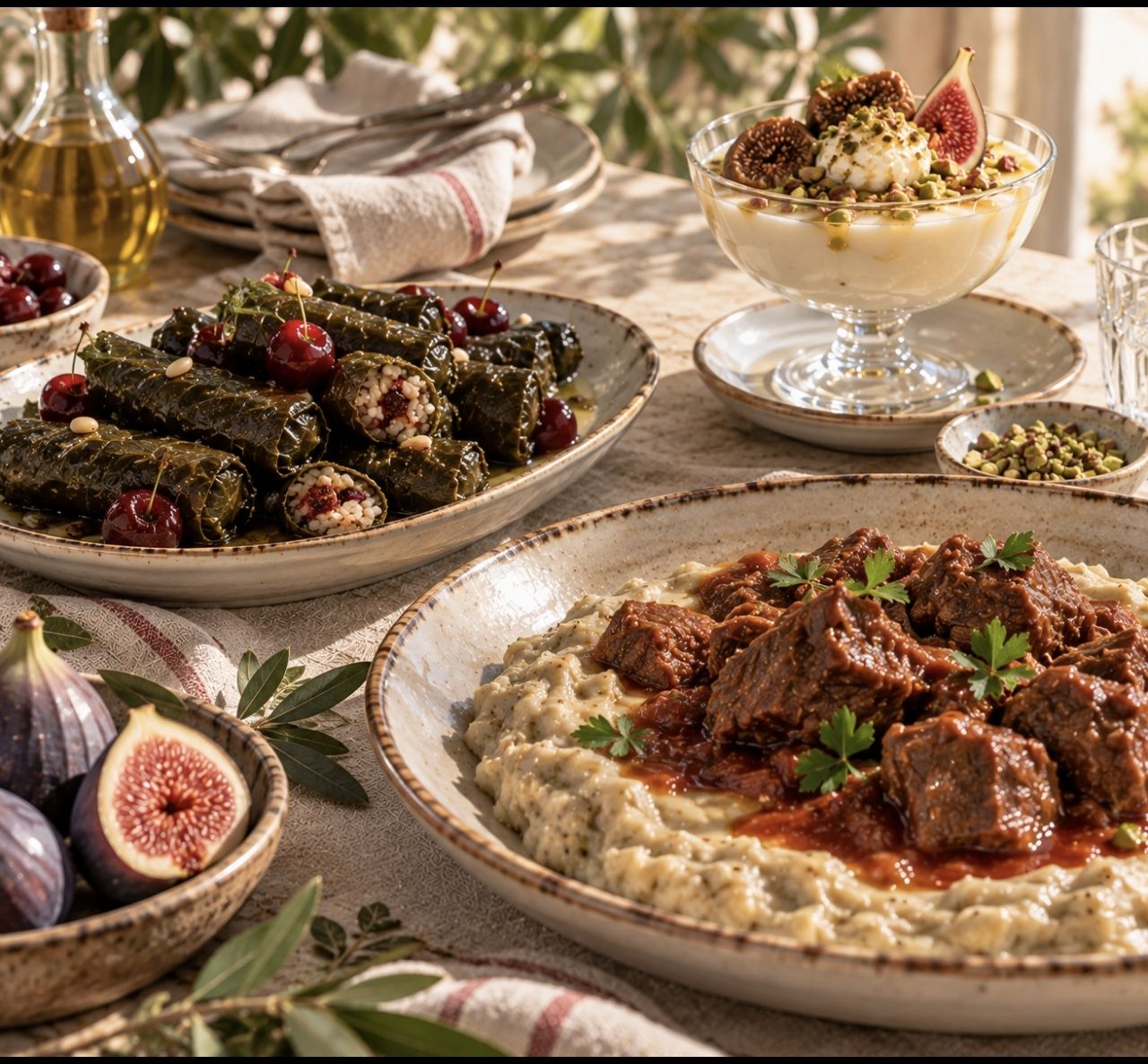
A good table doesn't need every dish competing for attention at once. Hünkar Beğendi is warm, smoky and deep. The sour cherry vine leaves are olive-oil-rich, aromatic and lightly sweet-tart. The fig muhallebi completes the table with the season's own natural sweetness.
Being different from one another is exactly what makes them beautiful together. This is where the elegance of the September table lies.