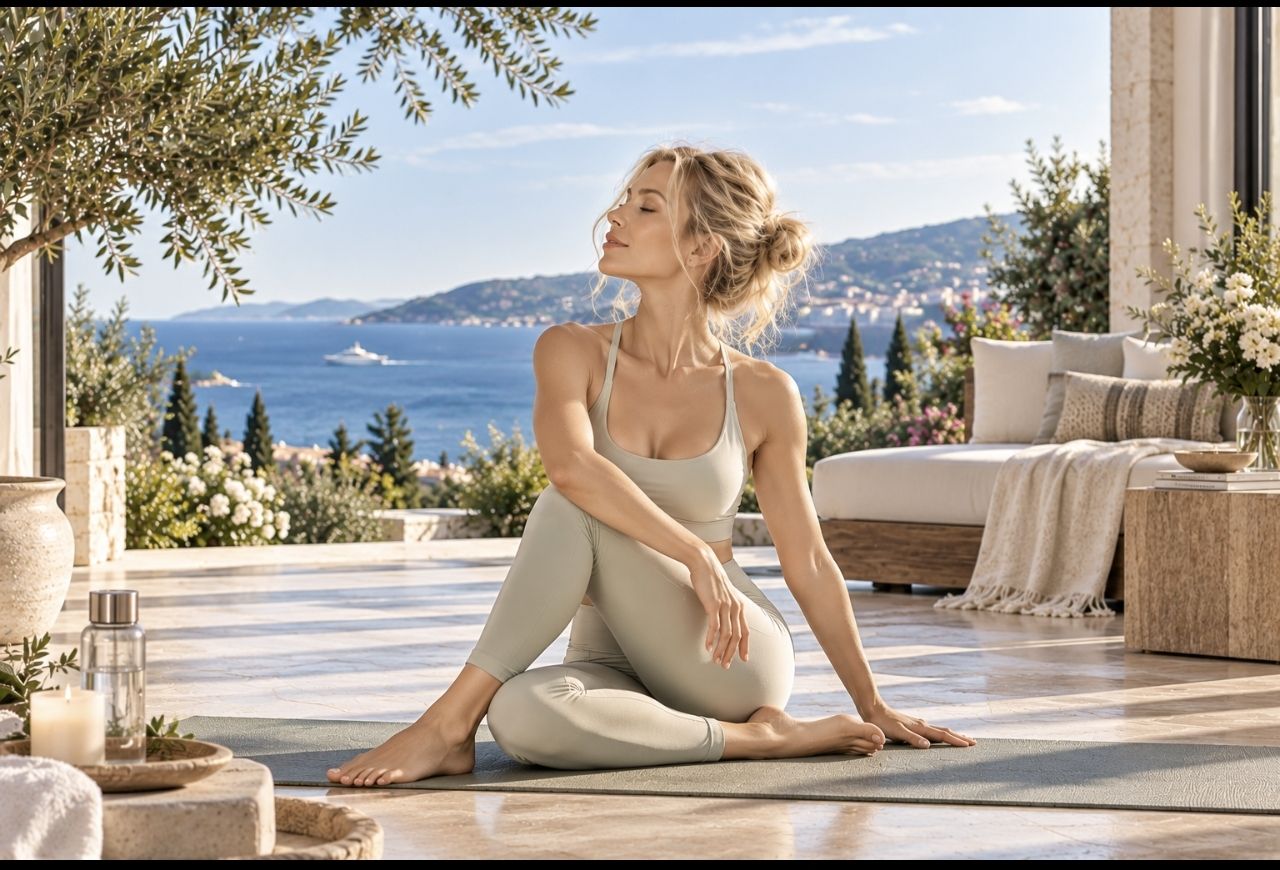
Pilates & Yoga
Stronger • More Flexible • Calmer • More You
This is exactly where Pilates and yoga meet. Though their origins, methods and forms of practice differ, both carry movement beyond the idea of simply "exercising." Through controlled movement, breath, balance and body awareness, they open a space to step away from the pace of daily life for a short while and return to ourselves.
Modern life often pushes us toward sitting for long periods, repeating the same motions, and overlooking the small signals our body gives us. Yet moving does not always require long hours or complicated programmes. Sometimes even ten mindful minutes can give the day a different rhythm.
Pilates or Yoga?
Rather than seeing them as alternatives to one another, it makes more sense to think of them as two distinct practices that approach the body from different directions.
Pilates focuses on controlled, precise movement; on core control, strength, coordination and postural awareness. How a movement is done often matters more than how many times it is repeated.
Yoga, meanwhile, brings physical postures together with movement, breath and attention. Depending on the style of practice, it works on mobility, flexibility, balance and strength, while also folding mental focus into the practice itself.
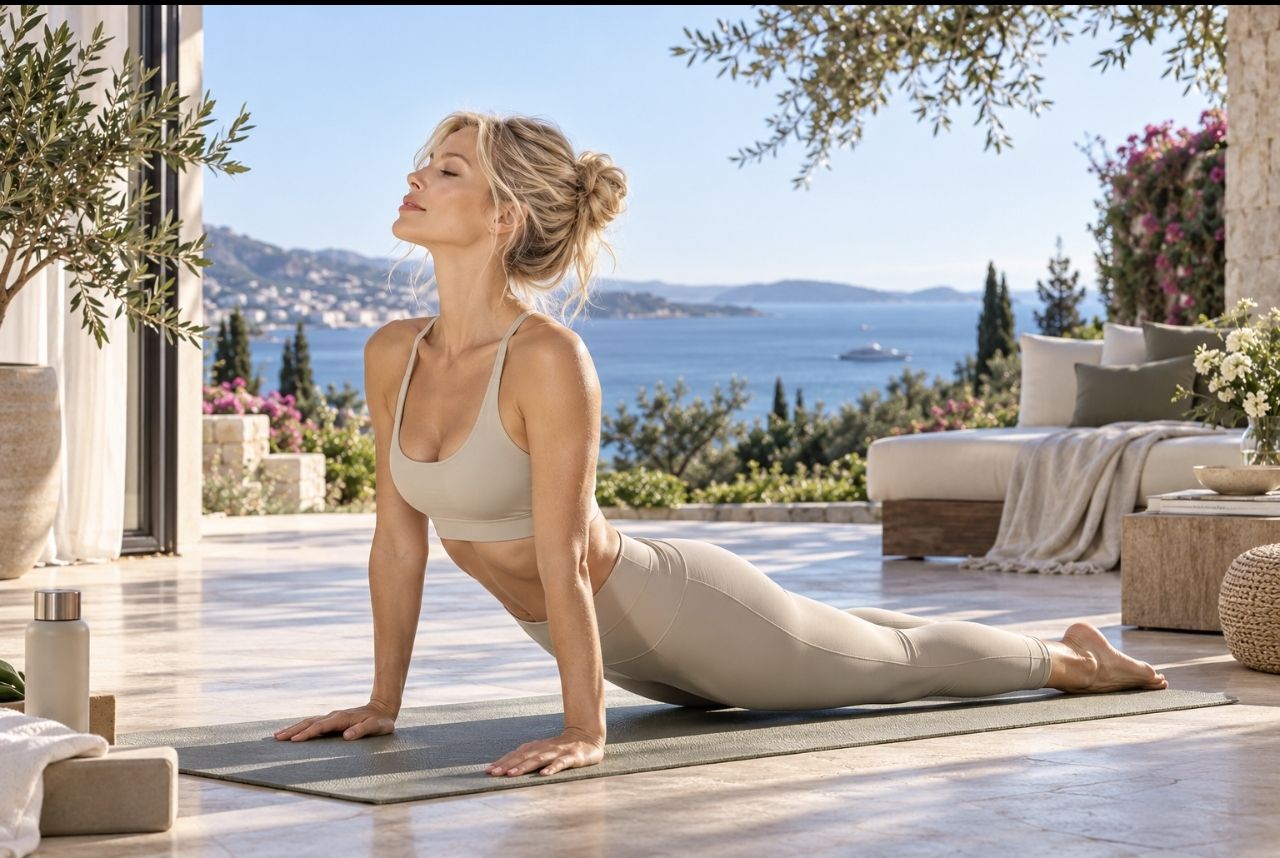
Controlled movement, breath and attention — Pilates and yoga meet at the same point.
So which should you choose?
Perhaps the question isn't "Which is better?" but "What does my body need today?" On days when you're looking for strength and controlled movement, Pilates may feel closer to you; on days when you want range of motion, balance and a calmer tempo, yoga may feel closer. And it is entirely possible to bring both into the same life.
What the Body Gains
The value of a regular movement practice isn't measured only by the changes we see in the mirror.
Depending on the form of practice, its frequency and the individual, Pilates and yoga can contribute to muscular strength, balance, range of motion, coordination, and body awareness. Learning to move with control, in particular, can also help us notice how we carry our bodies in daily life.
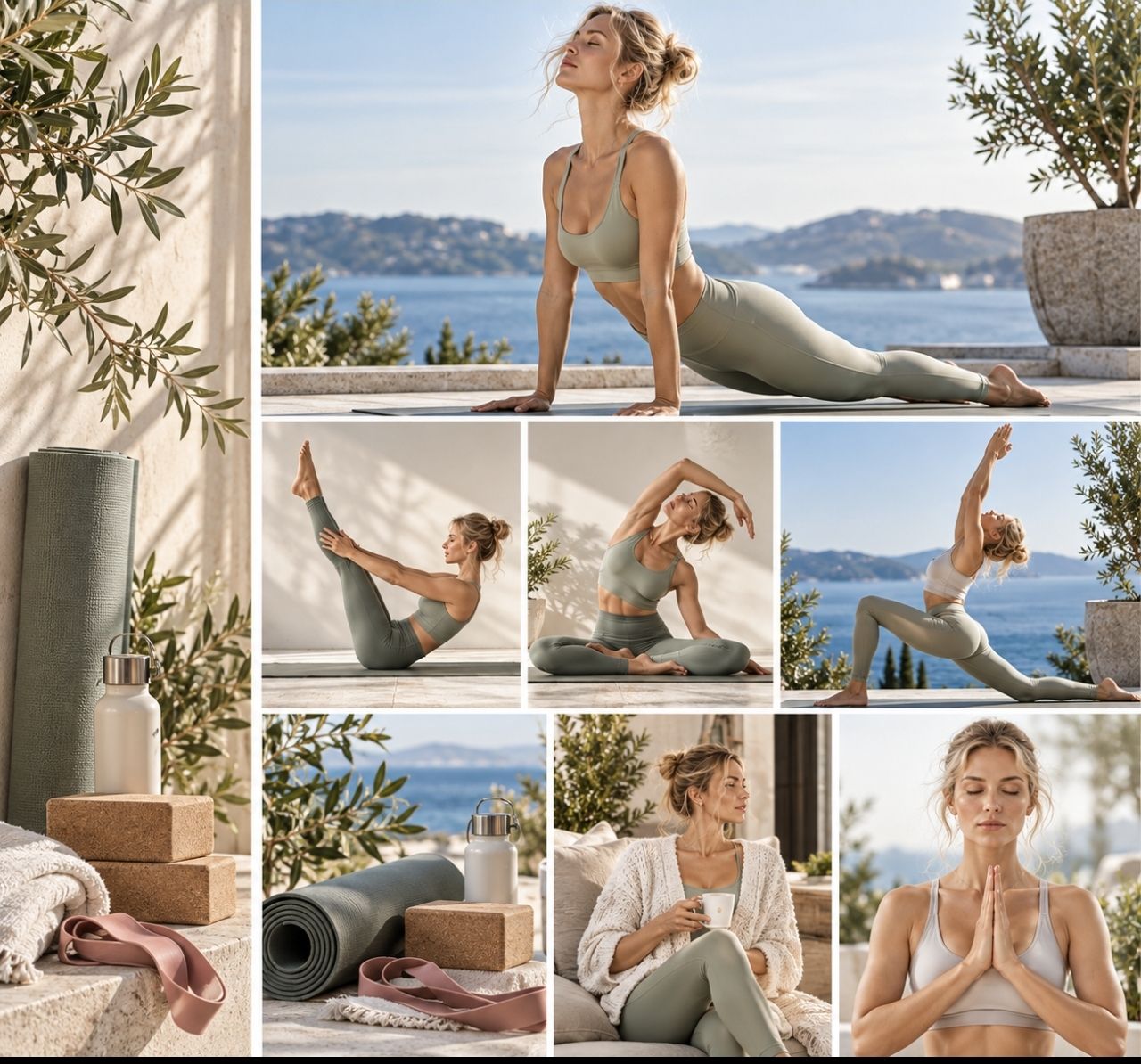
Strength, balance, flexibility and awareness — different faces of the same practice.
The aim here is not a flawless posture or a hard-to-reach level of flexibility.
The aim is to be able to move more comfortably, with more control and more awareness, within our own body's capacity.
Starting Out: A Little, But Right
You don't need a large gym or dozens of pieces of equipment to begin.
Clothes you can move comfortably in, a non-slip mat, and a little space are enough for most beginner practices. Yoga blocks can help bring certain positions closer to you, and straps can support particular movements. But equipment is never more important than the movement itself.
At Home or in a Studio?
Both have their place. Those just starting out — especially when unsure of their technique — may benefit from the support of a properly trained instructor. The great advantage of a home practice is that it can turn movement into a natural part of daily life.
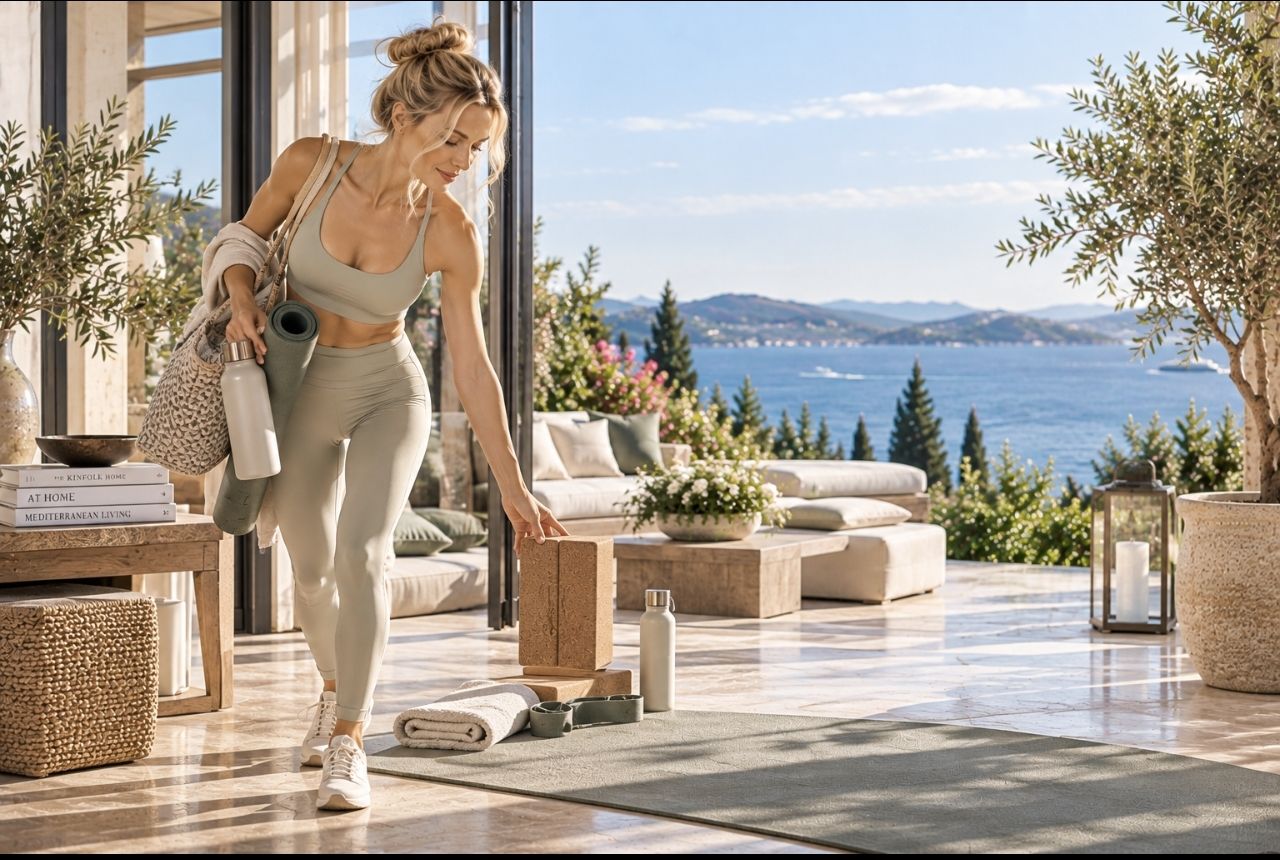
A mat, a couple of blocks, and a strap — that's often all you need.
And perhaps the most important rule when starting out: pushing your body and working with your body are not the same thing.
Sharp or unfamiliar pain does not mean "the movement is working." A movement can be scaled down, supported, or skipped altogether whenever needed.
A 10-Minute Return to the Body
You may not be able to set aside time for a long workout every day. That doesn't mean you can't move at all.
The short sequence below brings together six essential movements inspired by Pilates and yoga:
1. Cat–Cow
Hands beneath the shoulders, knees beneath the hips. With your breath, round and arch the spine with control. Rather than making the movement large, focus on feeling the flow of the spine.
2. Bird–Dog
From an all-fours position, extend one arm and the opposite leg with control. Keep the torso as stable as possible, then repeat on the other side.
3. Glute Bridge
Lie on your back, bend the knees, and place the feet on the floor. Raise and lower the hips with control. Keep the neck relaxed throughout the movement.
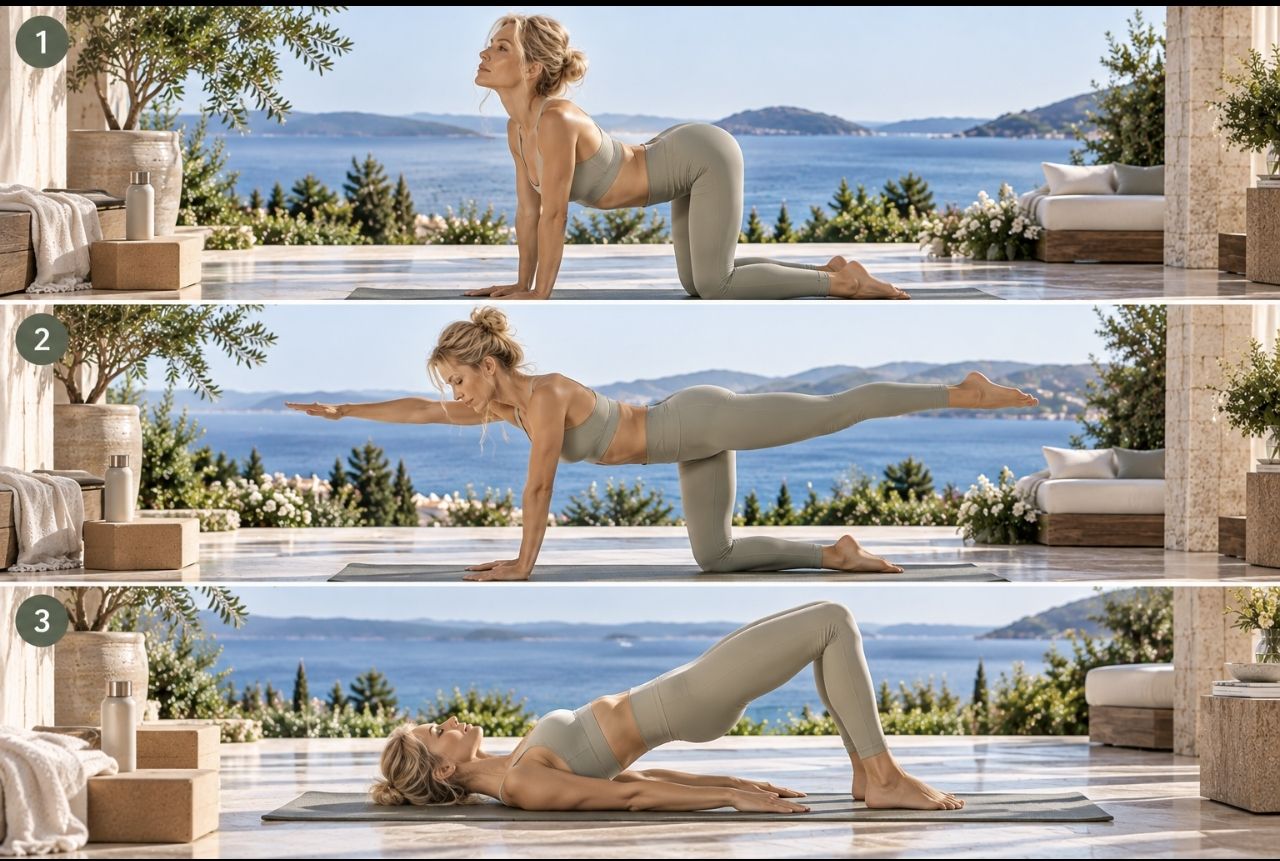
1 — Cat–Cow · 2 — Bird–Dog · 3 — Glute Bridge
4. Low Lunge
Step one foot forward, lowering the back knee to the floor for support. Lift the torso comfortably and feel the opening around the hip without forcing it.
5. Side Plank
Carry the torso with control in a side-support position. If the full version isn't suitable, the movement can be made easier with the knee supporting you.
6. Knees-to-Chest
Lying on your back, gently draw the knees toward the chest. Relax the shoulders and jaw. Complete the flow with a few calm breaths.
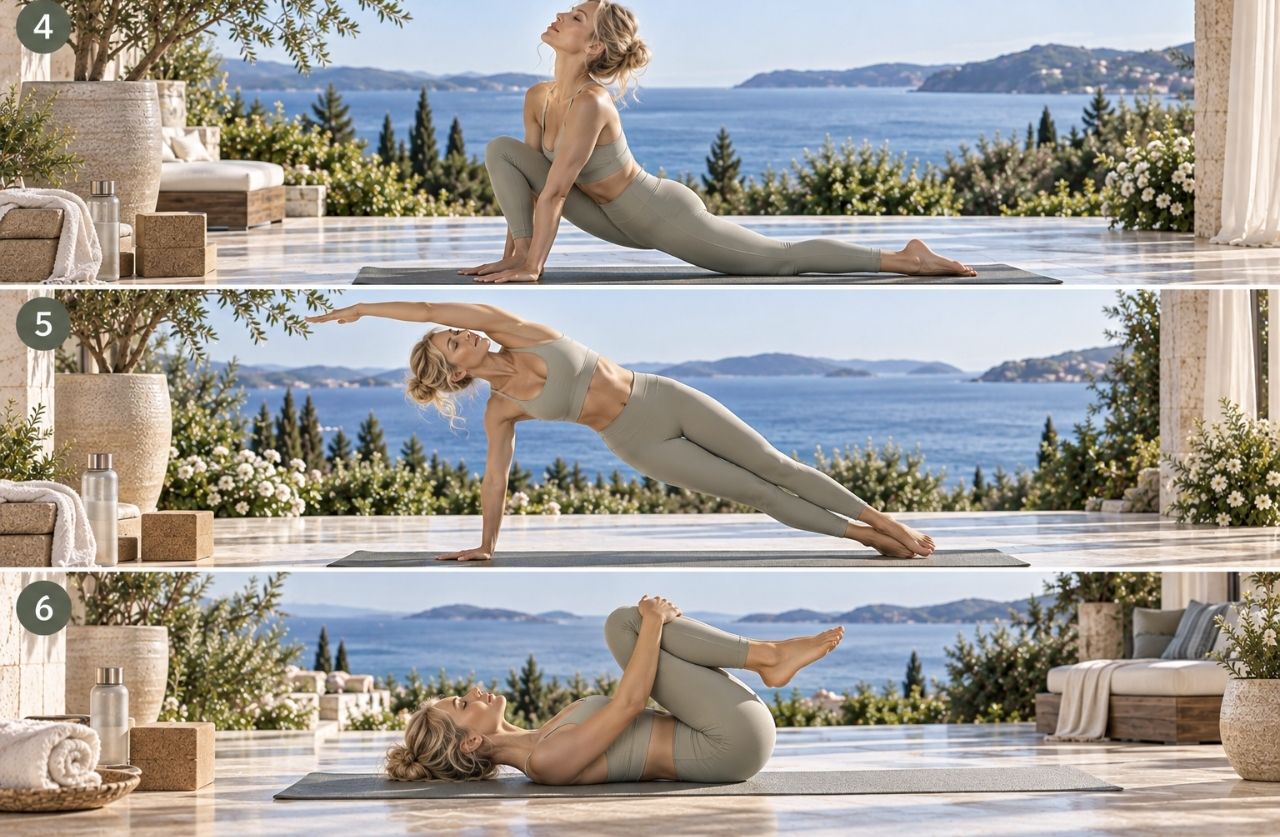
4 — Low Lunge · 5 — Side Plank · 6 — Knees-to-Chest
Think of these six movements not as a race, but as a small, connected ritual of movement. You can leave a few breaths' worth of transition between movements, or shorten the duration whenever you need to.
Note: This sequence is a general, low-intensity movement suggestion; it is not a personalised exercise prescription. Anyone with pain, an injury, pregnancy, or a health condition that affects movement should seek individual guidance from a qualified health professional or a competent instructor.
From Sport to Ritual
For a movement habit to be sustainable, it doesn't need to be flawless.
Some days a half-hour class may be possible; other days, just ten minutes. What matters is not confining movement only to "the hours when we exercise."
Leaving your mat somewhere within reach, setting aside a small window of movement in your day, or adding the practice alongside your morning or evening routine can make it easier to begin.
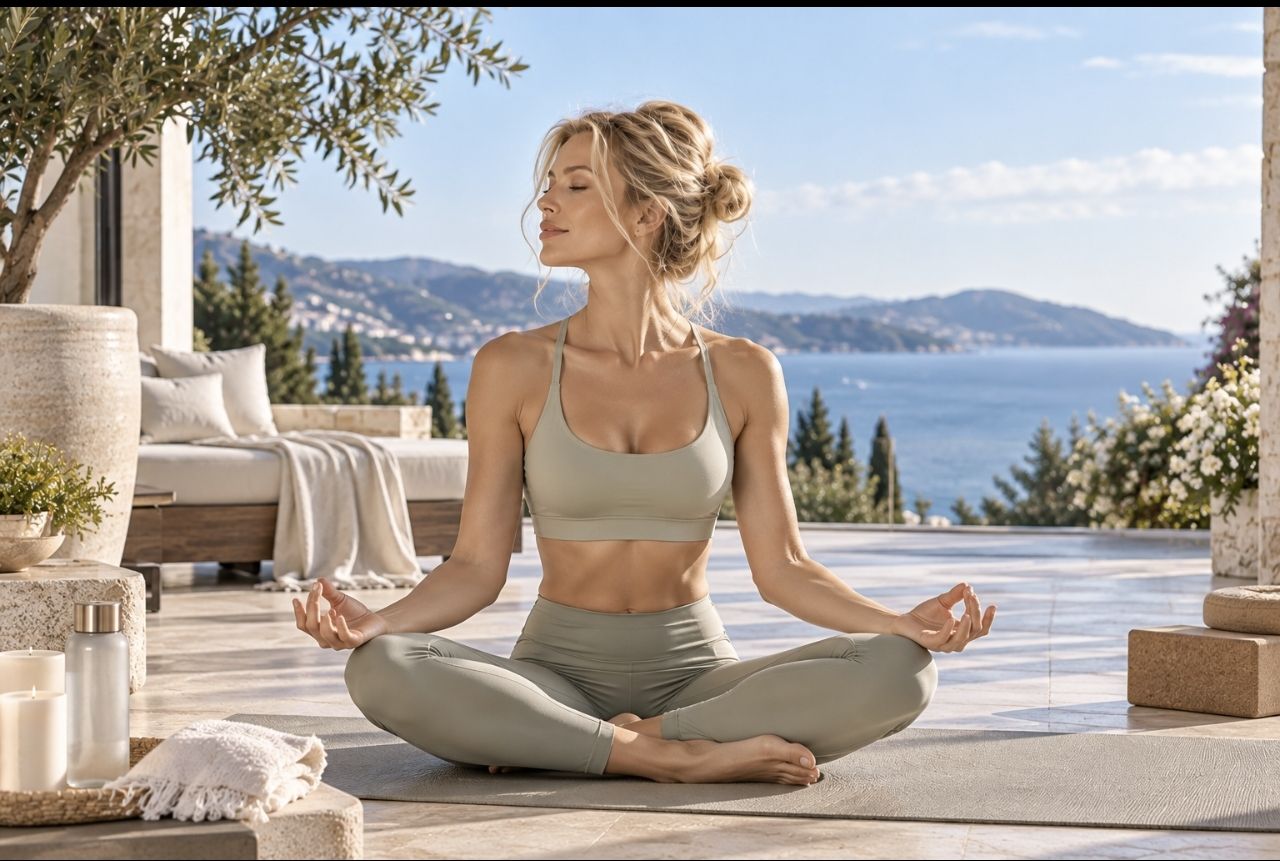
A few calm breaths at the end of the practice.
And sometimes the loveliest thing you can do at the end of a practice is not to rush straight into something else.
Sitting on the mat for a few minutes…
Noticing the breath grow calm again…
Checking in with how the body feels…
Because the value of movement lies not only in how far we stretch or how strong we become, but also in the quality of the relationship we build with our own body.
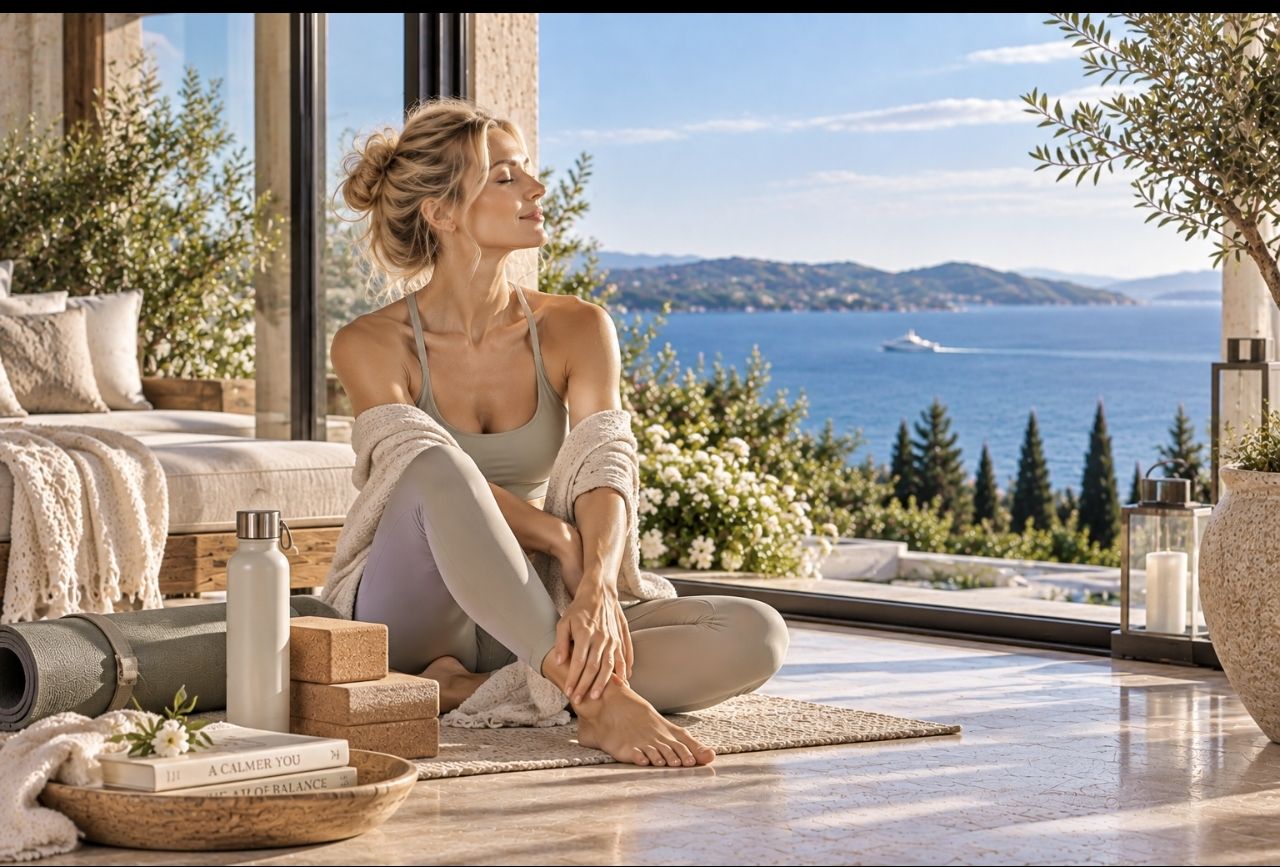
Stronger · More Flexible · Calmer · More You
Movement feels good.