The Three Quiet Pillars of a Long Life: Movement • Muscle • Sleep
A long and high-quality life is built, more often than not, not from major changes but from small habits that quietly settle into daily life. In this section we look at three quiet pillars: movement, muscle, and sleep.
The Cost of Inactivity
Modern life invites us to sit for long hours. Moving from one meeting to the next, from one screen to another, our bodies often remain still. Yet prolonged inactivity leaves its own mark on the body — regardless of how active we might be for the rest of the day.

Starting the day with movement, a calm walk toward the terrace.

Long hours of sitting can leave a cost the body pays quietly.
The "60-Second Movement Break"
Taking a short break every hour is a far more attainable habit than a long workout. Rotating the ankles, drawing the shoulders back, walking a few steps — none of these require great effort, but repeated regularly they can help the body step out of stillness.
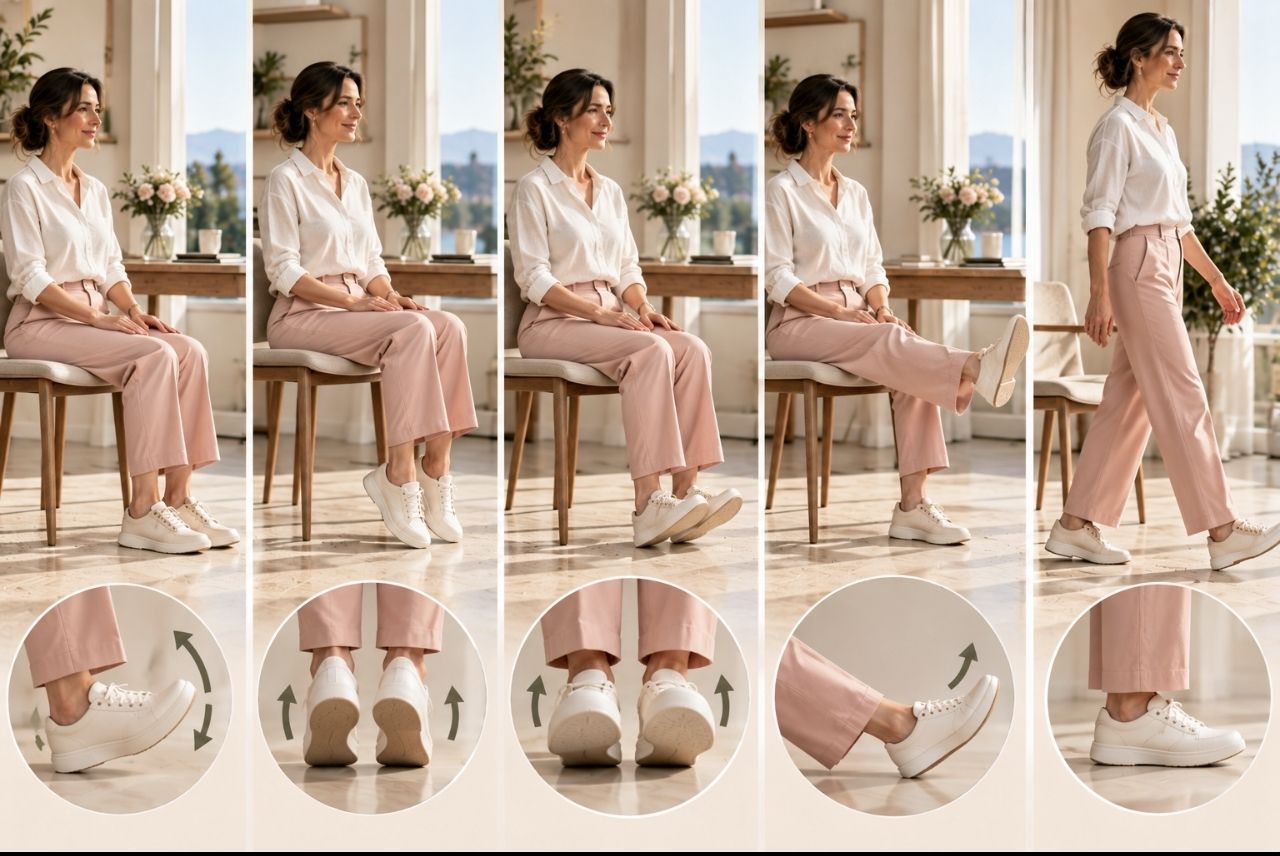
A short movement break — a simple way to reconnect with the day.
Muscle — Resistance Training
Muscle mass naturally declines with age; but regular resistance work can play a role in slowing this process. No heavy equipment is needed — light weights, or movements using the body's own resistance, can offer a meaningful contribution when practised regularly.

Working with light resistance — a sustainable habit even at home.
What Muscle Means in Daily Life
Muscle strength is not only for athletes. Climbing stairs, carrying the shopping, picking something up off the floor — these ordinary moments of daily life are, in fact, the most concrete expression of muscle strength. Muscle is the quiet foundation of being able to move independently and with ease.

Everyday independence often rests on a muscle strength we rarely notice.
Sleep & Circadian Rhythm
Sleep is more than rest — a large part of the body's repair and renewal takes place during sleep. The circadian rhythm, the body's natural 24-hour cycle, is shaped by light, darkness, and our daily habits. Making a gentle transition into the night — putting screens away early, dimming the surroundings, keeping a regular bedtime — is among the simplest ways to support this cycle.

A calm bedroom, a gentle transition into the night.
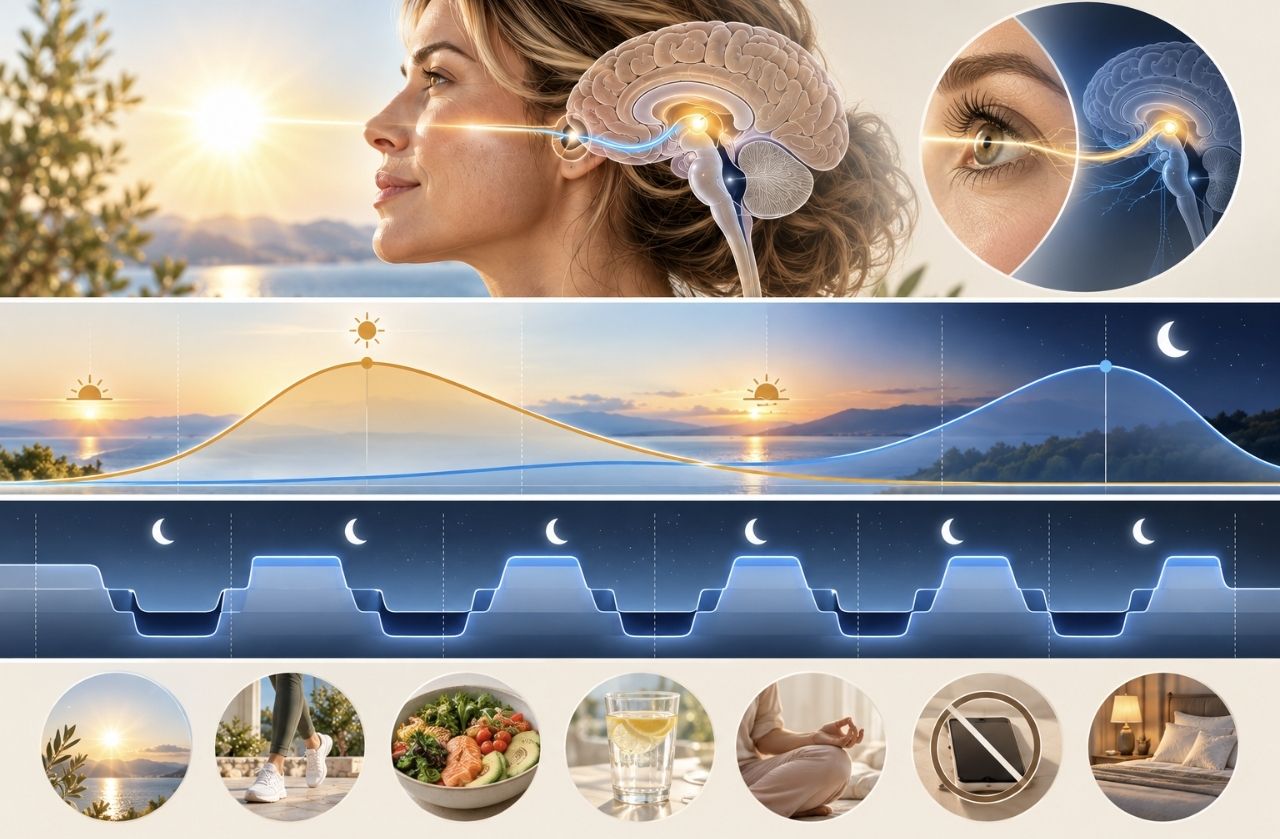
Circadian rhythm: the quiet dialogue light and darkness hold with the body.
A Note from Zarif Yaşam
Movement, muscle and sleep are not three independent subjects — they are three parts of the same whole. When one is neglected, the others are affected too.
Before trying to build a grand programme, starting the day with a few minutes of movement, working with light resistance, and preparing for the night a little earlier — this is where the most lasting difference lies, over the long run, in these small steps.

Movement, muscle, sleep — a balance quietly built.
Editorial health note
This content has been prepared for general informational purposes and does not replace personal medical assessment. Those with a specific health condition, an injury, or who take medication regularly are advised to consult a health professional before making exercise or lifestyle changes.