THE ELEGANT TABLE
The Elegant Table
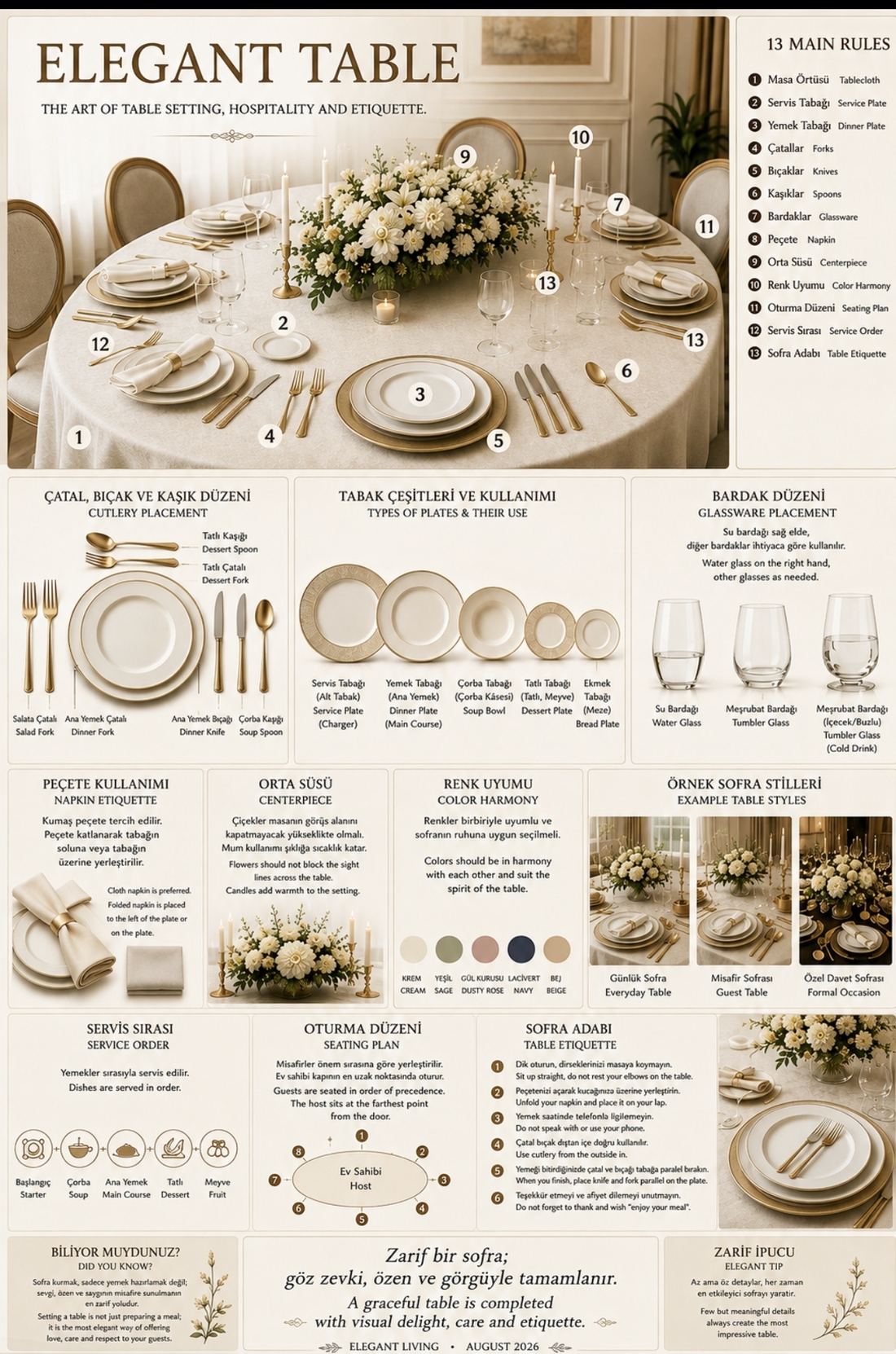 Table manners are not born from rules; they are born from respect.
What makes a table beautiful is not expensive plates or careful decor; it is the attention everyone at the table shows one another. Waiting until everyone is served before eating, setting phones aside, thanking whoever prepared the meal — these are small but meaningful gestures.
Children learn table manners not by being told, but by example. A child who watches the adults around them show respect at the table carries that same respect into their own life.
The Fundamentals of Setting an Elegant Table
A beautiful table is not just about delicious food. A table where aesthetics, order and etiquette come together reflects a host's care and the value they place on their guests.
Main Topics
1. Tablecloth
2. Charger Plate
3. Dinner Plate
4. Forks
5. Knives
6. Spoons
7. Glasses
8. Napkin
9. Centrepiece
10. Colour Harmony
11. Seating Arrangement
12. Service Order
13. Table Etiquette
Fork, Knife and Spoon Arrangement
Cutlery is arranged in the order it will be used, from the outside in.
Forks sit on the left, knives and spoons on the right. For each course, use the outermost piece of cutlery first, working your way inward.
Types of Plates and Their Use
• Charger Plate — used as a base plate
• Dinner Plate — for the main course
• Soup Bowl — for soup or rice dishes
• Dessert Plate — for dessert or fruit
• Bread Plate — for bread or appetisers
Glass Arrangement
The water glass sits on the right side, with other glasses arranged according to need. The water glass and beverage glass are placed to the upper right of the plate, in order of use.
Napkin Etiquette
A cloth napkin is preferred. It is folded and placed either on top of the plate or to its left.
Centrepiece
Flowers should be kept low enough not to block guests' view across the table. Candles add warmth to the table.
Colour Harmony
Colours should be harmonious and suited to the table's mood, chosen according to the season and the type of occasion.
Suggested palette: Cream, Sage, Dusty Rose, Navy, Beige.
Example Table Styles
You can see the difference between an everyday table, a guest table and a formal occasion table in the image above — the same core rules, applied with different degrees of care.
Service Order
Starter → Soup → Main Course → Dessert → Fruit
Courses are served in order. The next course is not brought out until the previous plate has been cleared.
Seating Arrangement
Guests are seated according to precedence. The host sits at the point farthest from the door; the most honoured guests are seated closest to the host.
Table Etiquette
1. Sit up straight and keep your elbows off the table.
2. Unfold your napkin and place it on your lap.
3. Don't speak with food in your mouth.
4. Use your cutlery from the outside in.
5. When you finish eating, leave your knife and fork parallel on the plate.
6. Don't forget to say thank you and wish everyone a good meal.
Table manners are not born from rules; they are born from respect.
What makes a table beautiful is not expensive plates or careful decor; it is the attention everyone at the table shows one another. Waiting until everyone is served before eating, setting phones aside, thanking whoever prepared the meal — these are small but meaningful gestures.
Children learn table manners not by being told, but by example. A child who watches the adults around them show respect at the table carries that same respect into their own life.
The Fundamentals of Setting an Elegant Table
A beautiful table is not just about delicious food. A table where aesthetics, order and etiquette come together reflects a host's care and the value they place on their guests.
Main Topics
1. Tablecloth
2. Charger Plate
3. Dinner Plate
4. Forks
5. Knives
6. Spoons
7. Glasses
8. Napkin
9. Centrepiece
10. Colour Harmony
11. Seating Arrangement
12. Service Order
13. Table Etiquette
Fork, Knife and Spoon Arrangement
Cutlery is arranged in the order it will be used, from the outside in.
Forks sit on the left, knives and spoons on the right. For each course, use the outermost piece of cutlery first, working your way inward.
Types of Plates and Their Use
• Charger Plate — used as a base plate
• Dinner Plate — for the main course
• Soup Bowl — for soup or rice dishes
• Dessert Plate — for dessert or fruit
• Bread Plate — for bread or appetisers
Glass Arrangement
The water glass sits on the right side, with other glasses arranged according to need. The water glass and beverage glass are placed to the upper right of the plate, in order of use.
Napkin Etiquette
A cloth napkin is preferred. It is folded and placed either on top of the plate or to its left.
Centrepiece
Flowers should be kept low enough not to block guests' view across the table. Candles add warmth to the table.
Colour Harmony
Colours should be harmonious and suited to the table's mood, chosen according to the season and the type of occasion.
Suggested palette: Cream, Sage, Dusty Rose, Navy, Beige.
Example Table Styles
You can see the difference between an everyday table, a guest table and a formal occasion table in the image above — the same core rules, applied with different degrees of care.
Service Order
Starter → Soup → Main Course → Dessert → Fruit
Courses are served in order. The next course is not brought out until the previous plate has been cleared.
Seating Arrangement
Guests are seated according to precedence. The host sits at the point farthest from the door; the most honoured guests are seated closest to the host.
Table Etiquette
1. Sit up straight and keep your elbows off the table.
2. Unfold your napkin and place it on your lap.
3. Don't speak with food in your mouth.
4. Use your cutlery from the outside in.
5. When you finish eating, leave your knife and fork parallel on the plate.
6. Don't forget to say thank you and wish everyone a good meal.
DID YOU KNOW?
Setting a table is not just preparing a meal; it is the most elegant way of offering love, care and respect to your guests.
Setting a table is not just preparing a meal; it is the most elegant way of offering love, care and respect to your guests.
A graceful table is completed with visual delight, care and etiquette.
AN ELEGANT TIP
Few but meaningful details always create the most impressive table.
A small step you can take today: at your next meal, keep phones away from the table and ask everyone how their day went. A table is set not only to satisfy hunger, but to give one another time.
Few but meaningful details always create the most impressive table.