This September, the core idea behind Zarif Düzen isn't turning the home into a place that can hold more things — it's creating a calmer, more functional living space that can breathe.
Drawing on the Japanese concepts of Danshari and Ma, this feature isn't only about a philosophy of order. It moves through practical methods readers can apply in their own home right away.
The core movement of this issue: Reduce → Create space → Fold properly → Place visibly and within reach.
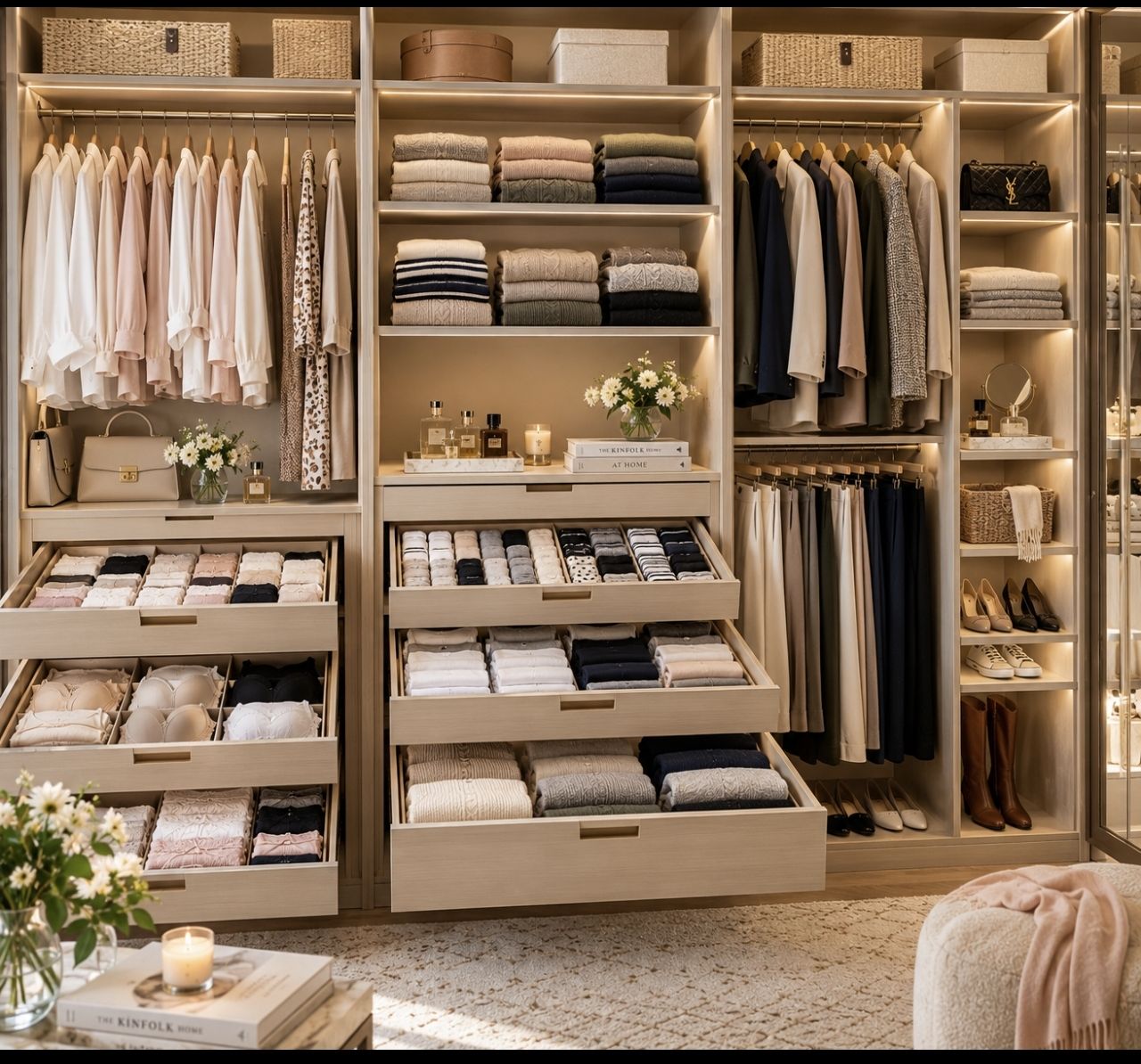
A wardrobe organised according to the principles of Danshari & Ma: everything visible, everything within reach.
1. Danshari — Rethinking Our Relationship with Belongings
Danshari isn't treated simply as "getting rid of things." It's explained through three core ideas:
Dan — Refusing
Reducing the flow of new items into the home that we don't truly need.
Sha — Letting Go
Sorting through belongings that are no longer used, have lost their purpose, or no longer have a place in our lives.
Ri — Loosening the Attachment
Not letting what we own control us; becoming more conscious of the emotional bond we form with our belongings.
The aim isn't to create a flawless or empty home — it's to make room for the things that genuinely serve our lives.
2. Ma — The Value of Empty Space
A shelf that isn't completely full, a little space left in a drawer, or a room where every corner isn't occupied by something — none of this is a "lack." Empty space is part of order too.
This section, drawing on the concept of Ma in Japanese culture, explains the calm that visual and physical space can create in a home.
Order isn't about fitting everything somewhere — it's also about knowing when to leave certain places empty.
3. Where to Start at Home
Rather than trying to organise the whole house at once, the approach begins with small, manageable areas.
Suggested order: Wardrobe → Drawer → Bathroom → Kitchen → Entryway
The same three questions can be used for every area:
— Do I use it?
— Does it need to be here?
— Can I see it and reach it easily?
This way, organising becomes not only about aesthetics, but a functional system that makes daily life easier.
4. Folding & Storage Guide
This is the strongest hands-on section of the September feature. The aim isn't just to prepare a wardrobe that looks nice — it's to teach a system that preserves the shape of clothes, uses space efficiently, and makes it easy to reach the piece you're looking for.
T-Shirts
Fold into a neat rectangle and, where possible, store upright in the drawer. This way, instead of pulling a piece out from under a stack, every option is visible at once.
Shirts / Blouses
A distinction is made between folding and hanging, depending on the fabric and how often the piece is worn. For shirts that will be folded, a clean rectangular form that preserves the shoulder and sleeve line is shown.
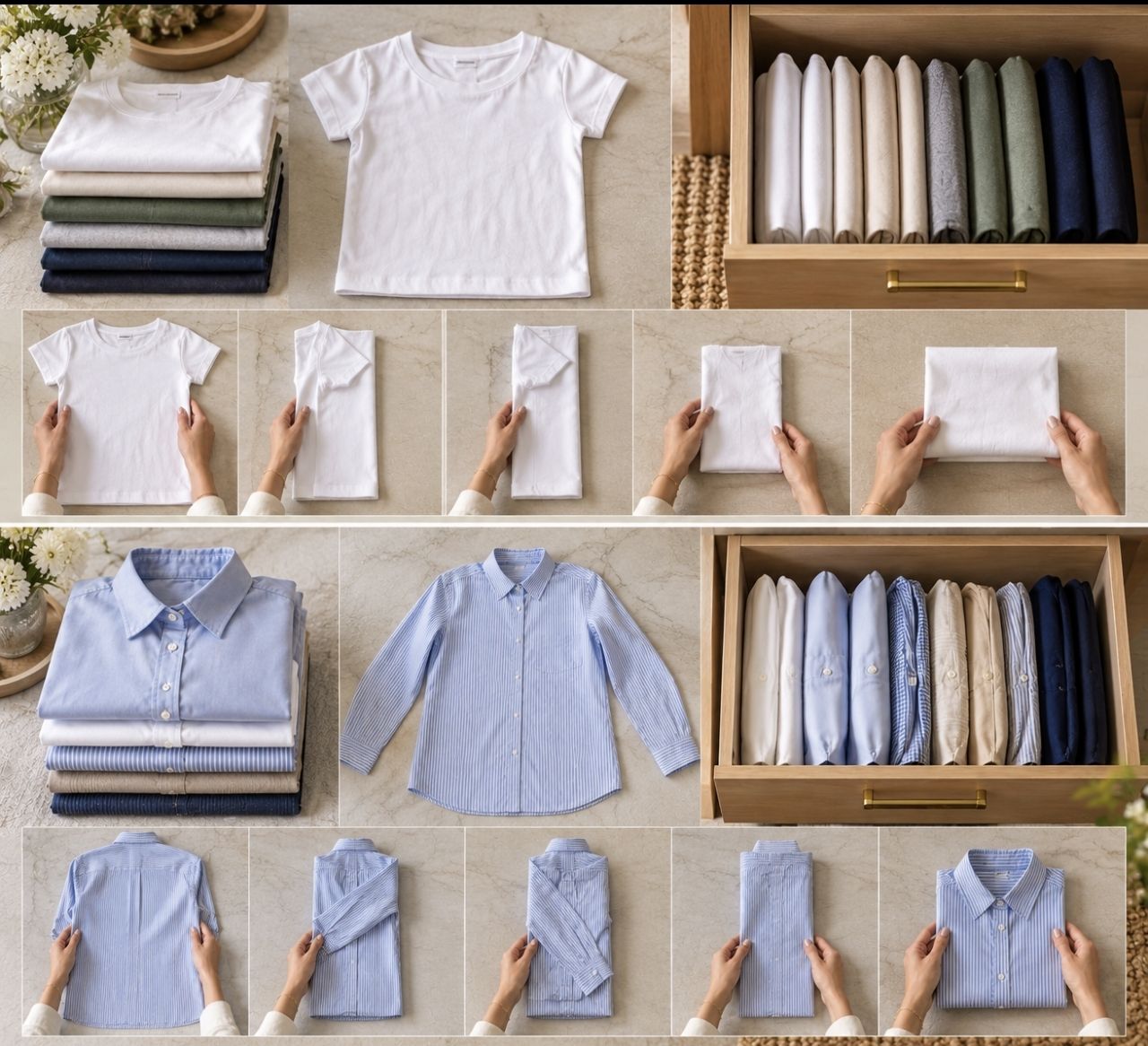
Step-by-step folding technique for t-shirts and shirts.
Trousers
Hanging or folded storage options are shown depending on the fabric type. Neat folding is used for jeans, cotton and everyday trousers; hanging is preferred for pieces that crease easily or classic tailored styles.
Jumpers / Knitwear
It's explained that heavy knitwear in particular can lose its shoulder and neck shape over time on a hanger. A soft folding method is shown, bringing the sleeves in over the body without stretching the fabric.
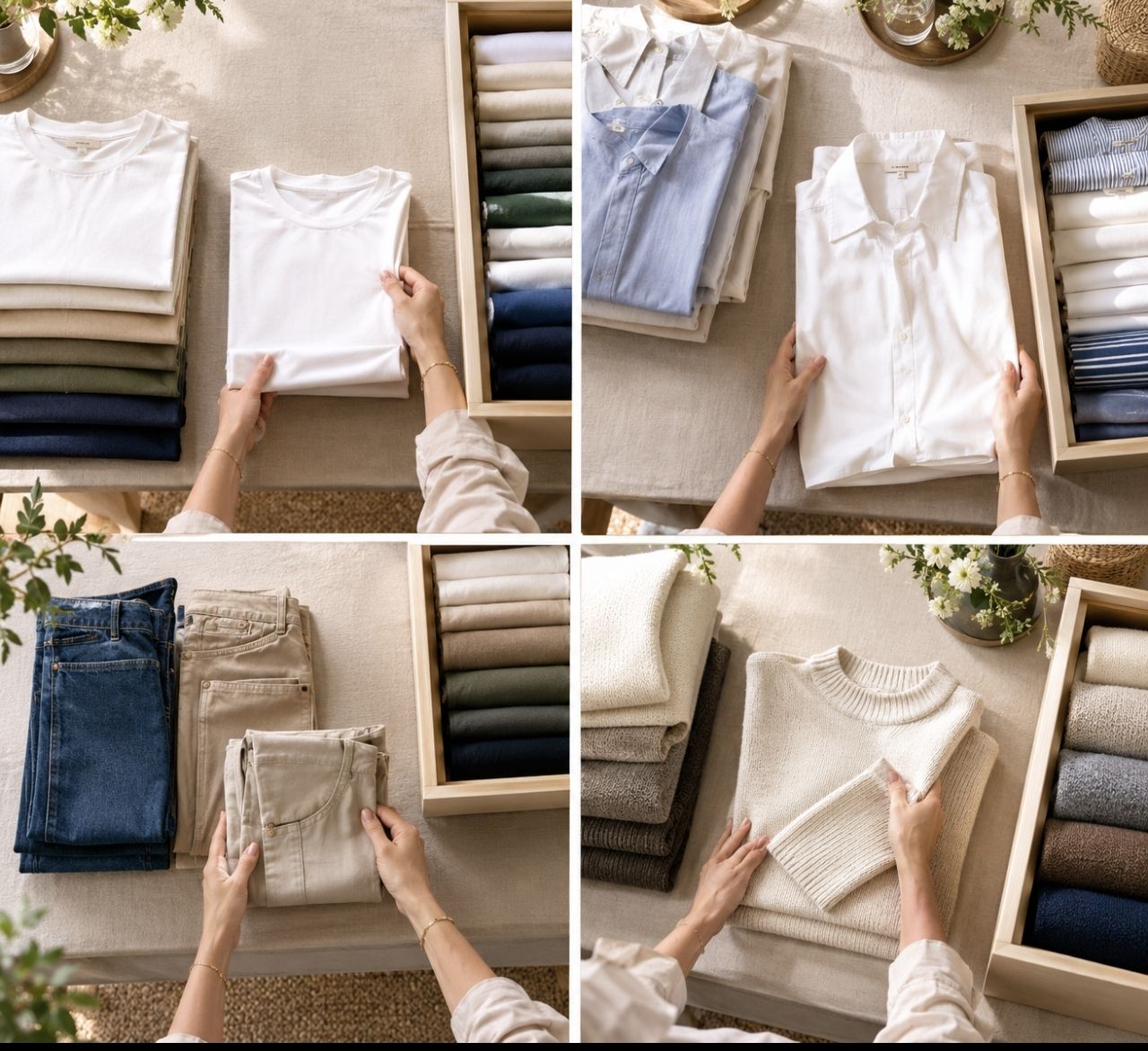
A quick folding summary for t-shirts, shirts, trousers and jumpers.
Underwear
Rather than cramming small items together, they're arranged visibly by category. The aim isn't to make things as small as possible, but to create a system in the drawer that's easy to find your way around.
Socks
Instead of tucking one sock inside the other — which stretches the elastic over time — pairing socks gently and storing them side by side or upright is recommended.
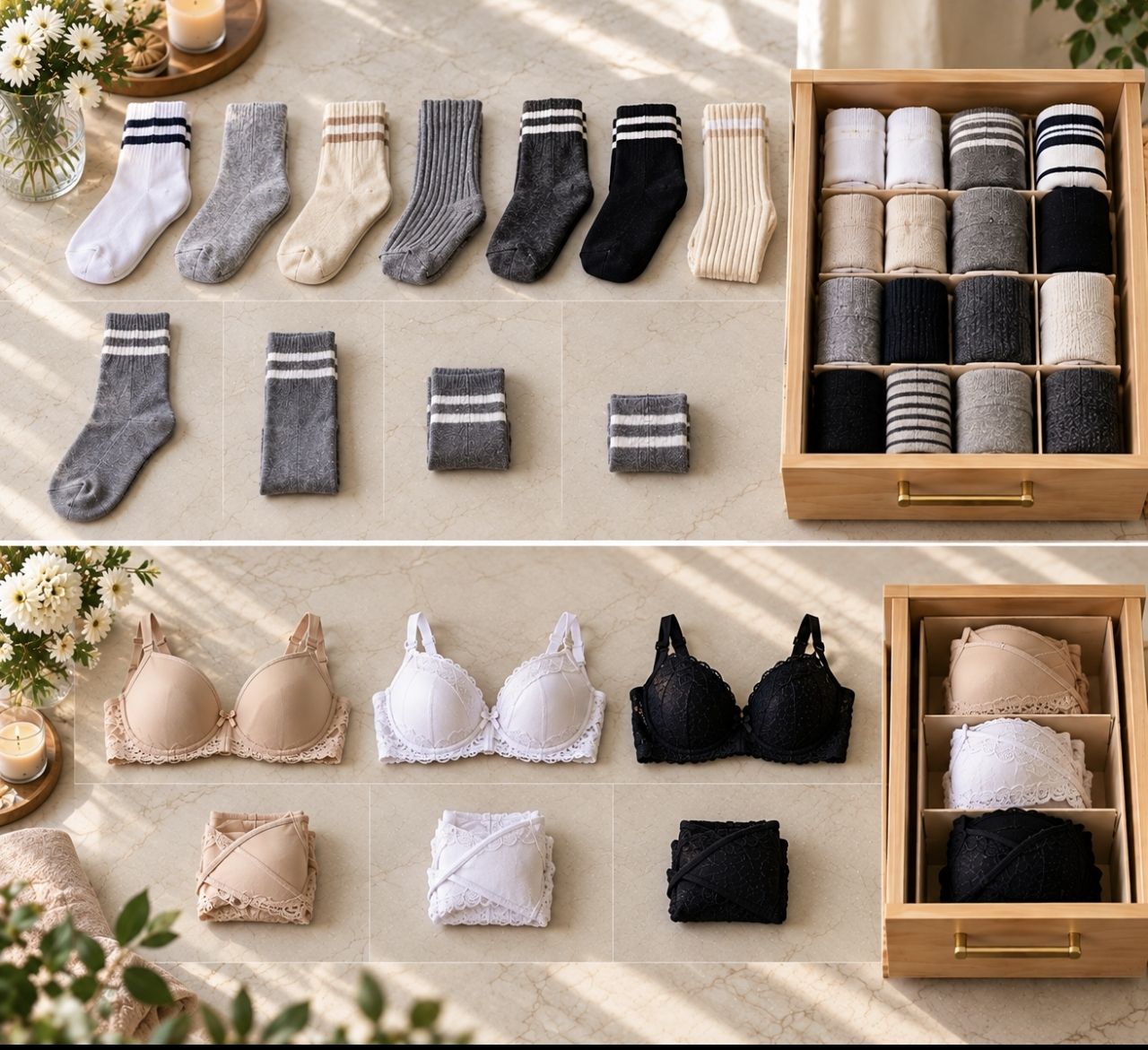
The "Right Storage" technique for socks and underwear.
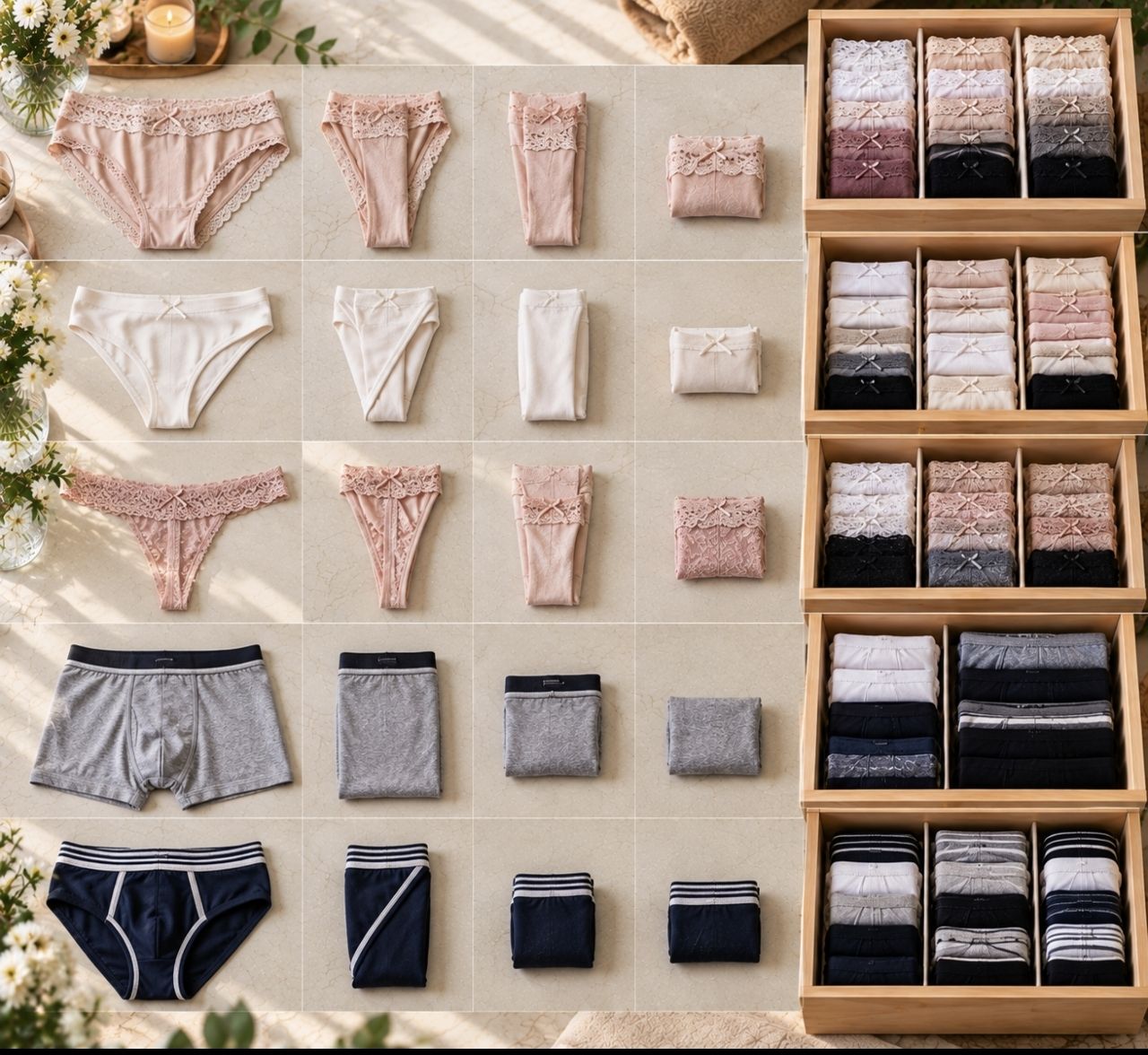
An example of category-based, visible placement for underwear.
Towels
Depending on the structure of the bathroom cabinet, it's shown when classic folding or a rolled system is more practical. Folding towels to the same size gives the shelves a calm, visual consistency.
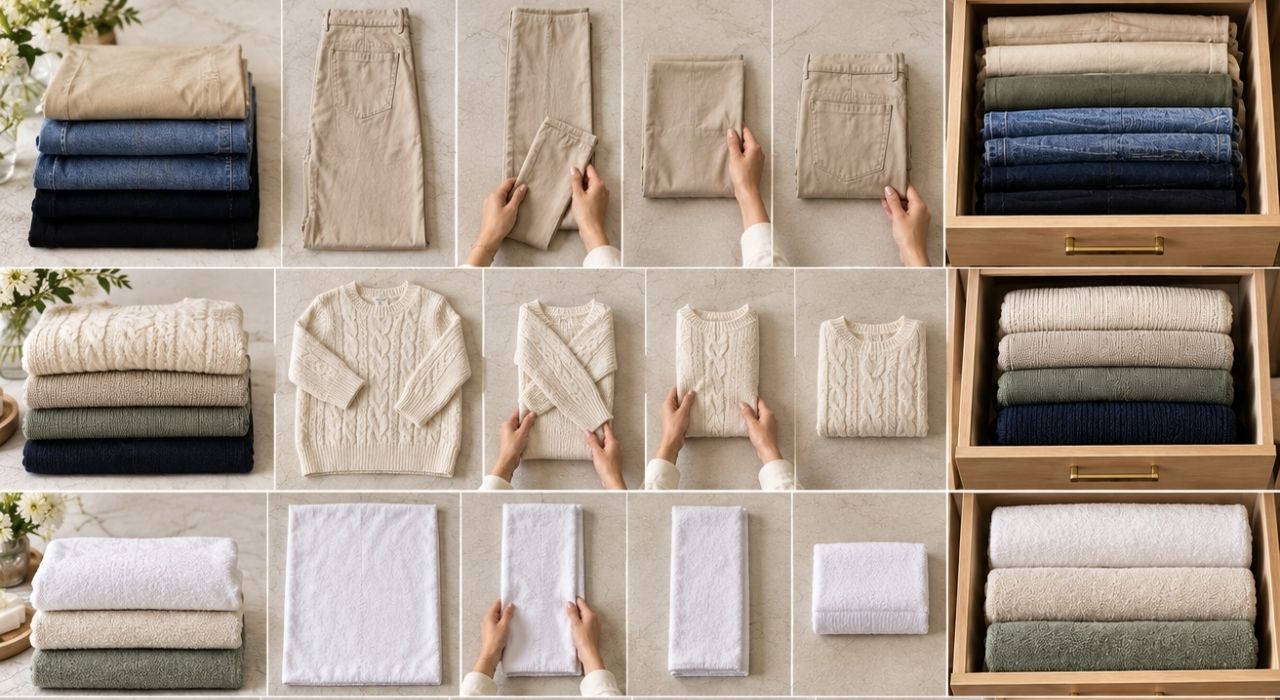
Step-by-step folding and placement for trousers, jumpers and towels.
Fitted Sheets
This is one of the most instructive hands-on sections of the feature. It shows, step by step, how to tuck the corners of a fitted sheet into one another to form a neat rectangle, then fold it compactly.
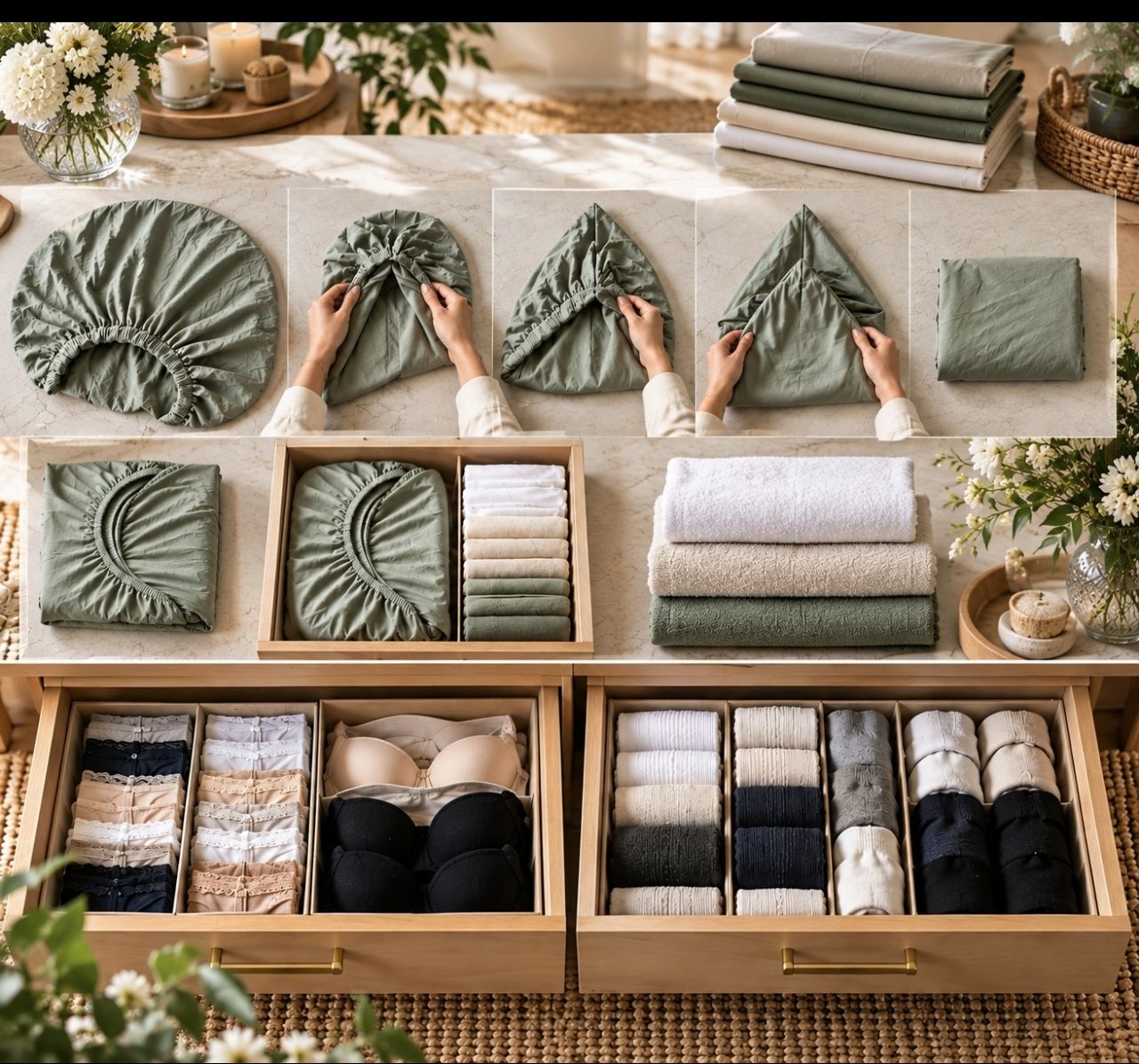
Fitted sheet folding technique and the final drawer arrangement.
5. Drawer Organisation
Core principle: store visibly wherever possible, rather than stacking items on top of one another. The goal is for most of the drawer's contents to be visible at a single glance when opened.
Dividers are used only when they genuinely help create categories. It's kept in mind that filling every drawer with numerous boxes and organisers can create a new kind of clutter.
Establish the order first; bring in organisers afterward, only if needed.
6. Wardrobe Organisation
Items in the wardrobe are separated into three main groups:
— To hang — Shirts, blouses, dresses, jackets that crease easily, and pieces that need to keep their shape on a hanger.
— To fold — T-shirts, knitwear, everyday trousers, and pieces more practically stored in a drawer.
— Not needed for this season — Out-of-season pieces set aside from the everyday rotation.
Having hangers all face the same direction, keeping similar categories together, and not filling the wardrobe to capacity are among the basic principles of visual order.
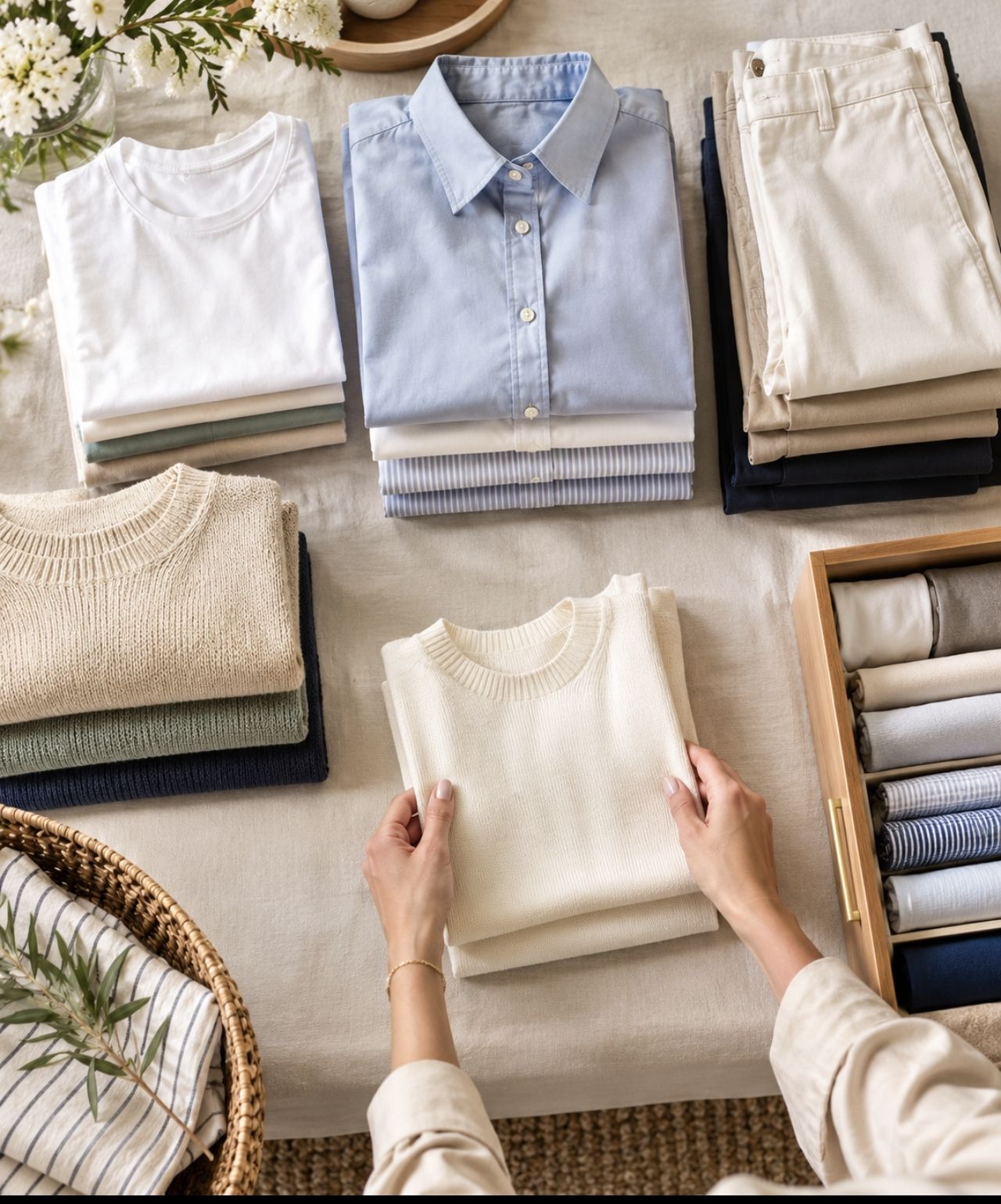
The final result of folded pieces in the drawer.
7. A Calmer Home in 7 Days
Rather than one big "home organisation operation," just one small area each day.
— Day 1 — A single drawer
— Day 2 — A bedside table
— Day 3 — One shelf of the bathroom cabinet
— Day 4 — The t-shirt and knitwear area
— Day 5 — The underwear and sock drawer
— Day 6 — A small area in the entryway
— Day 7 — A shelf or surface deliberately left empty in the home
The aim isn't to create a flawless home in seven days — it's to show that order is built through small, sustainable decisions.
A NOTE FROM ZARİF YAŞAM
The way to make a home feel more open and airy doesn't always run through bigger wardrobes, more boxes, or new organisers.
Sometimes all that's needed is to reduce, to rethink, and to leave a little space.
Because a well-organised home is not the one that can store the most. It's the one that can leave room for the person living in it.
Perhaps this is exactly where elegant living begins: not in storing more, but in owning more consciously.
Reduce. · Create space. · Fold properly. · Place visibly.
Own more consciously, rather than storing more.