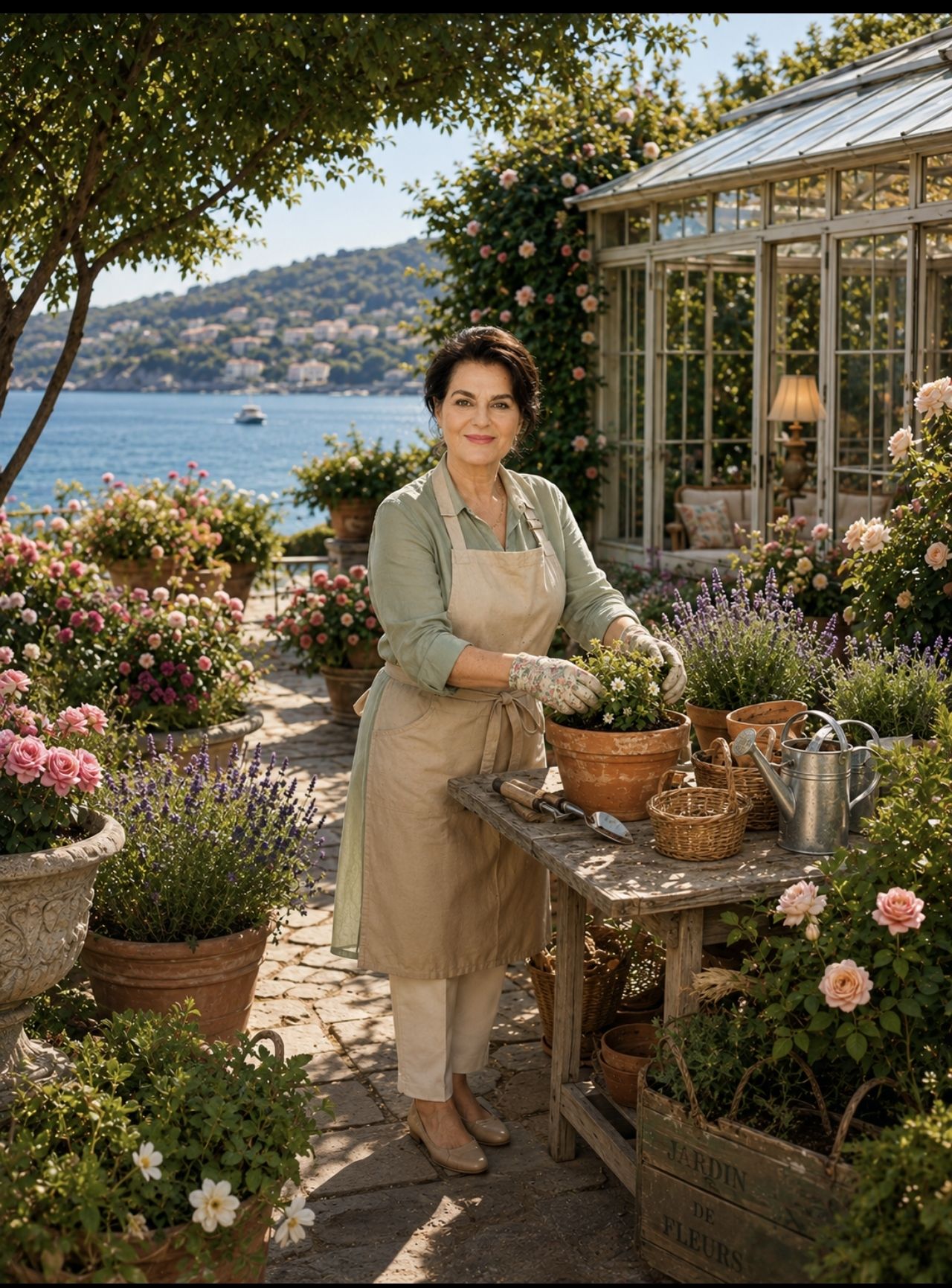
Summer's Last Light
September is not the month when summer suddenly ends in the garden. The sun is still warm, the leaves are still green, and some roses and summer flowers are still blooming. What changes is, more than anything, the garden's rhythm.
This is why, rather than rushing the September garden into autumn, it's better to preserve a little of what's left of summer's beauty. Instead of pulling out healthy flowers, suddenly cutting back watering just because the calendar has changed, or pruning the whole garden harshly, observing the plants and making only the small interventions they actually need makes for a truer transition.
A Little September Care for Roses
Many repeat-flowering roses can continue blooming into September in temperate regions. The aim at this point isn't to prune heavily to prepare the rose for winter, but to help the plant stay healthy and well-kept.
Fully spent blooms can be selectively removed. Yellowed, spotted or damaged leaves are checked; healthy leaves, new buds and flowers are preserved.
There's an important distinction here: deadheading a spent flower and pruning are not the same thing.
The right time to prune can vary depending on the rose variety and the climate it's growing in. So cutting back the whole rose bush hard simply because the calendar says September isn't the right approach.
With watering, too, it's better to look at the soil than the calendar. If September is running warm, a plant's water needs may not differ much from summer. The surface of the soil looking dry isn't enough on its own — check the moisture a few centimetres below before deciding whether to water.
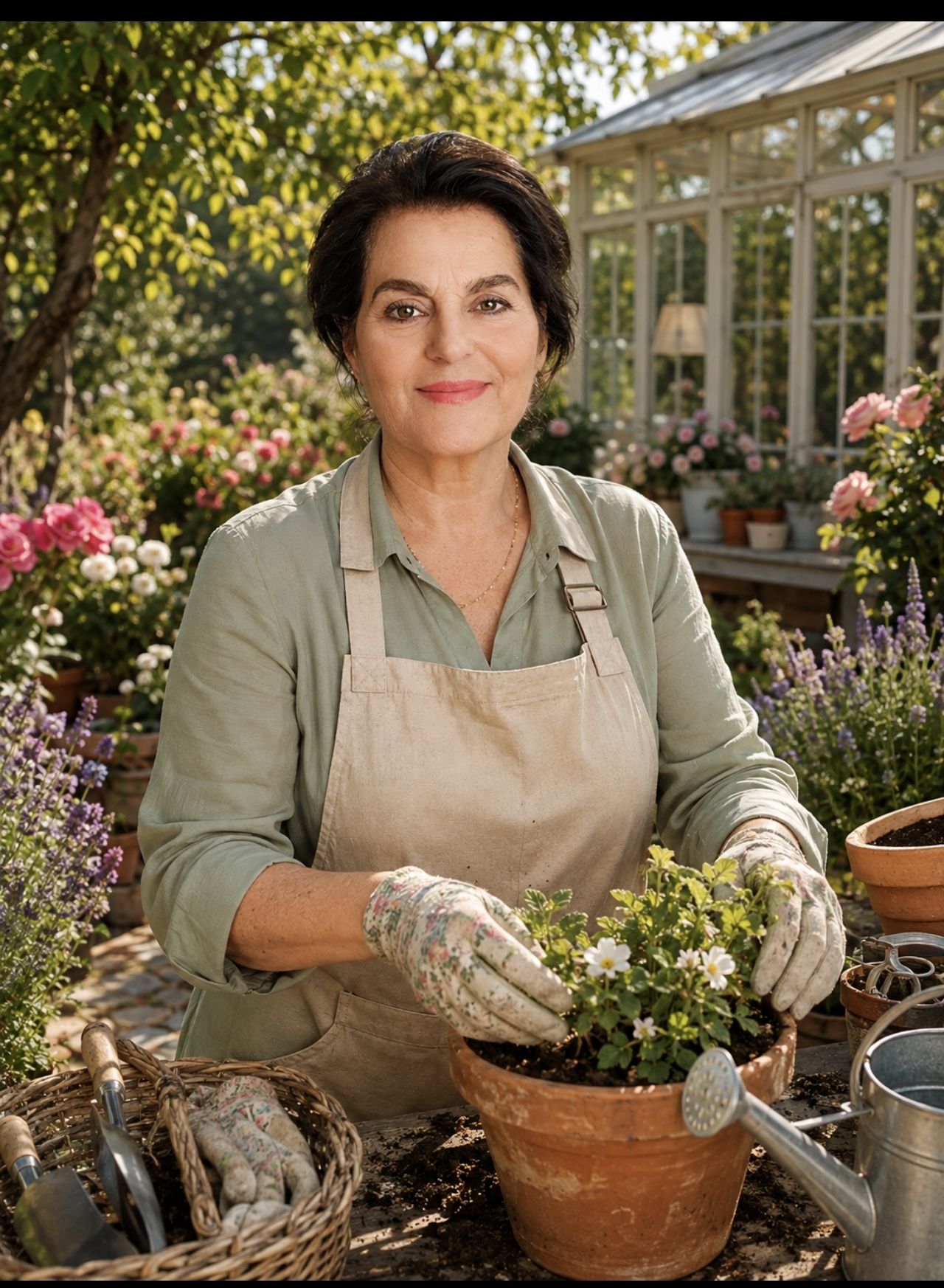
Refreshing a pot: keeping the healthy plant and filling in the empty space.
Bringing a Pot Back into Balance
Refreshing a pot doesn't always mean pulling out everything inside it and starting again.
September is a good time to review the pots that have grown through summer. Healthy plants can be kept; dried-out sections cleared away, empty spaces filled in, and the surface of the soil tidied.
The small secret to a beautiful pot arrangement lies not only in colour, but in the distribution of heights.
You might use a plant that gives height to the arrangement in the centre or back; fuller plants that fill the mid-level around it; and varieties at the edges that soften the line of the pot, spilling gently outward.
This way, the pot becomes a small, natural garden rather than looking like a single cluster of flowers.
From Garden to Home
Three Flower Arranging Techniques
The garden's beauty doesn't have to stay outside. With a few flowers, a few green stems and the right choice of vase, it's entirely possible to bring the garden's September air into the home.
What's more, a beautiful arrangement doesn't need very many flowers. What matters is knowing how the flowers speak to one another.
1. The Low Table Arrangement
Choose a wide, low vessel. Cut flowers in peach and cream tones to different lengths; place natural greenery gathered from the garden in between.
First, establish the main directions of the composition with a few flowers and green stems. Then fill in the gaps. Don't bring every flower to the same height, and don't try to form a perfect dome.
Letting some flowers lean a little forward, and others back or to the side, gives the arrangement a natural feel.
One of the most important measures for a table arrangement is height: the flowers should never block the view of people sitting across from one another.
2. The Elegant Console Arrangement
Here you can use a taller vase and longer stems.
First, build the outer line of the arrangement with a few green stems. Leave one side a little taller than the other. Then place the main flowers at different levels.
You don't need to fill every gap with a flower.
The small gaps within the arrangement — the negative space — make the shape of the stems and flowers visible. This gives the arrangement a lighter, more contemporary, more elegant look.
Sometimes a few well-chosen stems are stronger than a great many flowers.
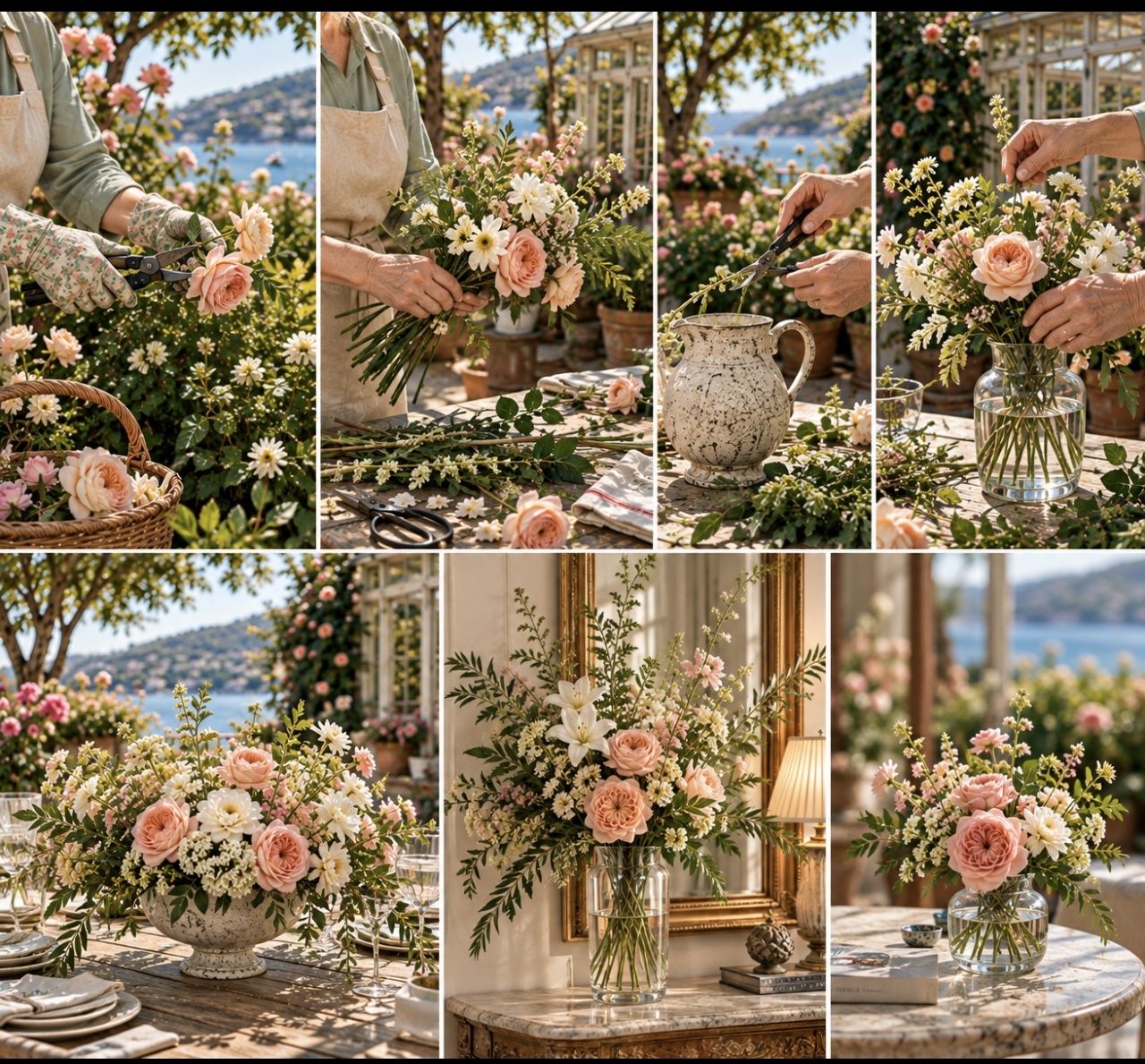
From garden to home: from cutting to vase, the path to three arrangements.
3. The Small September Bouquet
Sometimes just three or five beautiful flowers are enough.
Choose a small vase. Add a few small companion flowers and delicate greenery to the roses. Strip the leaves from the lower part of the stems that will sit in the water, and rather than cutting all the flowers to the same length, leave slight differences in height.
This small arrangement can sit on a desk, a bedside table, a windowsill, or a small side table.
The secret to a beautiful arrangement with few flowers is not filling the space, but finding the balance.
Keeping Cut Flowers Beautiful for Longer
The life of a flower cut from the garden begins the moment it enters the vase.
Use a clean vase and remove any leaves from the stems that would sit below the waterline. Recut the stems properly before placing them in the vase. Change the water regularly and keep the inside of the vase clean.
Don't leave the arrangement for long periods in direct sunlight, or beside a radiator or other strong heat source. Separating flowers that are beginning to fade from the rest also helps the arrangement stay fresh and beautiful for longer.
In the September Garden
| IN THE SEPTEMBER GARDEN — DO | DON'T |
|---|---|
| • Observe the plants | • Suddenly cut back watering just because the calendar says September |
| • Check the moisture of the soil | • Prune all the roses hard |
| • Selectively remove spent blooms | • Pull out healthy summer plants too early |
| • Preserve healthy buds and summer flowers | • Turn the garden into a deep autumn look before the season has actually arrived |
| • If warm days continue, keep your care routine matched to it |
The elegance of the September garden lies not in rushing to create a new season;
but in letting summer's last light linger a little longer while allowing nature to change slowly.