The Elegance of Living Within a Community
Mutual respect at home, in the building, in the garden, and in shared living spaces
"Elegance isn't only about making our own living space beautiful — it's also about being able to show care for the space others live in."

A greeting, a smile — the simplest elegance of good neighbourliness.
A greeting, a smile — the simplest elegance of good neighbourliness.
Our home is where we feel most free. Once we close the door, we rest, talk, laugh, listen to music, host guests, and carry on our daily life according to our own habits.
But no home is ever entirely separate from the world.
Whether we live in an apartment, a residential complex, or a detached house with a garden, our lives, at some point, sit alongside the lives of other people.
Sometimes we share the same floor. Sometimes our floor is someone else's ceiling. Sometimes only a fence separates two gardens. Sometimes we share the same lift, staircase, car park, garden, or building entrance.
This is why living within a community means not only knowing our own rights, but being able to recognise where other people's rights begin.
Good neighbourliness isn't interfering in one another's lives.
It's showing care for one another's right to live.
NEIGHBOURLINESS ISN'T ONLY ABOUT COURTESY — IT'S A MATTER OF RIGHTS
We often think of relationships between neighbours purely in terms of manners and courtesy. Yet neighbourliness is also one of the oldest subjects in law.
In different countries around the world, excessive noise, the use of shared spaces, property boundaries, smoke, odour, and various forms of disturbance to those living nearby can all be subject to different legal regulations.
Of course, the details vary from country to country, city to city, and according to local regulations. But behind all of this lies a fairly universal idea:
Our freedom to use our own living space doesn't mean the freedom to disrupt someone else's peace without limit.
Law sets the minimum boundaries of living within a community.
A culture of living, however, often begins beyond that boundary.
Because we shouldn't always need a legal clause to turn the television down, to avoid dragging furniture at night, to look down before shaking out a cloth from the balcony, or to lower the volume of music in the garden as the hour grows late.
Sometimes a single question we ask ourselves is enough:
"How does what I'm doing affect the life of the person living around me?"
OUR FLOOR MAY BE SOMEONE ELSE'S CEILING
One of the most commonly overlooked disturbances in apartment living is sound transmitted through the floor.
Walking indoors in hard-soled shoes or heels, stepping heavily, children running and jumping for long periods, dragging chairs and armchairs, or setting heavy items down on the floor may seem like a small movement in our own home, but can be heard far more strongly in the flat below.
Especially in the evening and at night, a few small habits can make a big difference.
Wearing soft-soled slippers indoors, placing protective felt pads under table and chair legs, lifting furniture instead of dragging it, and using rugs in suitable areas aren't only about the comfort of our own home.
These are quiet courtesies shown to a neighbour we may never see.
SOUND HAS A NEIGHBOURLY BOUNDARY TOO
Noise isn't only about footsteps.
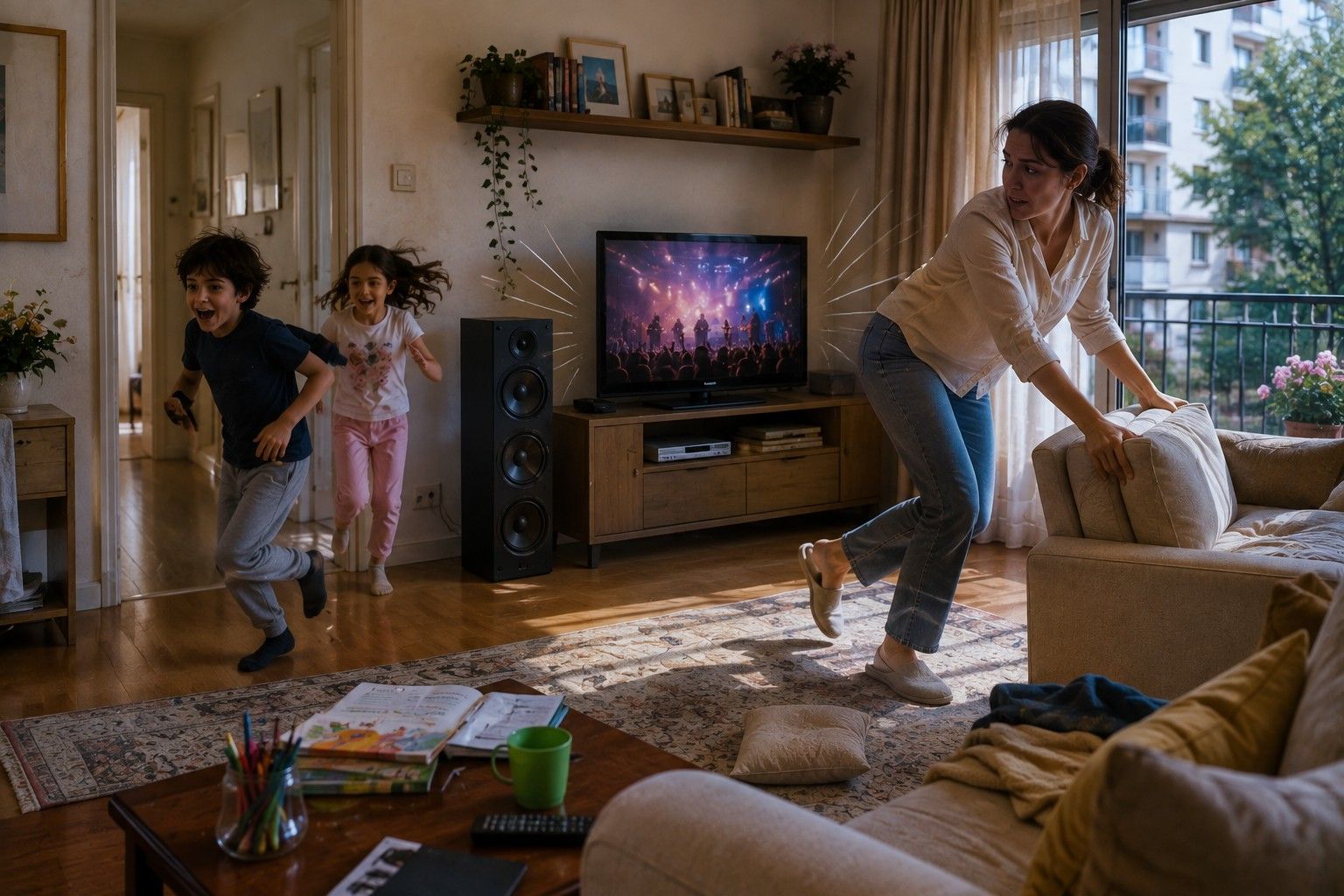
Turning the television up loud enough to be heard from nearby homes, listening to music with particularly strong bass, constantly speaking loudly indoors, or having long, loud phone conversations on the balcony or by an open window can all spill into someone else's living space.
Music that's fun in one home can be noise for someone trying to rest in the flat next door.
And it's worth remembering this isn't only about night-time hours.
A neighbour may be working from home during the day. Someone else may have just come back from a night shift and be asleep. An elderly person may be resting, a baby may be sleeping, or a student may be studying.
Of course, living within a community doesn't mean absolute silence.
Children play. People talk. Guests visit. Meals are cooked. Housework gets done. Life continues.
These are the natural sounds of life.
What matters is being able to tell the difference between the ordinary sound of life and noise that is constant, excessive, and preventable.
Sound that's fun in one home can be noise for someone trying to rest in the flat next door.
TIME OF DAY HAS ITS OWN COURTESY
Sound that's fun in one home can be noise for someone trying to rest in the flat next door.
Some sounds may be perfectly ordinary during the day, yet turn into a serious disturbance at night or very early in the morning.
Washing machines, vacuum cleaners, loud kitchen appliances, drills, hammering, moving furniture and similar tasks should, wherever possible, be done with the resting hours of nearby residents in mind.
In particular, the vibrations created during a washing machine's spin cycle can travel through the floor and walls to other flats. A vibration we barely notice in our own home can feel far more pronounced on another floor.
In the same way, doing a noisy task in the very early hours of the morning instead of late at night isn't necessarily a thoughtful solution either.
Courtesy is sometimes less about what we do, and more about knowing when to do it.
THE BALCONY IS OUR LIVING SPACE TOO — BUT ITS EFFECT ISN'T LIMITED TO US
The balcony is part of our home. But the effects of what we do there don't necessarily stop at the balcony railing.
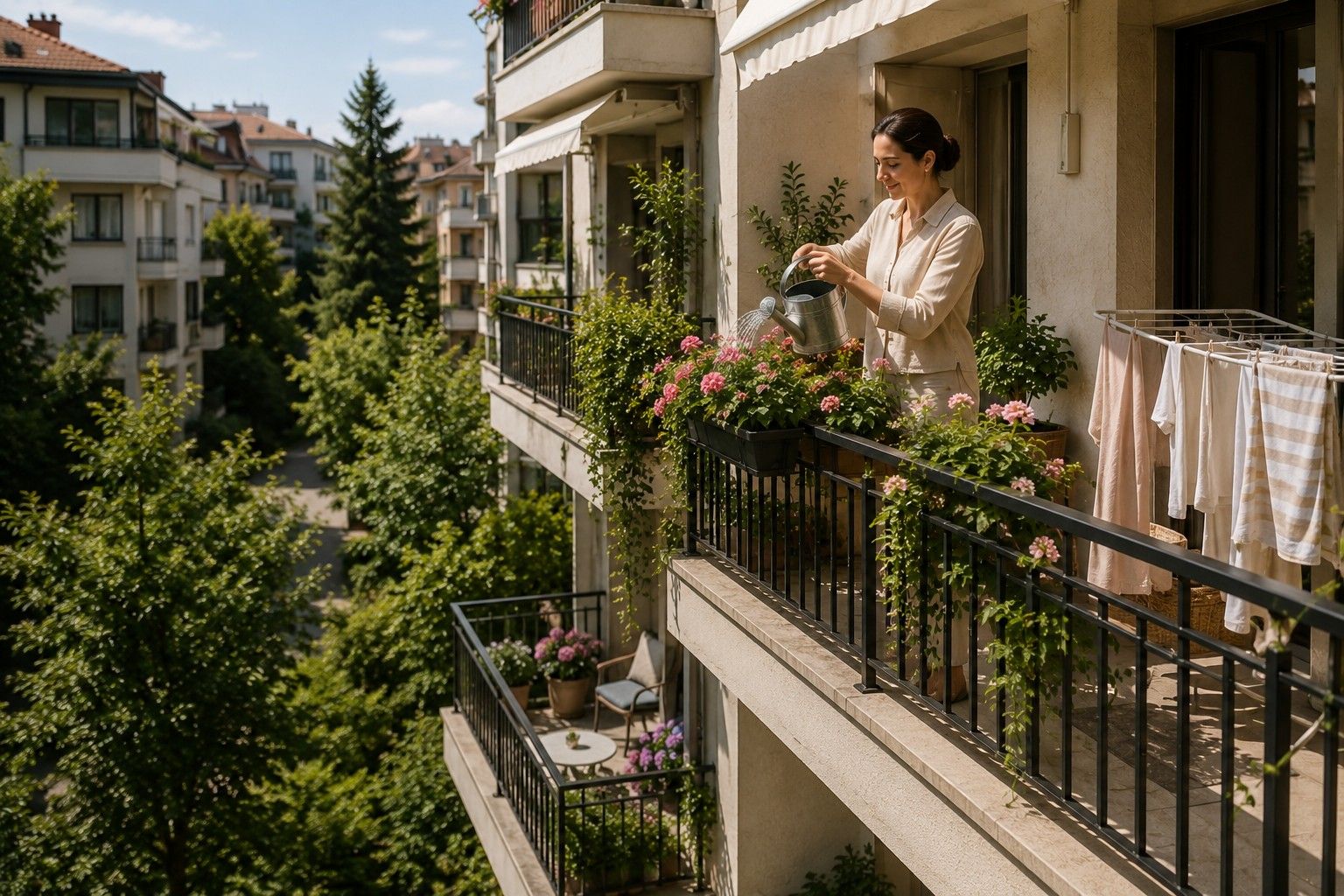
Shaking out a rug, a kilim, a doormat, a cloth, a tablecloth, or a crumb-covered table linen from the balcony or window may seem like a few seconds of cleaning.
But there's another life down below.
The dust, hair, crumbs or other debris that get shaken out can land on the balcony, open window, table, belongings — even the freshly washed laundry — of the neighbour below.
Not dirtying someone else's home while cleaning our own is one of the most basic subtleties of neighbourly culture.
Shaking anything out from above, pouring dirty water, or letting water run down during balcony cleaning is especially significant when laundry is hanging on the balcony below — it directly affects another person's effort and living space.
The same sensitivity should be shown when watering plants and pots. Excess water shouldn't run down onto the balcony, window, or belongings of the flat below.
Sometimes elegance is simply remembering to look down.
Sometimes elegance is simply remembering to look down.
THINKING OF THE NEIGHBOUR WHEN HANGING LAUNDRY TOO
Sometimes elegance is simply remembering to look down.
Hanging laundry is a perfectly natural part of daily life. The issue here isn't hanging laundry itself — it's how, where, and how much we think of those around us while doing it.
Very wet laundry continuously dripping from an upper floor can leave the balcony, windows, or clean laundry hanging below wet as well. This is why hanging laundry that's had its excess water removed is a simple but thoughtful habit.
Not narrowing others' use of shared corridors, stairwells, or passageways by placing drying racks there is part of the same care.
Where balconies are part of a building's exterior appearance, avoiding practices that create long-term clutter, completely cover the façade, or visibly disrupt the shared architectural look can be thought of as part of respecting the aesthetics of communal living.
Because a culture of living isn't only about sound.
Cleanliness, order, and the visual environment are also part of the life we share.
THE SPACE IN FRONT OF OUR DOOR ISN'T AN EXTENSION OF OUR HOME
Another common issue in apartment living is turning the space in front of the door into personal storage.
Leaving dozens of shoes and slippers out in front of a flat's door, moving large shoe racks into the corridor, or accumulating boxes, bags, or various personal items in stairwells gradually turns shared space into private space.
Leaving a large number of shoes out in the open doesn't just create a messy look — it can cause odour, make cleaning more difficult, and narrow the corridor or passageway.
The order of our own home shouldn't come at the cost of disorder in shared space.
Shoes and personal belongings should, as much as possible, be kept within the boundaries of our own home. If the building or complex has designated specific areas for this purpose, their own rules of use naturally apply.
THE SPACE IN FRONT OF THE DOOR IS NOT A RUBBISH DUMP
Another common habit in apartment buildings and shared living spaces is leaving rubbish bags in front of the door.
With the thought "I'll take it out later," one bag is left by the door, then a second is added. Over time, this can turn from a temporary lapse into a lasting mess.
Rubbish left waiting by the door doesn't only create visual clutter. It can affect every resident on the floor in terms of odour, leakage, pest risk, and the cleanliness of the shared corridor.
Once taken out of the home, rubbish should be taken to the relevant rubbish area, container, or collection point within a reasonable time. Following the collection schedule and rules set by the building, complex, or local authority, where they exist, is part of the same care.
Making sure the rubbish bag doesn't leak, and doesn't leave marks or odour in shared spaces, isn't just about cleanliness — it's respect shown for other people's living space.
Because our responsibility doesn't end the moment we close our own door.
The space right in front of our door may feel close to us; but the air, smell, cleanliness and appearance of the corridor are everyone's shared concern.
SHARED SPACE IS SHARED RESPONSIBILITY
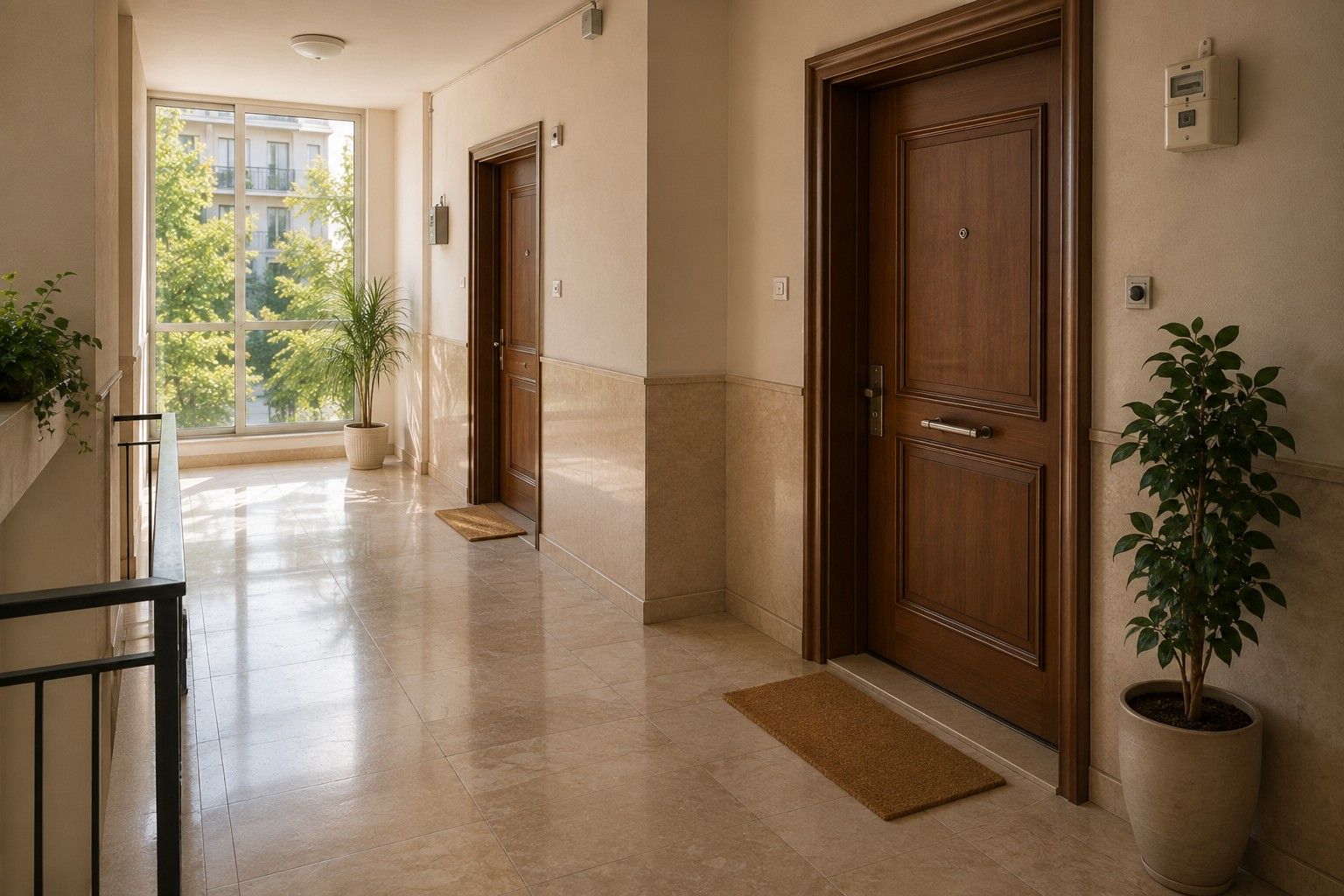
Building entrances, corridors, staircases, lifts, gardens, car parks and other shared areas within a complex don't belong privately to any single person or flat.
Bicycles, prams, boxes, old furniture or other personal items shouldn't be left in a way that blocks shared passage or continuously occupies the space.
Not keeping the lift waiting unnecessarily, not slamming doors, not encroaching on another car's space in the car park, and not blocking passageways with personal belongings are small but important behaviours.
Holding the door for a neighbour whose hands are full of bags, letting someone step out of the lift first, or making space for an elderly neighbour or someone who has difficulty moving are among the simplest elegances of daily life.
Using shared space means carrying shared responsibility.
Using shared space means carrying shared responsibility.
OUR GARDEN MAY BELONG TO US; OUR IMPACT DOES NOT
Using shared space means carrying shared responsibility.
Living in a house with a garden offers a larger private space. But beyond the garden wall, fence, or trees, there are other people's homes and places of rest too.
Playing loud music in the garden, not being mindful of the volume of large gatherings, especially in the evening and at night, having loud phone conversations outdoors, or using noisy garden equipment very early or very late can affect the homes nearby.
At garden gatherings, turning music and conversation down as the hour grows late isn't giving up on the fun.
It's remembering other people's right to rest as part of our own enjoyment.
The same sensitivity matters for barbecues and similar activities. If you notice heavy smoke drifting with the wind directly toward a neighbour's garden, balcony, or open windows, moving it if possible is a small but thoughtful gesture.
Making sure trees, branches, and vines don't spread uncontrollably into a neighbouring plot; not leaving pruning and garden waste on the other side; and not creating unnecessary clutter along shared boundaries are all part of being a good garden neighbour.
Our garden's boundary may be clear; the effect of our behaviour may not stop at that boundary.
Our garden's boundary may be clear; the effect of our behaviour may not stop at that boundary.
THE VALUE OF A GREETING

Our garden's boundary may be clear; the effect of our behaviour may not stop at that boundary.
Neighbourliness isn't only about not disturbing one another.
Not ignoring a neighbour we come across at the building entrance, in the lift, in the garden, in the car park, or on the street is one of the subtleties of living within a community.
"Good morning." "Good day." "Good evening."
Sometimes just a small smile…
These few seconds of behaviour strengthen the sense of mutual respect and trust between people living in the same community.
We don't have to be friends with every neighbour. We don't need to visit each other's homes or share our private lives either.
Warmth can be a choice; respect is the foundation of living within a community.
GOOD NEIGHBOURLINESS ALSO MEANS KNOWING PRIVACY
Neighbourliness requires knowing boundaries just as much as it requires closeness.
Who visits our neighbour's home, when they leave, what's happening in their family, or developments in their private life don't have to be our concern.
A good neighbour is there when needed; but doesn't step into private space they haven't been invited into.
Saying "welcome" to a newly moved-in neighbour, asking someone we know is unwell "Do you need anything?", helping an elderly neighbour with heavy bags, or offering a little support in a difficult moment are still very valuable parts of neighbourly culture.
Perhaps the most elegant balance in neighbourliness is this:
Not interfering because we're close; but not staying indifferent because we're close, either.
HOW WE VOICE OUR DISCOMFORT MATTERS TOO
It's natural for issues to arise from time to time in relationships between neighbours.
What matters isn't only the issue itself, but how we handle it.
As long as it's possible and safe, expressing something that bothers us calmly and directly, first, is usually the most civilised way forward.
Describing the behaviour rather than targeting the person can completely change the tone of the conversation.
Rather than "You're being far too loud," saying "The sound of the chair at night carries down quite a bit — could you be a little more mindful, if possible?" expresses the same discomfort without placing blame.
The same approach can be used for balconies, gardens, laundry, shared spaces, or any other neighbourly matter.
Because the person on the other side may genuinely not be aware of how much their behaviour affects us.
Elegant communication addresses the behaviour, not the person.
If the issue continues, or direct communication isn't appropriate, a solution can be sought through the relevant management structures and the local rules in force.
RESPONSIBILITIES ALONGSIDE OUR RIGHTS
When talking about neighbourly rights, asking only "What is my right?" isn't enough.
A culture of living within a community asks us a second question too:
"What right does my neighbour have, in relation to me?"
The right to rest. The protection of privacy. The right to make fair use of shared spaces. The right to live in a clean, orderly environment. The right to live in one's own home without being subjected to constant, preventable disturbance.
And, alongside all of this, the right to carry on one's daily life in a reasonable way…
Because the right to good neighbourliness isn't one-sided.
Just as the person who wants quiet has a right, so does the person raising a child, hosting guests, doing daily housework, and simply carrying on with ordinary life.
The real issue is being able to exercise our rights without disregarding one another's.
Seen this way, neighbourliness stops being a list of prohibitions.
It becomes a culture of mutual rights, responsibility and respect.
A PRINCIPLE OF ZARİF YAŞAM
"Good neighbourliness isn't interfering in one another's lives — it's showing care for one another's right to live."
Sometimes the way there is through a greeting.
Sometimes through holding the door.
Sometimes through turning the television down a little.
Sometimes through leaving the washing machine for a more suitable hour.
Sometimes through lifting a chair instead of dragging it.
Sometimes through not filling the space in front of our door with dozens of shoes.
Sometimes through not leaving a rubbish bag waiting in the corridor.
Sometimes through not shaking a cloth out from the balcony.
Sometimes through noticing the clean laundry below.
Sometimes through checking where the water overflowing from a plant pot is going.
Sometimes through turning the garden music down as the hour grows late.
Sometimes through respecting our neighbour's privacy.
And sometimes through being able to talk about something that bothers us without anger.
Because the true elegance of living within a community is measured not only by how free we are within our own space, but by how thoughtfully we're able to balance that freedom with the peace, rights and freedoms of others.